
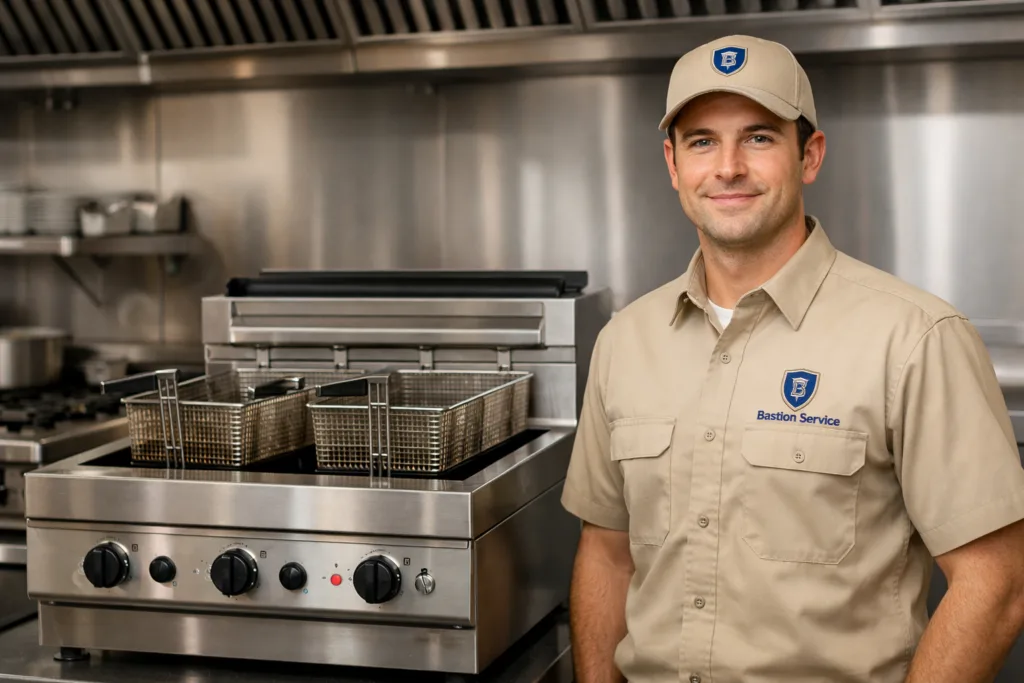




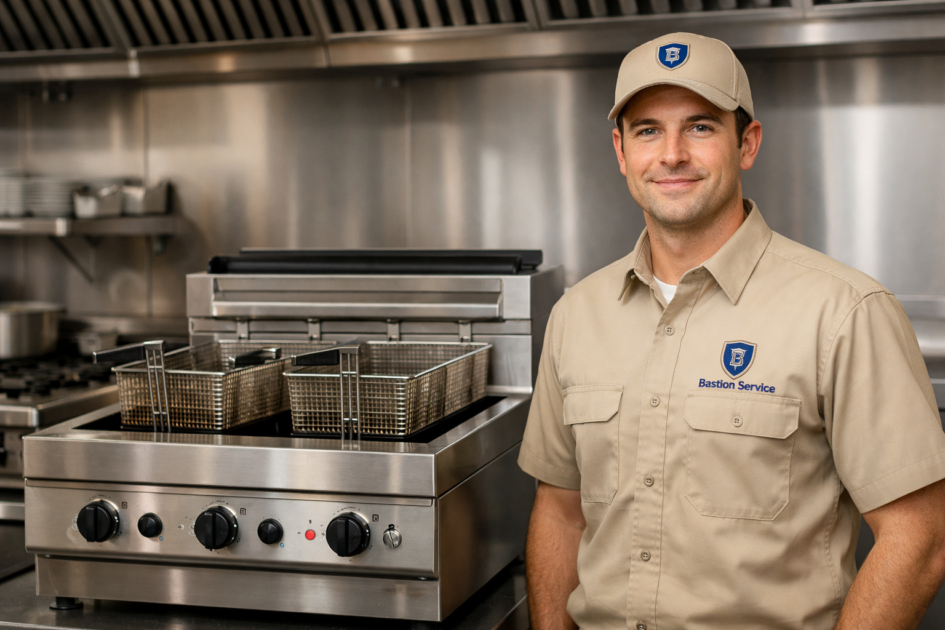
Unexpected fryer downtime can disrupt ticket flow, labor planning, and food consistency within a single shift. Because similar symptoms can come from different causes, the most effective repair path starts with identifying whether the problem is tied to heat production, temperature sensing, safety controls, ignition, power delivery, or oil recovery performance.
Related commercial equipment paths in Venice include Frymaster Fryer Repair in Venice and Pitco Fryer Repair in Venice.
Common commercial fryer problems and what they may indicate
Many fryer issues begin with slow heat-up, failure to hold set temperature, oil overheating, inconsistent recovery between batches, sudden shutdowns, or a unit that powers on without cooking properly. Depending on the equipment type, these symptoms may point to a failed heating element, burner problem, weak ignition sequence, thermostat drift, sensor inaccuracy, high-limit trips, relay or contactor failure, or a control board issue. What looks like one simple temperature complaint can affect cook times, product texture, oil life, and overall kitchen output.
Intermittent operation is another common problem in commercial kitchens. A fryer may run normally early in the day, then begin short-cycling, losing heat during peak periods, or shutting down after reaching temperature. That pattern can suggest overheating in electrical components, unstable gas flow, worn safety parts, loose wiring connections, or controls that fail under sustained demand rather than at startup.
Operators should also pay attention to leaks, unusual odors, repeated breaker trips, delayed ignition, or controls that stop responding consistently. These signs often indicate more than routine wear. In some kitchens, staff may first notice the problem because other cooking equipment is taking on extra volume; if the same production bottleneck also involves baking or roasting performance, Commercial Oven Repair in Venice may be the better service path for that specific equipment.
Temperature problems that affect food quality
Accurate oil temperature is central to commercial fryer performance. When a unit runs too cool, cook times increase and finished product can come out greasy, pale, or inconsistent from batch to batch. When a fryer runs too hot, oil can degrade faster, breading may darken too quickly, and product quality can become difficult to standardize. In either case, the root cause may involve a faulty thermostat, a drifting sensor, a control calibration issue, or a heating system that is not cycling correctly.
Slow recovery after each basket drop is especially important in higher-volume operations. A fryer that eventually reaches temperature but cannot recover fast enough between loads may be experiencing weakened heat output, restricted gas delivery, degraded elements, or controls that are reading oil conditions incorrectly. This is the kind of issue that may not appear during light use but becomes obvious once service speeds up.
Ignition, heating, and shutdown issues
Gas fryers and electric fryers fail in different ways, but both can show similar operating symptoms. On gas units, no-heat conditions may involve the ignition system, pilot assembly, gas valve behavior, flame sensing, or safety cutoffs. On electric models, the problem may center on elements, wiring, relays, limit devices, or the power path feeding the heating circuit. Distinguishing between a control issue and a heat-source issue matters because the repair scope can change significantly.
Unexpected shutdowns deserve prompt attention, especially when the fryer restarts only after cooling down or after repeated reset attempts. That can indicate a high-limit problem, overheating around the control compartment, failing internal components, or unstable electrical supply under load. Continued operation in that condition can increase wear on surrounding parts and create more disruption during busy service windows.
When to schedule service instead of waiting
Service should be scheduled when the fryer is no longer maintaining reliable temperature, is overheating oil, is slow to recover, shuts off unpredictably, or shows signs of ignition or electrical instability. Waiting can turn a relatively isolated issue into damage affecting additional components, especially when the unit is repeatedly cycling under abnormal conditions.
Repeated resets, scorched smells, visible leaks, fluctuating digital readings, or inconsistent cooking results are strong indicators that the unit needs attention. These are not minor inconveniences in a commercial setting. They can contribute to product waste, staff workarounds, and avoidable pressure on the rest of the kitchen line.
Signs continued operation may worsen the problem
- Oil temperature swings that do not match the control setting
- Longer preheat times than normal
- Recovery delays after regular batch loads
- Intermittent ignition or burners that do not stay lit
- Frequent high-limit trips or sudden power loss
- Error codes that return after clearing
- Evidence of leaking oil or heat-related component stress
Repair versus replacement considerations
Whether a fryer should be repaired or replaced usually depends on the age and condition of the unit, the type of failure involved, the frequency of prior breakdowns, and the operational cost of continued downtime. Repair is often the practical option when the problem is limited to serviceable parts such as sensors, thermostats, ignition components, switches, contactors, relays, or controls and the rest of the fryer remains structurally sound.
Replacement becomes a more serious consideration when the equipment has recurring failures, severe tank deterioration, extensive electrical damage, compromised safety components, or repair costs that no longer make sense compared with the remaining usable life of the unit. For many businesses, the decision is not only about part cost but also about reliability during production hours.
What businesses in Venice should expect from a useful fryer diagnosis
A thorough diagnosis should explain not just what stopped working, but why the failure occurred and whether it appears isolated or part of a larger wear pattern. That helps kitchen managers decide whether to authorize repair, plan equipment replacement, or temporarily rebalance workflow while the unit is being addressed.
For commercial kitchens in Venice, the most helpful service outcome is one that supports uptime, safety, and consistent output without guesswork. When fryer performance affects speed, oil quality, and menu consistency, a focused assessment can make the next step much easier to prioritize.


