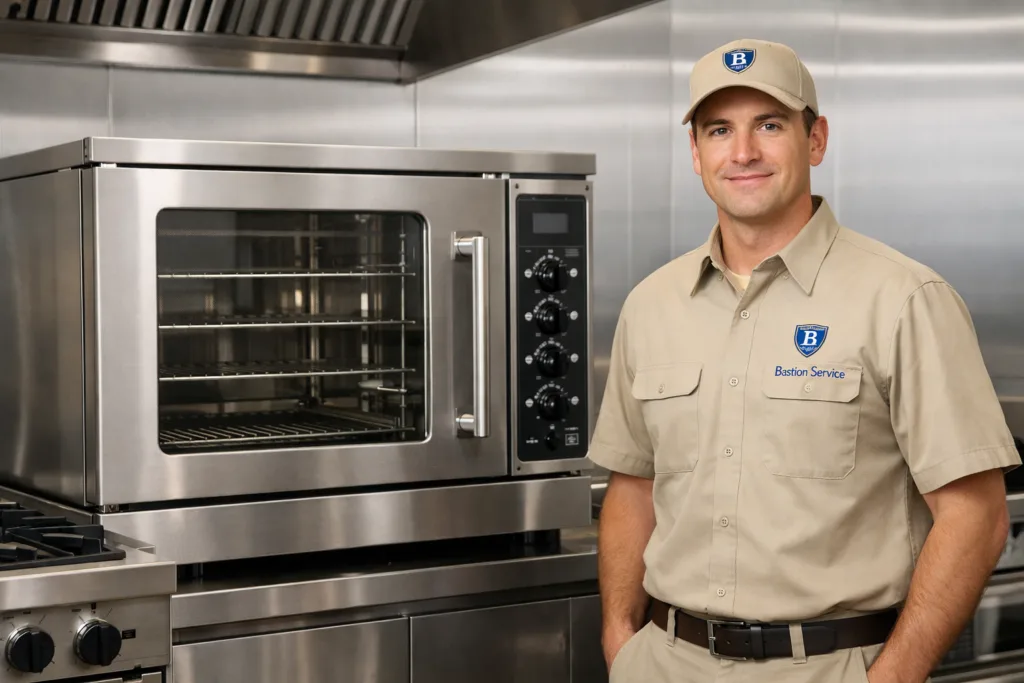




Common commercial oven problems and what they may indicate
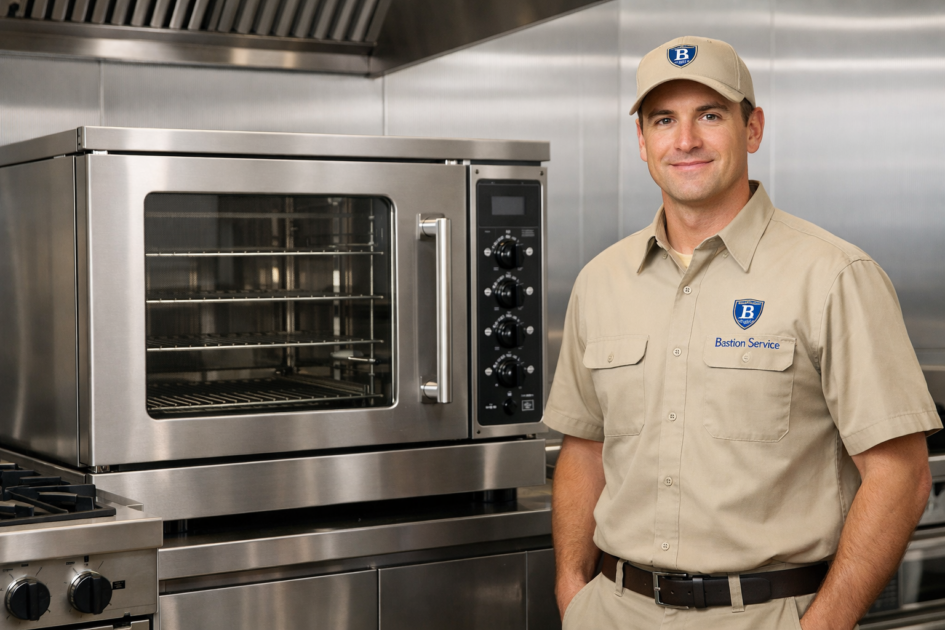
Temperature-related complaints often show up first as inconsistent product quality. When a commercial oven runs too hot, too cool, or takes too long to recover after the door opens, likely causes can include a failing temperature sensor, thermostat or control-board issues, weakened heating elements, ignition trouble, gas valve problems, or calibration drift. In a commercial kitchen, even small temperature errors can affect batch timing, food consistency, and staff workflow.
Related commercial equipment paths in Century City include Blodgett Oven Repair in Century City and Southbend Oven Repair in Century City.
Uneven baking or roasting usually points to a heat-distribution problem rather than simple operator variation. Convection fan issues, worn door gaskets, weak elements, blocked airflow, or internal component wear can cause one section of the cavity to perform differently from another. If pans need constant rotation just to maintain acceptable results, the oven should be checked before the inconsistency starts affecting production standards.
Power loss, random shutdowns, breaker trips, and intermittent controls often require electrical testing instead of parts guessing. Loose wiring, failing relays, damaged switches, control faults, and heat-stressed components can all create similar symptoms. A proper diagnosis matters because replacing the wrong part can add cost without solving the downtime problem.
Signs the problem should not be ignored
Some ovens continue to operate in a limited way, which makes it tempting to keep using them through service. That approach can make the repair more complicated. Unstable ignition, overheating, damaged seals, erratic cycling, and control failures can place added strain on related components. If staff are extending cook times, resetting the unit between loads, or changing normal prep flow to work around the oven, the issue is already affecting operations.
If there is a strong or persistent gas smell, stop using the appliance immediately and follow the site’s safety procedures before arranging service. Even without an active gas odor, delayed ignition or repeated ignition failure should be treated as a priority because cooking performance and equipment safety both depend on stable burner operation.
It also helps to separate oven symptoms from nearby hot-line equipment problems. If the complaint is really about oil heat, slow recovery between loads, or fryer burner performance, Commercial Fryer Repair in Century City may be the better service path.
How commercial oven diagnosis helps Century City businesses
For businesses in Century City, the goal is not just getting the oven hot again. The more important question is why the failure started and whether it points to an isolated repair or broader wear. A thorough inspection can help determine whether the issue is limited to one failed component, whether multiple systems are contributing to the same complaint, or whether the equipment is becoming unreliable enough to affect output planning.
This matters especially in operations where timing, repeatability, and kitchen coordination depend on predictable oven performance. When a unit cannot maintain temperature, preheats slowly, or shuts down mid-cycle, the disruption often extends beyond a single appliance. Prep schedules shift, finished product quality becomes less consistent, and staff attention gets pulled away from normal production.
When repair is usually the practical option
Repair is often the sensible choice when the oven is structurally sound and the problem can be traced to a specific failed part or system. Common examples include sensor replacement, igniter failure, heating element problems, fan motor issues, control faults, wiring repairs, and door hardware wear. In many cases, correcting the root cause restores stable performance without requiring broader equipment changes.
Repair also tends to make sense when the unit has otherwise been reliable, the symptom appeared recently, and the kitchen can return to normal production once the fault is corrected. For commercial operators, that kind of targeted service is often the fastest way to protect uptime.
When replacement may be worth discussing
Replacement becomes more relevant when the oven has a history of repeat breakdowns, significant heat loss, multiple failing systems, or unreliable performance even after prior service. If control issues, heating problems, and structural wear are all showing up together, the long-term value of continued repair may be limited.
Age by itself is not the deciding factor. What matters more is whether the unit can support daily production without constant intervention, whether parts failures are becoming more frequent, and whether another interruption would create larger operational costs than planned replacement.
What to note before scheduling service
Useful details include whether the oven is not heating at all, overheating, cycling unpredictably, preheating slowly, cooking unevenly, failing to ignite, losing power, or showing error codes. It also helps to note whether the issue affects every cycle or only certain temperatures, whether it began after cleaning or a power event, and whether the symptom is constant or intermittent.
Photos of error displays, a record of unusual sounds, and notes about how long the unit takes to reach temperature can all make diagnosis more efficient. For a Century City operation, accurate symptom history can shorten the path to the right repair decision and reduce unnecessary delays.
Operational impact of unresolved oven issues
An unreliable commercial oven can affect more than cooking performance. It can create scheduling backups, increase food waste, complicate quality control, and put extra pressure on surrounding equipment. What begins as slow preheat or uneven browning can turn into missed service windows and avoidable strain across the kitchen line.
The most useful next step is evaluating the actual symptom pattern, confirming the cause, and deciding whether targeted repair will restore dependable operation. That approach gives Century City businesses a better basis for protecting uptime and avoiding repeated disruption.