
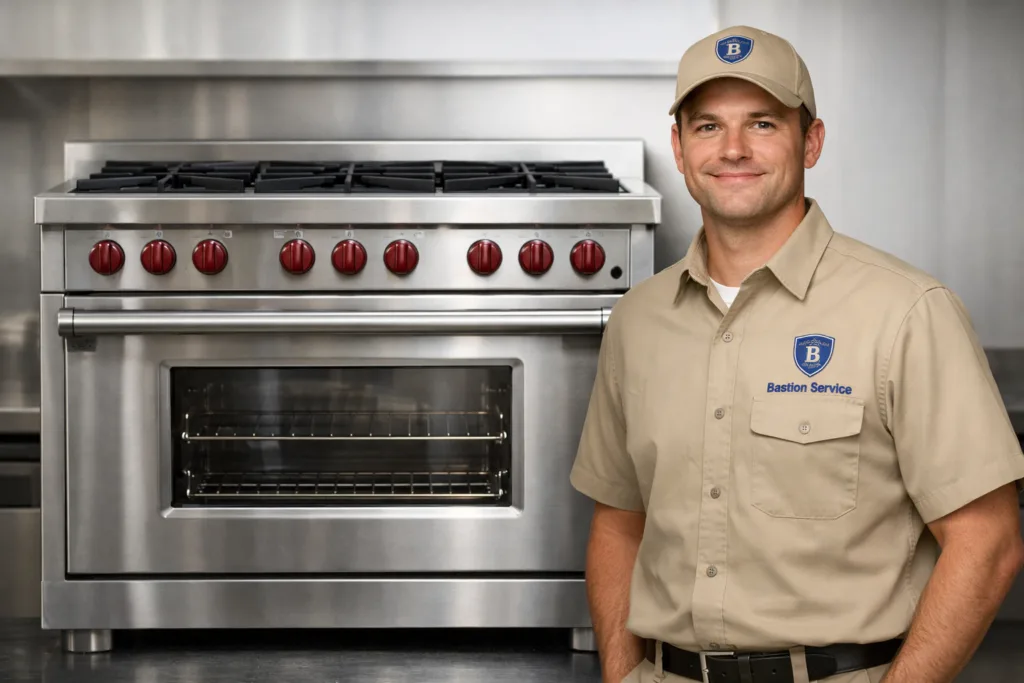




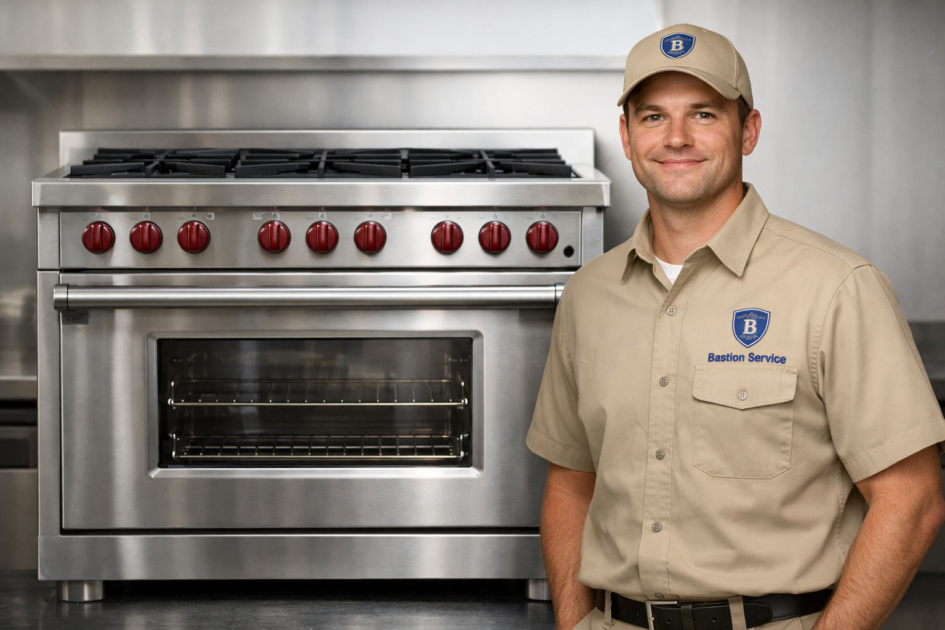
Oven problems rarely stay isolated for long in a working kitchen. When a Wolf unit starts missing temperature targets, heating unevenly, or shutting down mid-cycle, the next step should be service that identifies the fault pattern, confirms the affected components, and helps your team schedule repair around production demands. For businesses in Century City, that approach reduces avoidable downtime and keeps a single oven issue from disrupting prep, timing, and output across the day.
Related commercial service paths in Century City include Wolf Commercial Repair in Century City, Commercial Oven Repair in Century City, and Wolf Range Repair in Century City.
Bastion Service works with Century City businesses that need Wolf oven repair based on actual operating symptoms rather than guesswork. That matters when similar complaints can come from very different causes, such as a bad sensor, unstable control, failing igniter, weak heating circuit, airflow problem, or door seal issue that is quietly affecting temperature recovery.
Common Wolf Oven Symptoms and What They May Mean
Not heating or taking too long to preheat
If the oven does not heat at all, takes far longer than normal to preheat, or stalls below the set temperature, the cause may involve an igniter, heating element, temperature sensor, relay, control board, or incoming power problem. In daily operations, this usually shows up as delayed opening prep, longer cook times, and staff adjusting workflows just to keep tickets moving.
Uneven baking or inconsistent results from rack to rack
When one area cooks faster than another, products come out scorched on one side, or results vary between batches, the issue may be related to calibration drift, fan problems, restricted airflow, a worn gasket, or controls that are no longer regulating heat correctly. These symptoms matter because they affect product consistency before the oven fully fails.
Temperature swings during use
An oven that overshoots, drops heat suddenly, or cycles erratically can create quality problems even if it still appears to be working. This can point to a faulty temperature sensor, control instability, relay failure, or a heating component that operates intermittently under load. If the problem is ignored, what starts as a quality issue can become a shutdown during a busy shift.
Display or control problems
Blank screens, unresponsive keypads, error codes, or settings that do not save properly often indicate interface or board-level faults. In some cases, the heating system is still capable of running, but the control system prevents normal operation or sends inaccurate commands that lead to poor performance.
Shutdowns, trips, or safety-related interruptions
If the unit powers off during operation, trips protection devices, or restarts unpredictably, the cause may involve electrical faults, overheating conditions, failing safety components, or internal control issues. These are high-priority symptoms because continued operation can increase damage and create bigger repair needs.
Door, hinge, or gasket wear
A door that does not close firmly or a seal that leaks heat can make the oven seem weak even when the heating system is still functioning. Heat loss increases recovery time, affects consistency, and places extra strain on components that now have to work harder to maintain temperature.
Why Similar Symptoms Can Lead to Different Repairs
One of the most common repair mistakes is assuming that every heating complaint has the same cause. A Wolf oven that seems to need a new heating component may actually have a sensor reading issue. An oven that appears to be underheating may be losing heat through the door. A unit with uneven results may have a fan or airflow problem rather than a temperature control problem.
That is why diagnosis matters before parts are ordered or major repair decisions are made. For businesses in Century City, the cost of a wrong first repair is not limited to the invoice. It can mean another lost production window, more product waste, and more time spent working around equipment that still is not dependable.
Signs Service Should Be Scheduled Soon
It is usually best to schedule oven service when the problem becomes repeatable, even if the unit still runs part of the time. Waiting often turns a targeted repair into a broader failure. Service should move up in priority when you notice:
- slow or incomplete preheat
- uneven cooking between pans or racks
- unexpected temperature drops during a cycle
- error codes or intermittent display failures
- burning smells or overheating concerns
- door seal problems or loose hinges
- shutdowns during active use
- staff needing repeated workarounds to finish normal output
These symptoms are especially important when the oven is used heavily throughout the day. Repeated operation under unstable conditions can put added strain on controls, fans, igniters, sensors, and other connected components.
What a Service Visit Should Clarify
A useful oven service call should do more than confirm that the unit is malfunctioning. It should narrow the symptom to a probable source, identify whether the issue is isolated or part of a larger wear pattern, and explain how the fault affects heating performance, reliability, and safe use. It should also help your team understand whether the next step is immediate repair, short-term monitored operation, or planning for replacement.
That kind of evaluation is important for Century City businesses where scheduling, menu timing, and staffing can all be affected by a single unreliable oven. The goal is to leave with a defined repair path, not a vague guess about what might be wrong.
Repair Versus Replacement Considerations
Many Wolf oven problems are repairable when the unit is otherwise in solid condition and the failure is limited to a sensor, control, igniter, heating component, fan, relay, or door hardware. Replacement becomes a more serious consideration when breakdowns are frequent, multiple major systems are failing at once, cabinet condition is poor, or the repair path no longer makes sense for the oven’s remaining service life.
The better decision usually comes down to overall condition, parts availability, history of repeat failures, and how much downtime your operation can realistically absorb. In a busy kitchen, even a technically repairable unit may not be the right long-term choice if it has become unpredictable.
Preparing for Wolf Oven Repair in Century City
Before service is scheduled, it helps to note the exact symptom pattern. Useful details include whether the issue happens during preheat or during cooking, whether it affects every cycle or only certain temperature ranges, whether any error codes appear, and whether the problem began after a power interruption, cleaning event, or recent drop in performance. If staff have noticed hot spots, delayed recovery, or random shutdowns, that history can help narrow the likely cause faster.
For Century City businesses, the most helpful repair visit is one that connects the symptom to an actionable next step: identify the fault, explain the business impact, and move toward a repair plan that fits operational timing. When a Wolf oven starts affecting consistency, throughput, or safe operation, timely service is usually the most efficient way to protect workflow and limit further disruption.


