
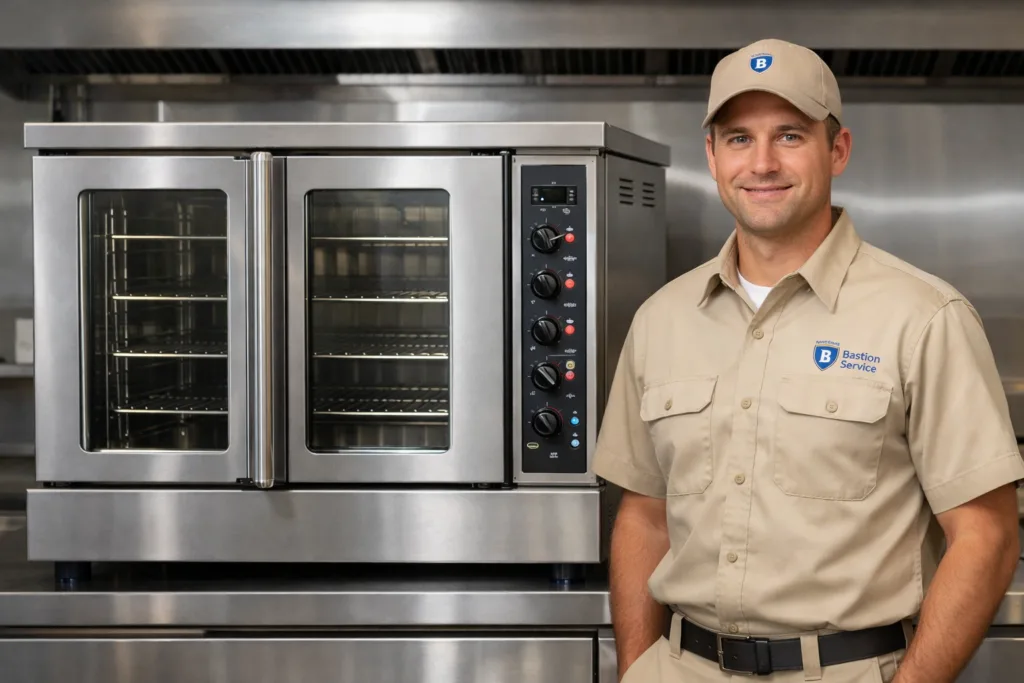




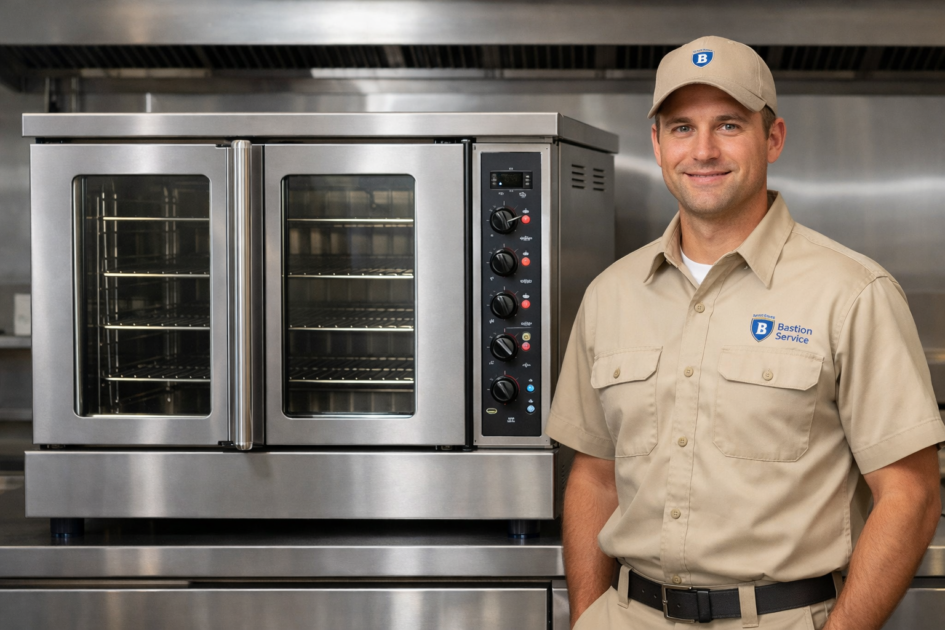
Blodgett oven problems can interrupt prep, slow ticket times, and create avoidable product loss when temperatures are inconsistent or the unit stops holding heat during a busy shift. For businesses in Century City, service is most useful when the symptom is traced to the actual failed component or operating condition, not guessed from the surface complaint alone. Bastion Service handles Blodgett oven repair by connecting what staff are seeing in daily use with the repair path that best restores stable operation and helps reduce further downtime.
Related commercial service paths in Century City include Blodgett Commercial Repair in Century City, Commercial Oven Repair in Century City, and Southbend Oven Repair in Century City.
Why Blodgett ovens develop heating and performance problems
A Blodgett oven works as a system, so one complaint can have several possible causes. An oven that runs cool may have an ignition issue, a sensor problem, weak heat output, a control fault, airflow trouble, or heat loss from a worn door seal. An oven that seems to bake unevenly may actually be dealing with fan performance issues, calibration drift, restricted airflow, or a burner problem that is affecting heat distribution.
That is why symptom-based service matters. The goal is to determine whether the fault is isolated and repairable, whether related parts have been stressed by continued operation, and whether the oven can return to normal production without repeated interruptions.
Common Blodgett oven symptoms and what they often indicate
Not heating or taking too long to preheat
If the oven does not heat, takes much longer than normal to preheat, or never reaches the set point, likely causes can include ignition components, heating elements on electric models, gas supply issues, temperature sensors, relays, or electronic controls. In daily kitchen use, this often shows up as delayed opening prep, longer cook cycles, and pressure on staff to adjust timing manually.
Uneven baking or inconsistent results from rack to rack
Hot spots, pale sections, overbrowning on one side, or the need to rotate pans constantly can point to convection fan problems, sensor drift, airflow restrictions, poor heat circulation, or gasket wear that allows heat to escape. When product consistency changes from batch to batch, the issue is no longer just a quality concern. It becomes an operational problem that affects planning, waste, and customer experience.
Temperature swings during operation
An oven that overshoots temperature, drops too low, or struggles to recover after the door opens may be dealing with sensor inaccuracies, control board issues, failing thermostatic components, or heat retention problems. These symptoms are especially disruptive for kitchens that depend on repeatable results across multiple menu items.
Ignition faults or unreliable startup
If the oven clicks repeatedly, starts inconsistently, or shuts down shortly after ignition, the problem may involve igniters, flame sensing components, burner assemblies, safety devices, wiring, or control failures. Intermittent startup faults are important to address early because they often become less predictable under heavier use.
Control panel issues or error displays
When settings do not respond correctly, temperatures cannot be adjusted, or the display shows faults, the cause may be tied to the user interface, internal controls, wiring, switches, or moisture and heat stress inside the control area. What begins as a minor control glitch can lead to no-heat conditions or unreliable operation if left unresolved.
When to schedule repair instead of waiting
Some ovens fail all at once, but many give warning signs first. It makes sense to schedule service when staff notice:
- slower preheat than normal
- longer cook times without a recipe change
- repeated temperature adjustments to get acceptable results
- unexpected shutdowns during use
- inconsistent browning, baking, or finishing
- unusual fan noise or airflow changes
- startup hesitation or intermittent ignition
- controls that respond inconsistently
These early symptoms often mean the oven is still operating, but not within normal performance. Continuing to run it through daily production can place more strain on related components and make the final repair more involved.
Why continued use can make the repair bigger
When a Blodgett oven is compensating for a failing part, other parts of the system often work harder. A unit that cycles excessively because it cannot regulate temperature properly may over-stress controls or heating components. Poor airflow can create uneven internal temperatures that affect cooking quality and component life. Ignition faults can lead to repeated failed starts, shutdowns, and lost production windows.
If staff are already adapting by rotating pans more often, extending cook times, lowering menu volume, or restarting the oven during service, the equipment is signaling that a repair decision should not be delayed.
Repair decisions should be based on the exact symptom pattern
Effective Blodgett oven repair in Century City is not just about replacing the first part associated with heat loss or startup failure. It should involve checking how the oven behaves under normal use, verifying whether the reported symptom is constant or intermittent, and identifying whether the fault is limited to one assembly or reflects broader wear.
That service approach helps answer practical questions that matter to operators and facility teams:
- Is the problem tied to ignition, heat generation, sensing, airflow, or controls?
- Is the oven safe to continue using before repair?
- Has the issue likely affected neighboring components?
- Is this a targeted repair or a sign of repeated decline?
- What is the most sensible next step for uptime and cost control?
Repair versus replacement
Many Blodgett oven issues are repairable, especially when the problem is isolated to ignition components, sensors, controls, fan-related parts, wiring, or other serviceable wear items. Replacement becomes a more serious consideration when the oven has a history of repeat failures, multiple systems are deteriorating at once, or downtime is becoming more costly than the repair itself.
For Century City businesses, the right choice usually depends on the present fault, the overall condition of the oven, and whether a repair is likely to return the unit to stable day-to-day use. Looking at the full symptom pattern makes that decision more practical and helps avoid spending on a fix that does not solve the underlying problem.
How to prepare for a Blodgett oven service visit
Before service is scheduled, it helps to note what the oven is doing and when the problem appears. Useful details include whether the fault happens during preheat, only after the oven has been running for a while, on every cycle, or only at certain temperature settings. Staff should also note any recent changes such as slower recovery, unusual sounds, error displays, or the need to alter cook times.
That information can make diagnosis more efficient and help separate a steady fault from an intermittent one. If the oven is shutting down unexpectedly, failing to ignite, or producing unreliable cooking results that affect output, it is best to stop relying on workarounds and arrange service before the problem disrupts another shift.
For businesses in Century City, the best next step is to schedule Blodgett oven repair when heating, ignition, control, or temperature problems begin affecting production rather than waiting for a complete failure. A service-focused evaluation can identify what is actually causing the breakdown, clarify whether repair is the right path, and help get the oven back into dependable operation with less disruption to kitchen workflow.


