
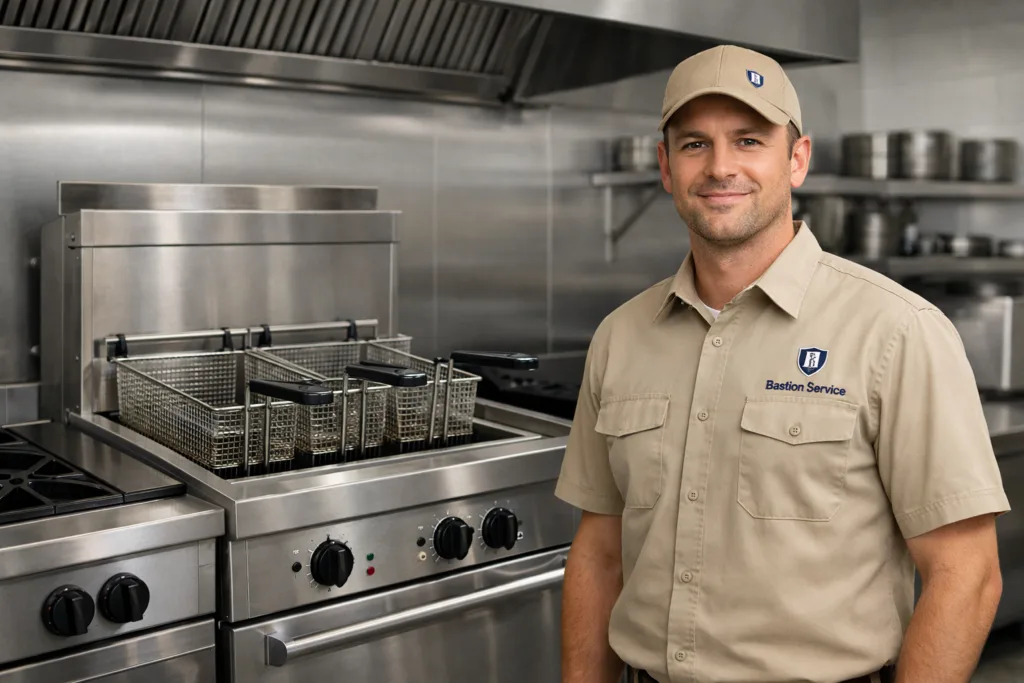




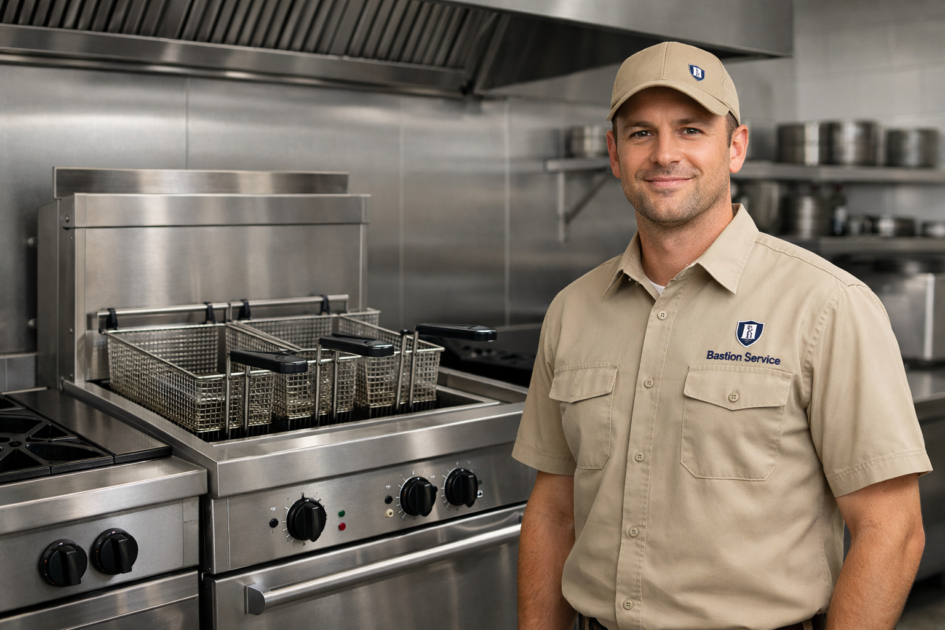
Commercial fryer problems tend to affect more than a single menu item. In a busy Century City kitchen, one unit running below temperature or shutting down mid-shift can slow ticket flow, create product inconsistency, increase oil waste, and force staff to redistribute work across the line. The most useful next step is identifying whether the issue is tied to heat generation, temperature sensing, ignition, controls, gas flow, or electrical supply.
Related commercial equipment paths in Century City include Frymaster Fryer Repair in Century City and Pitco Fryer Repair in Century City.
Common fryer symptoms and what they often mean
A fryer that will not heat at all may have a failed heating element, ignition fault, high-limit issue, contactor problem, blown fuse, or power-supply interruption. Gas models can also lose heat because of burner ignition trouble, flame-sensing faults, or valve-related failure. Electric models may show similar no-heat symptoms when the problem is actually in relays, wiring, or control components rather than the heating assembly itself.
Slow recovery is another common complaint in commercial kitchens. If oil temperature drops too far after each basket and takes too long to recover, the fryer may be dealing with weakened heating performance, restricted gas delivery, sensor drift, dirty burners, scaling, or failing controls. Operators usually notice this first as longer cook times, darker product from extended oil exposure, or uneven results during heavier volume periods.
Temperature swings can be just as disruptive as total failure. When a fryer overheats, undershoots, or cycles unpredictably, the cause may involve the thermostat, temperature probe, high-limit circuit, or control board. In practical terms, that often shows up as food that comes out too dark on one batch and undercooked on the next, even when staff are following the same timing and loading process.
Leaks around the drain, valve, fittings, or tank area should be taken seriously. Oil loss creates cleanup and safety concerns, but it can also signal seal wear, connection failure, or more significant deterioration that needs evaluation before the fryer is returned to regular use. Continued operation with a leak can increase risk to surrounding components and nearby work areas.
Signs the problem may be getting worse
Some fryer issues start small and escalate under production load. A unit that occasionally fails to ignite during prep may stop heating entirely during service. A fryer that seems only slightly slow to recover can become a bottleneck once basket volume increases. If staff are compensating by extending cook times, reducing batch size, restarting the machine, or moving product to another station, the equipment is already outside normal operating range.
Intermittent shutdowns deserve prompt attention. Random resets, breaker trips, error codes, and controls that stop responding can point to unstable electrical connections, failing safety components, overheating controls, or moisture-related issues inside the unit. Even when the fryer comes back on, that does not mean the underlying fault has cleared.
For gas fryers, delayed ignition, rough burner lighting, or failure to stay lit usually indicates a problem that should be tested rather than guessed at. Burner instability can involve igniters, flame sensors, gas valves, airflow conditions, or related safety circuits. Because similar symptoms can come from different sources, replacing parts without diagnosis often leads to repeat downtime.
When fryer symptoms may actually point to another cooking station
In some kitchens, the reported fryer problem turns out to be part of a broader hot-line performance issue. If the symptom involves burner heat and oven temperature at the same time, Commercial Oven Repair in Century City may be the better service path for the equipment creating the larger production delay. Separating fryer-specific faults from wider cooking-line problems helps avoid misdirected repair decisions.
What service should clarify before repair begins
A useful commercial assessment should narrow the issue to the failed system, explain whether the fryer can be operated safely in the meantime, and outline whether repair is likely to restore stable day-to-day performance. That includes checking actual temperature behavior, recovery under load, ignition sequence, safety cutoffs, control response, and any visible signs of wear around oil-handling components.
For Century City businesses, that kind of diagnosis matters because the goal is not simply getting the fryer to power on again. The unit needs to hold set temperature, recover at a workable pace, operate safely through a full shift, and support consistent output without forcing staff into workarounds.
Repair versus replacement
Repair is often the better option when the fault is limited to a definable component or subsystem and the fryer cabinet and tank remain in serviceable condition. Temperature probes, high-limits, igniters, contactors, control parts, wiring issues, and some valve-related failures can often be addressed without replacing the entire unit. Replacement becomes more likely when the fryer has recurring breakdowns, structural wear, significant oil-loss issues, or ongoing problems that keep returning after prior repairs.
The decision should come down to reliability, not just whether the fryer can be made to run for another short stretch. If repair restores predictable heating and safe operation, it may be the right move. If downtime risk remains high even after service, replacement may be the more practical business decision.
Why prompt service protects kitchen workflow
Commercial kitchens depend on repeatable equipment performance. A fryer that runs too hot, too cool, or only intermittently may still appear usable, but it can quietly affect food quality, labor efficiency, and order timing across the shift. Addressing the problem early helps limit wasted product, reduce strain on adjacent stations, and prevent a partial fault from becoming a full outage at the worst possible time.
For operators in Century City, the value of timely fryer service is operational stability: fewer disruptions, more predictable cooking results, and a better chance of keeping the line moving during peak demand.


