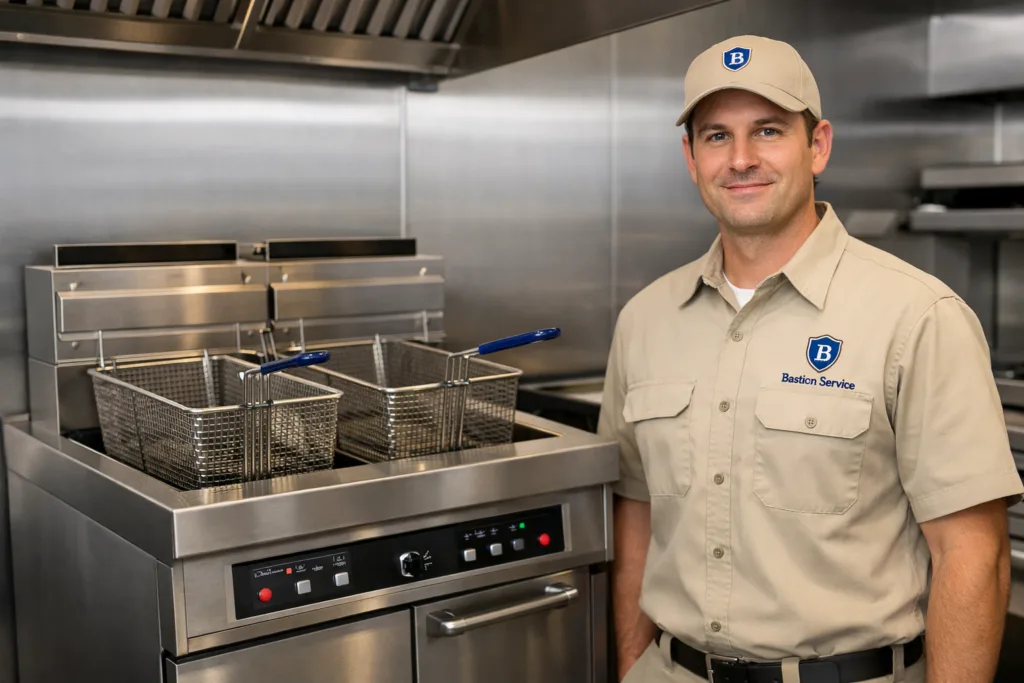




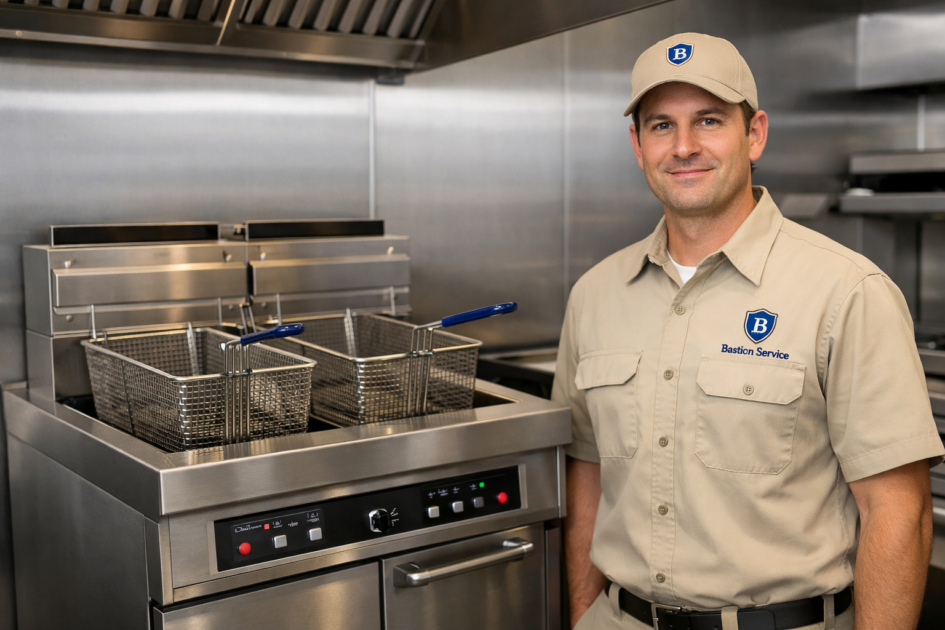
A fryer problem can disrupt more than one menu item. In a busy West Los Angeles kitchen, poor heat recovery, unstable oil temperature, or intermittent shutdowns can slow output, increase waste, and force staff to work around equipment that is no longer performing predictably. Because similar symptoms can come from different failures, the most effective next step is to identify whether the issue is tied to heat production, sensing, controls, ignition, power supply, or a leak affecting safe operation.
Related commercial equipment paths in West Los Angeles include Frymaster Fryer Repair in West Los Angeles and Pitco Fryer Repair in West Los Angeles.
Common fryer symptoms and what they often mean
Many fryer service calls begin with one of a few repeat complaints: no heat, slow recovery after a batch, oil that runs too hot or too cool, repeated high-limit trips, fault codes, ignition trouble, or visible oil leakage. On electric fryers, heating performance issues may trace back to elements, contactors, relays, wiring, or temperature controls. On gas units, the fault may involve ignition components, burners, gas flow, flame sensing, or venting conditions that interfere with normal heating.
Temperature swings are especially disruptive because they affect food quality before the fryer appears fully down. Product may come out too dark, too pale, greasy, or inconsistent from batch to batch. That often points to a thermostat, probe, control board, or calibration problem rather than an oil-management issue alone. When the fryer cannot hold a stable set point under load, the problem usually spreads quickly into timing, consistency, and food cost.
No heat, slow heat, and poor recovery
If the fryer does not heat at all, the cause may be as simple as a failed switch or as involved as a control, safety, or power issue preventing the unit from entering a heat cycle. A fryer that heats only intermittently can be harder to diagnose because it may appear normal during light use and fail during peak volume. That pattern often suggests a weakening component, unstable connection, or control issue that shows up only when the equipment is under demand.
Slow recovery is another common commercial complaint. If oil takes too long to return to temperature after each basket, the kitchen loses speed even when the fryer technically still works. Restricted burner performance, weak elements, sensor drift, or control problems can all create that symptom. If the problem involves burner heat and oven temperature concerns elsewhere on the cooking line, Commercial Oven Repair in West Los Angeles may be the better service path for that separate equipment issue.
Shutdowns, fault codes, and safety trips
A fryer that shuts off during service should not be treated as a minor inconvenience. Repeated safety-limit trips, error messages, or resets usually indicate an underlying fault that needs direct testing. In some cases, the unit is overheating because it is reading temperature incorrectly. In others, the fryer is failing to sustain heat and the control system is reacting to an ignition or component problem. Either way, repeated resets tend to delay proper repair while increasing the chance of a more expensive failure.
Power issues can also be misleading. A fryer that will not turn on is not always suffering from a catastrophic internal problem. The fault may be in incoming power, fuses, wiring, contactors, or interlocks that keep the unit from operating when a safety condition is not met. For gas equipment, ignition failure or unstable flame performance should be addressed promptly because it affects both reliability and normal production flow.
Signs the fryer is affecting food quality
Commercial fryer trouble is not always obvious at first glance. Kitchens often notice the results before they identify the equipment fault. Cook times may lengthen, breading may brown unevenly, finished product may lose crispness, or oil may seem to break down faster than expected. While operations sometimes assume these are training or oil-handling issues, they frequently connect back to inconsistent heat delivery or poor temperature control inside the fryer.
These performance shifts matter because they reduce output even before a full shutdown occurs. A fryer that remains online but no longer cooks consistently can create remakes, slower ticket times, and uneven product from one station to the next. Addressing the equipment issue early is often less disruptive than waiting for a complete loss of heat during service.
Oil leaks and physical wear should not be ignored
Oil around the drain, fittings, valve area, or beneath the cabinet deserves prompt inspection. Leaks may result from worn seals, drain problems, loose connections, or more serious structural wear. Continuing to run a leaking fryer can increase safety risk, create cleanup burdens, and allow a repairable issue to spread into adjacent components or surrounding equipment areas.
Physical wear also matters when evaluating long-term reliability. Corrosion, damaged controls, loose handles, unreliable doors, or evidence of repeated overheating may indicate that the fryer has been operating under strain for some time. Even when the immediate complaint is temperature-related, the broader condition of the unit helps determine whether repair is likely to restore dependable daily use.
When service should move up in priority
Service becomes more urgent when the fryer cannot maintain temperature during normal volume, takes too long to recover, trips limits, leaks oil, fails ignition repeatedly, or produces inconsistent cooking results across the same product. These are operational issues, not minor inconveniences. They affect throughput, labor efficiency, food quality, and the kitchen’s ability to maintain a reliable pace.
It also makes sense to schedule evaluation sooner when staff have begun adjusting procedures to compensate for the equipment. If cooks are rotating product between fryers, extending cook times, lowering batch size, or resetting the unit during service, the equipment is already affecting workflow. That is usually the point where a targeted repair visit provides more value than continued workarounds.
Repair or replacement depends on the full condition of the unit
The decision between repair and replacement usually comes down to the fryer’s age, overall condition, service history, parts requirements, and role in the kitchen. If the fault is isolated to a control, ignition component, heating part, sensor, valve, or other specific system, repair is often the sensible option. If the fryer has multiple recurring issues, broad cabinet wear, chronic leakage, or declining reliability across several systems, replacement may deserve serious consideration.
Downtime cost matters as much as parts cost. A high-volume fryer supporting core menu items may justify faster intervention because even moderate performance loss can affect the entire line. A lower-use backup unit may allow more flexibility, but unresolved issues still tend to worsen over time, especially when heat and safety components are involved.
How fryer issues relate to the rest of the cooking line
In some kitchens, equipment problems appear to overlap because production slows across multiple stations at once. Even so, fryer diagnosis should stay focused on the fryer’s own heating, sensing, ignition, drain, and safety systems. Looking at the exact symptom pattern helps prevent confusion between a fryer fault and a separate issue elsewhere on the line.
That matters in commercial settings where several cooking appliances operate side by side. A delayed ticket may start at the fryer, or it may trace to another station entirely. Separating those symptoms clearly helps businesses in West Los Angeles choose the right repair path without blending unrelated equipment problems into one service call.
What a productive service visit should accomplish
A worthwhile commercial fryer repair process should do more than get the unit heating again for the moment. It should identify why the failure happened, whether related parts have been stressed, and whether the fryer can return to dependable operation under real kitchen demand. That gives management a more useful basis for deciding whether to proceed with repair, monitor the unit, or plan for replacement.
For businesses in West Los Angeles, the goal is stable cooking performance, safe operation, and equipment that supports daily volume without repeated interruptions. When the cause of the problem is defined correctly, repair decisions become easier, downtime is easier to manage, and the kitchen can return to more predictable service.