
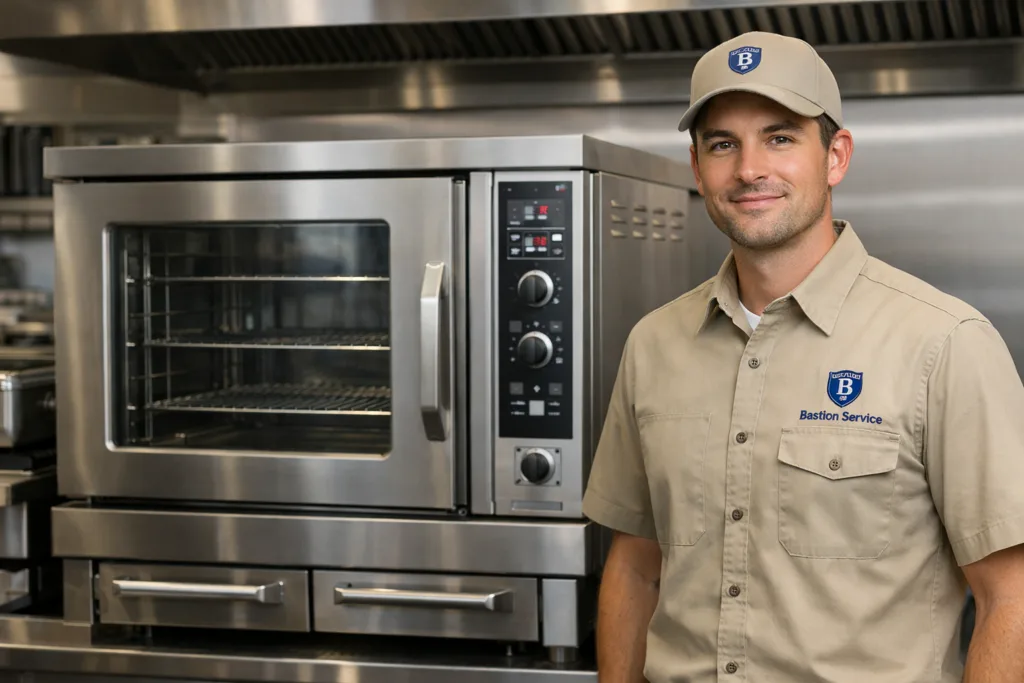




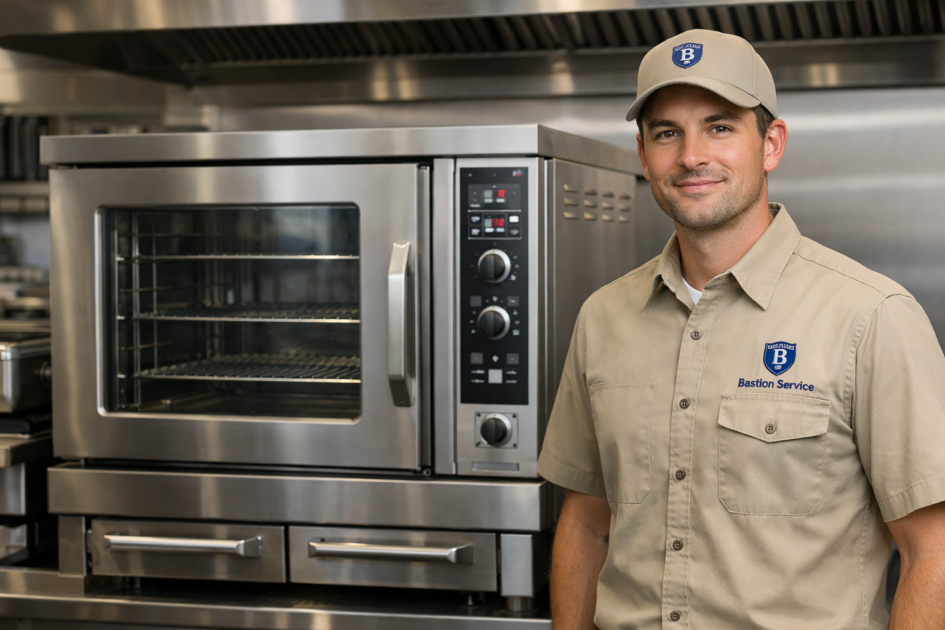
Temperature consistency matters more than many kitchens realize until product quality starts drifting. A commercial oven that preheats slowly, overshoots the set point, or leaves hot and cool zones inside the cavity can disrupt prep timing, ticket flow, and batch reliability. In West Los Angeles, that often means a problem is no longer just about one appliance—it is affecting labor, food cost, and service pace at the same time.
Related commercial equipment paths in West Los Angeles include Blodgett Oven Repair in West Los Angeles and Southbend Oven Repair in West Los Angeles.
Common commercial oven problems and what they can indicate
Most service calls begin with a few recognizable symptoms: not heating, weak heat, uneven baking, repeated shutdowns, error displays, or controls that do not respond normally. Those complaints can come from very different failures depending on the oven design. The issue may involve heating elements, igniters, temperature sensors, thermostats, relays, contactors, convection fans, door gaskets, hinges, or wiring that interrupts stable operation.
Uneven results are a good example of why testing matters. One oven may have a failing sensor that misreads cavity temperature, while another may be losing heat through a worn door seal or suffering from poor air circulation. When the unit cycles incorrectly, staff may compensate by rotating pans, extending cook times, or opening the door more often, which usually makes consistency worse rather than better.
Heating, ignition, and control-related symptoms
If an oven does not start, drops temperature during use, or shuts off in the middle of production, the failure may be electrical, ignition-related, sensor-related, or tied to the control system. Intermittent problems deserve attention early because they are harder on operations than a complete stop; staff may think the unit is back online, only to lose another cycle during a busy period.
For gas equipment, delayed ignition, weak flame performance, or repeated failed starts should not be treated as routine wear. If there is a strong or persistent gas odor, stop using the unit and address safety immediately. When the issue is heat-related across multiple cooking stations, especially with oil-based equipment on the line, Commercial Fryer Repair in West Los Angeles may be the better service path for the affected unit.
Signs continued use may increase downtime
Some oven problems stay relatively contained for a short time, but others tend to spread. A damaged gasket can force the oven to run longer and harder. A weak fan motor can create uneven cooking and place more strain on controls and heating components. Intermittent power loss, arcing, or repeated breaker trips can turn a limited repair into a larger electrical failure if the unit keeps being reset and used.
Overheating and underheating also create hidden costs. Product waste, recooks, delayed service, and staff workarounds can add up quickly in a commercial kitchen. When operators are constantly adjusting time and temperature to compensate for unreliable performance, the oven is already affecting output enough to justify service.
Repair versus replacement considerations
Not every oven with a temperature or ignition problem needs to be replaced. Many issues are tied to serviceable parts such as sensors, igniters, switches, relays, control components, fan motors, or door hardware. In those cases, repair can be the most practical decision if the rest of the unit is structurally sound and parts support is still reasonable.
Replacement becomes a more serious consideration when breakdowns are recurring, the control system has a pattern of failure, the cabinet or interior is deteriorating, or parts lead times make repeat downtime too disruptive. For a business in West Los Angeles, the right decision usually depends on whether the problem appears isolated or whether the oven is showing broader wear that will continue to interrupt production even after the immediate fault is fixed.
Operational clues that help narrow the diagnosis
The timing of the symptom often says a lot. If the oven struggles only during preheat, the problem may point toward heat generation or ignition. If it reaches temperature but cannot hold it, the cause may involve sensing, airflow, door sealing, or control response. If the failure appears only after the unit has been running for a while, heat-related electrical weakness or control instability may be more likely.
It also helps to note whether the issue affects every rack position, every menu item, or only certain loads. Inconsistent browning, longer cook times on one side, or results that change from batch to batch can all help separate product-loading issues from equipment faults. Those details make service more efficient because they reduce guesswork and help focus on the components most likely to be causing the problem.
What a useful service visit should clarify
A productive commercial oven diagnosis should identify what failed, what supporting wear is present, and whether the unit can realistically return to normal kitchen demands after repair. That includes checking temperature response, control behavior, ignition or heating performance, fan operation, door condition, and the overall reliability of the affected system.
For businesses trying to protect uptime, the goal is not just to get the oven running again for the moment. The real value is understanding whether the repair is likely to restore dependable performance or whether the equipment is entering a pattern of repeated interruption that calls for a broader operating decision.


