
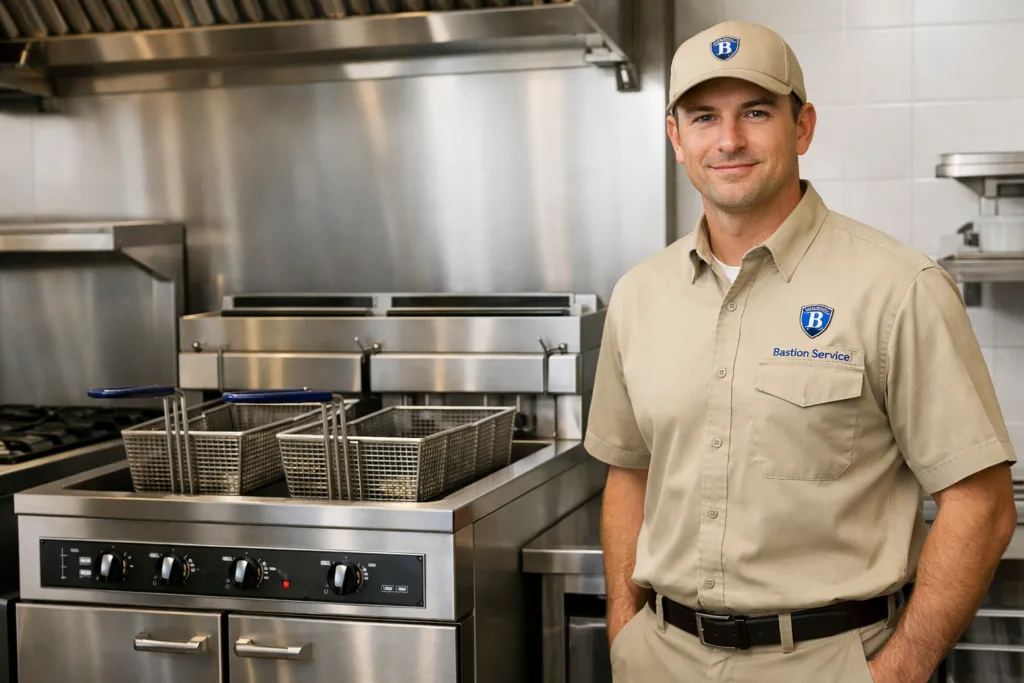




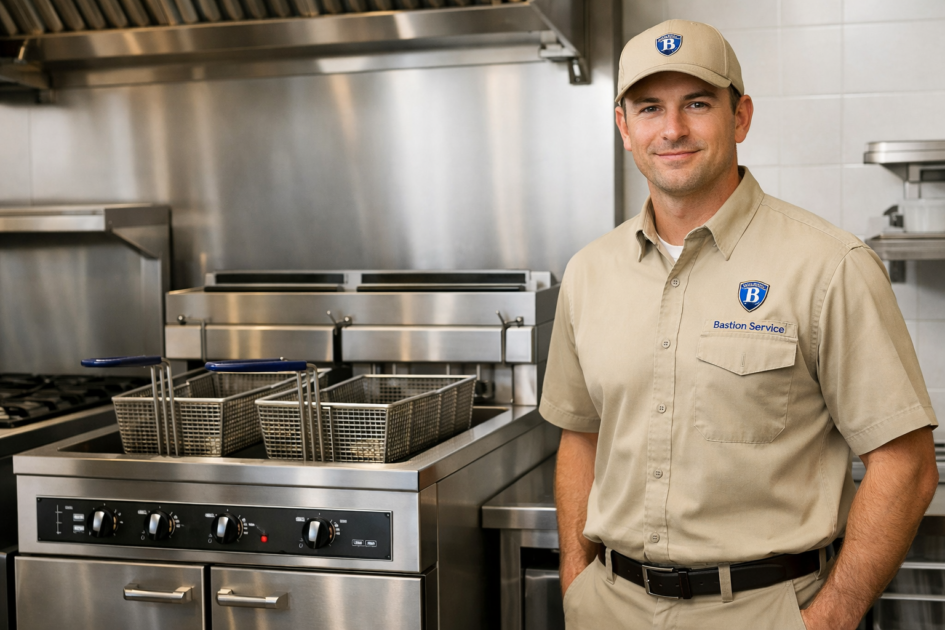
In a busy kitchen, fryer problems show up fast in ticket times, food consistency, and staff workflow. A unit that heats slowly, overshoots temperature, or drops too far between batches can hold up the entire line. The most useful first step is separating whether the fault is tied to the heat source, sensing system, controls, filtration, or the electrical or gas supply feeding the unit.
Related commercial equipment paths in Rancho Palos Verdes include Frymaster Fryer Repair in Rancho Palos Verdes and Pitco Fryer Repair in Rancho Palos Verdes.
Common fryer problems and what they often mean
Temperature complaints are among the most frequent service calls. If oil never reaches set temperature, recovery lags after each basket, or the fryer cycles too aggressively, the issue may involve heating elements, burners, thermostats, probes, contactors, airflow restrictions, or control drift. Similar symptoms can come from very different failures, which is why testing matters more than swapping parts based on guesswork.
Units that shut down during operation often point to safety-limit trips, ignition faults, wiring issues, poor combustion, or overheating caused by residue buildup and restricted circulation. Intermittent operation can be especially disruptive because the fryer may appear normal at startup, then fail only after it has been under production load for a while.
Startup problems also deserve prompt attention. A fryer that will not power on, will not ignite, or loses flame intermittently may have worn ignition components, failed switches, loose connections, control board faults, or supply issues that need to be isolated methodically. If the symptom involves burner heat and oven temperature at the same time, Commercial Oven Repair in Rancho Palos Verdes may be the better service path for that additional equipment.
Leaks, smoke, and filtration issues
Oil leaks around the drain valve, fittings, or lower cabinet area should be addressed quickly. Even a small leak can create cleanup issues, slip hazards, and avoidable strain on staff during peak production. In some cases the source is a worn seal or valve component, while in others it may reflect deeper wear in connected assemblies.
Smoke is not always caused by a failed fryer component, but it can be linked to poor temperature regulation, inaccurate sensing, old oil conditions, or burners operating outside normal range. Slow or incomplete filtration may point to pump issues, clogs, damaged lines, switch failures, or electrical problems that prevent the filtration system from operating correctly.
Signs the fryer is affecting business operations
Not every fault appears as a complete shutdown. Some of the most expensive problems are the ones that quietly reduce output: longer recovery times, uneven cooking color, inconsistent crispness, frequent manual resets, and staff adjusting cook times just to compensate for unreliable heat. Those symptoms usually mean the equipment is no longer performing predictably enough for commercial volume.
In Rancho Palos Verdes, kitchens often need service when fryer performance starts affecting timing across multiple stations. When one fryer falls behind, production can shift to other equipment, creating bottlenecks and quality problems elsewhere on the line. That makes early repair planning worthwhile even before the unit fails completely.
When repair makes sense and when replacement should be discussed
Repair is often the practical option when the issue is limited to controls, thermostats, sensors, ignition parts, switches, wiring, contactors, filtration components, or other serviceable assemblies. If the tank and core structure remain sound, many heating and control problems can be addressed without replacing the entire unit.
Replacement becomes more realistic when the fry tank is compromised, failures are spreading across multiple major systems, parts support has become unreliable, or repeated downtime is costing more than a planned equipment change. For a commercial kitchen, the decision is not only about repair cost today, but also about future reliability, scheduling risk, and whether the equipment still fits the production load.
What a proper fryer diagnosis should include
A thorough evaluation should confirm whether the main fault is in heat generation, ignition, temperature sensing, controls, electrical feed, gas operation, or oil-handling components. It should also identify secondary wear that may not be the original cause of the breakdown but could shorten the life of the repair if left unaddressed.
That matters because the same complaint can have very different causes. For example, “not heating” might mean a failed element, a bad high-limit, a control issue, a burner ignition problem, or a power-supply fault. “Overheating” could point to probe inaccuracy, thermostat failure, relay problems, or control logic issues. Accurate diagnosis helps businesses make informed decisions on parts, timing, and expected reliability after service.
Operational issues that should not be ignored
Repeated safety cutoffs, scorched product, fluctuating oil temperature, delayed ignition, and visible leaks are all signs to stop treating the problem as minor. Continued operation under those conditions can increase wear on related components and make a straightforward repair more involved. In high-output environments, even intermittent symptoms can quickly turn into a full interruption of service.
For Rancho Palos Verdes businesses, the goal is not just getting the fryer running again for the day. It is making sure the unit returns to stable, repeatable performance so managers can plan around real equipment condition rather than constant workarounds on the line.


