
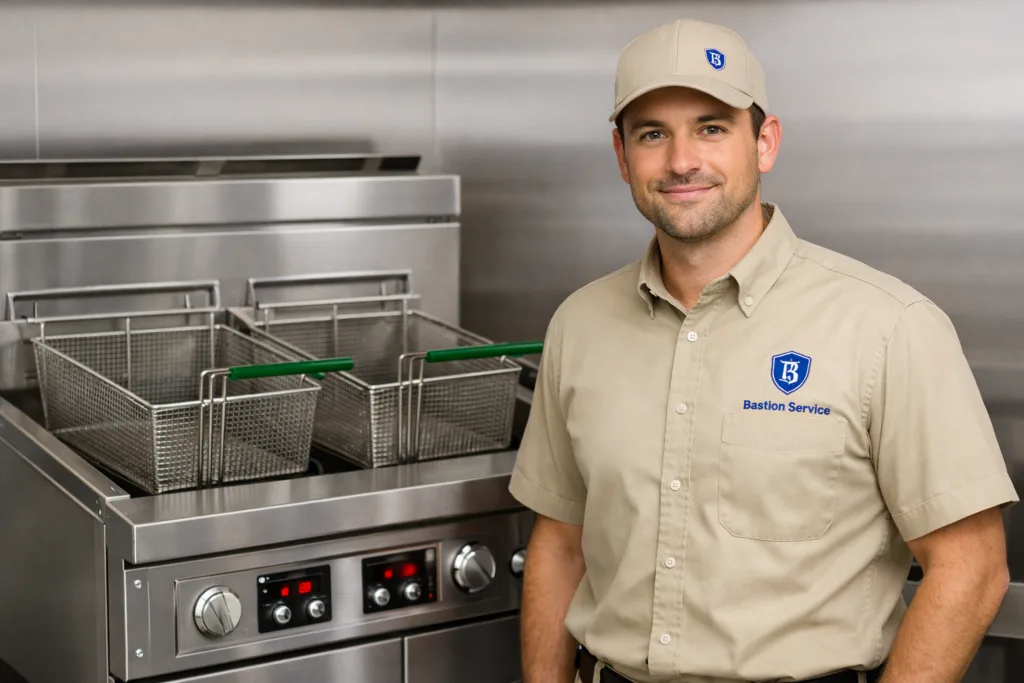




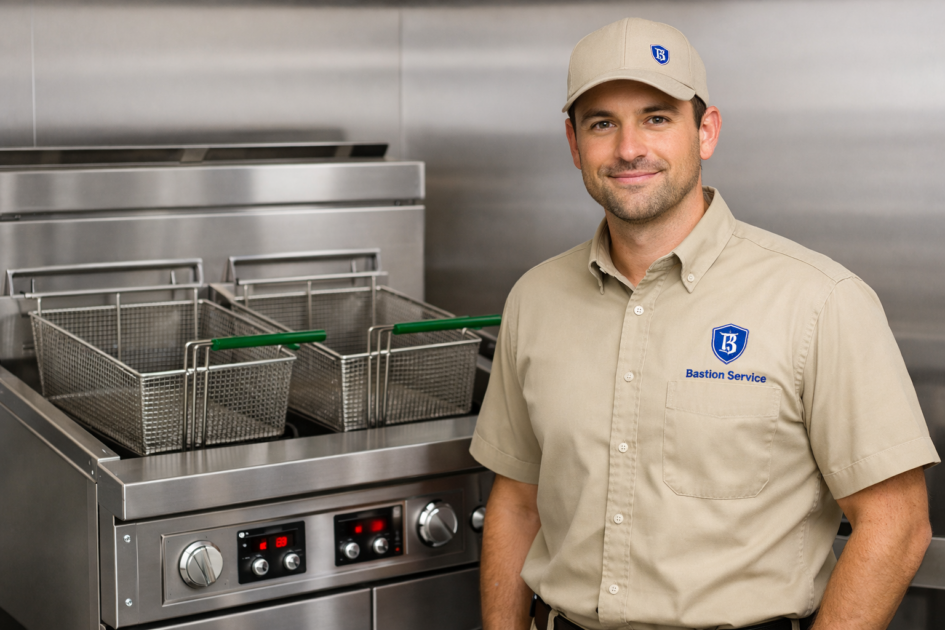
Fryer problems can disrupt ticket flow quickly, especially when the unit starts lagging during rush periods or stops holding a stable cooking temperature. For businesses in Rancho Palos Verdes, service should focus on what the fryer is doing in real operating conditions, whether that means no heat, weak recovery, repeated shutdowns, or controls that no longer respond the way they should. Bastion Service handles Pitco fryer issues by tracing the symptom to the failed component or operating condition before repair work is planned.
Related commercial service paths in Rancho Palos Verdes include Pitco Commercial Repair in Rancho Palos Verdes, Commercial Fryer Repair in Rancho Palos Verdes, and Frymaster Fryer Repair in Rancho Palos Verdes.
Common Pitco fryer symptoms and what they can indicate
No heat or failure to reach set temperature
When a Pitco fryer will not heat at all, or heats only partway and then stalls, the problem may involve the ignition system, gas valve, temperature sensing, high-limit safety, wiring, or the control board. In some cases, the fryer may appear to start normally but never build enough heat to become usable. That usually points to a fault that needs testing under actual startup and heating conditions rather than a parts guess.
Slow recovery between batches
If oil temperature drops hard after loading product and takes too long to recover, output and consistency both suffer. Recovery problems can come from weak burner performance, restricted airflow, sensor inaccuracies, control issues, heavy wear, or heat-transfer problems caused by buildup. Staff often notice this first when the fryer can no longer keep pace with normal demand.
Oil temperature swings
A fryer that runs too hot, too cool, or cycles unevenly can cause undercooked product, overbrowning, and shorter oil life. Temperature swings may be tied to the probe, calibration drift, control faults, relay issues, or burner behavior that is no longer stable. When the setpoint does not match actual oil temperature, the issue should be addressed before it affects food quality and daily workflow further.
Ignition problems and burner instability
Ignition failure, delayed lighting, intermittent flame, or shutdowns after startup are all signs that the fryer needs prompt attention. These symptoms may involve ignitors, flame sensing, wiring, gas delivery, or safety circuits. Repeated failed starts are more than an inconvenience; they can leave the fryer unreliable during busy periods and create a larger repair if the underlying cause is ignored.
Control faults and error conditions
Unresponsive buttons, inaccurate displays, inconsistent programming, or repeated fault codes can all point to a control-side issue. Sometimes the problem is the board itself. In other cases, the control is reacting to a sensor, high-limit, ignition, or electrical fault elsewhere in the fryer. Good diagnosis matters because a display problem and a heating problem can overlap.
Leaks, drainage issues, and visible wear
Oil leaks around fittings, drain components, or lower cabinet areas should be checked quickly. A leaking fryer can affect safety, cleanup time, and daily use. If leakage appears alongside heating or control symptoms, it is usually better to review the fryer as a whole instead of treating each issue separately. Broader wear can change whether repair is the right next step.
Why a Pitco fryer may stop heating or recover poorly
Poor heating performance usually comes down to one of a few categories: ignition failure, weak burner operation, inaccurate temperature sensing, control miscommunication, or a safety device interrupting normal operation. The difficulty is that these problems can look similar from the operator side. A fryer that recovers slowly may have a completely different root cause than one that overshoots temperature and then shuts down.
That is why symptom history helps. If the unit struggles only under load, the service approach may be different than with a fryer that fails at startup. If the fryer reaches temperature but cannot hold it, the diagnosis needs to focus on regulation and cycling. If the fryer never lights consistently, attention shifts toward ignition sequence, flame proving, and related components.
- Fryer does not heat at all
- Heats slowly and falls behind during peak periods
- Overshoots or undershoots the programmed temperature
- Cycles on and off too often
- Shuts down mid-shift
- Shows control or ignition faults during startup
When to schedule service
It makes sense to schedule repair when the fryer begins showing repeated performance issues, even if it is still partially operating. Waiting for a complete failure can turn a manageable repair into a longer outage. If staff are adjusting cook times to compensate, restarting the fryer repeatedly, or avoiding one vat because it cannot be trusted, the equipment is already affecting operations.
For Rancho Palos Verdes businesses, the most useful time to act is usually when the symptom pattern becomes repeatable. A fryer that intermittently loses flame, takes too long to recover, or drifts off temperature should be evaluated before it disrupts service windows more seriously.
What a service visit should evaluate
A focused fryer repair visit should stay centered on actual performance, not just the first visible failure. That includes checking startup behavior, burner response, flame stability, oil temperature accuracy, recovery time, high-limit operation, and the condition of controls and wiring. If the fryer has more than one symptom, those problems should be evaluated together because they may share the same cause.
A thorough assessment may also help answer whether the issue is isolated to a replaceable component or whether the unit is showing a broader pattern of age and wear. That distinction matters when deciding how far to go with repair planning.
Repair versus replacement considerations
Many Pitco fryer problems are repairable when the main structure is still in solid condition and the failure is tied to serviceable parts such as ignition components, sensors, controls, valves, or related electrical items. Replacement becomes a more serious discussion when the fryer has major physical deterioration, multiple overlapping failures, or a repair outlook that does not support stable operation going forward.
The best decision is rarely based on one symptom alone. It should account for the current failure, recent repair history, how often the fryer is used, and whether restoring the unit will realistically reduce repeat downtime.
How to prepare before the technician arrives
Helpful details from staff can speed up diagnosis. Note whether the fryer fails at startup, during recovery, or after reaching temperature. Pay attention to whether the issue affects every shift or only high-volume periods. If there are display messages, shutdown patterns, or unusual burner behavior, that information can help narrow the fault faster.
- When the problem first started
- Whether the fryer heats at all or only partially
- If the issue appears during startup or during active cooking
- Any visible leaks, odd smells, or repeated resets
- Whether temperature inconsistency is affecting product quality
If your Pitco fryer is causing downtime, slower output, or inconsistent cooking results in Rancho Palos Verdes, the next step is to schedule service around the exact symptoms the unit is showing now. A repair decision based on tested performance is usually the fastest way to restore reliable operation and avoid more disruptive failure during normal business hours.


