
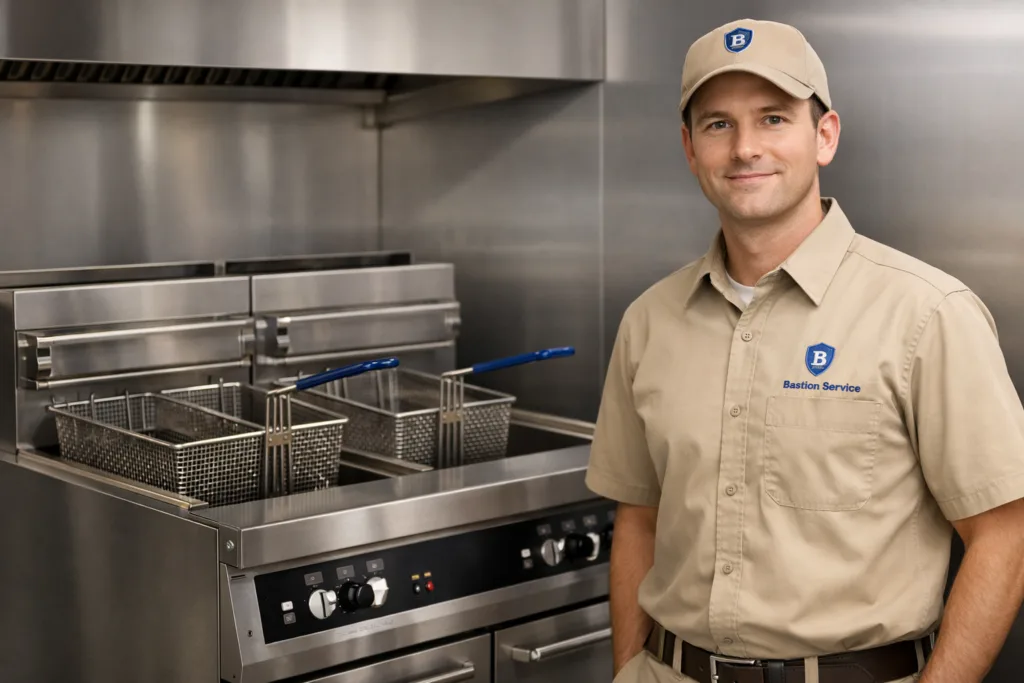




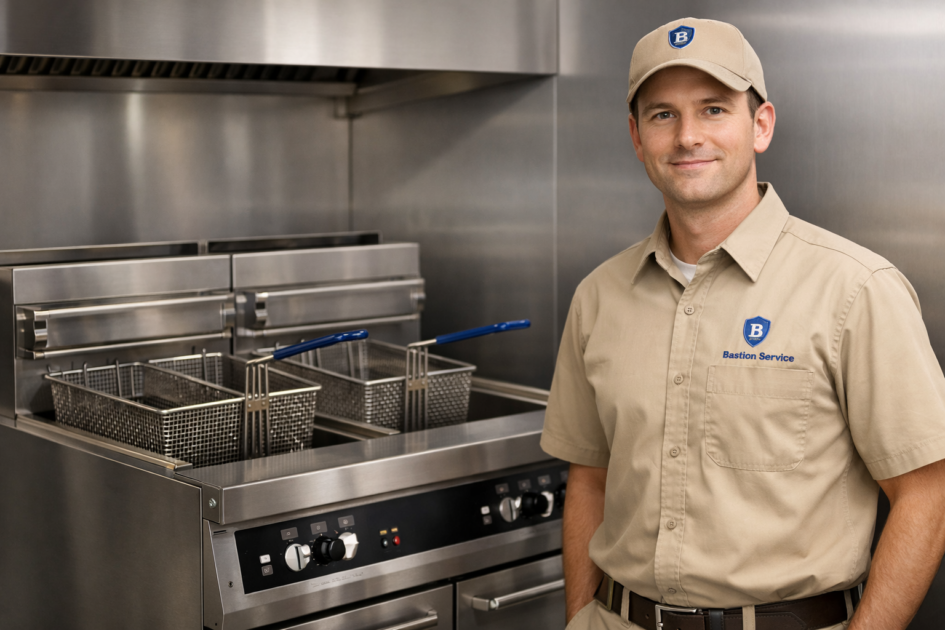
Fryer downtime can slow ticket flow, disrupt prep timing, and create inconsistent food quality long before a unit fully stops running. For businesses in Rancho Palos Verdes, service usually goes more smoothly when the symptom pattern is documented early and the repair visit is focused on what the fryer is actually doing: not heating, recovering slowly, overshooting temperature, locking out, leaking oil, or dropping out during use. Bastion Service handles Frymaster fryer repair with that service-first approach so the problem can be traced, tested, and scheduled around real operating needs.
Related commercial service paths in Rancho Palos Verdes include Frymaster Repair in Rancho Palos Verdes, Commercial Fryer Repair in Rancho Palos Verdes, and Pitco Fryer Repair in Rancho Palos Verdes.
Why a Frymaster fryer may stop heating or recover too slowly
A fryer that does not heat, takes too long to recover between batches, or struggles to hold oil temperature can affect output almost immediately. In day-to-day kitchen use, this often shows up as longer cook times, pale or greasy product, inconsistent browning, or staff adjusting cook routines to compensate for equipment behavior.
Several different faults can produce similar symptoms. Depending on the model and fuel type, the problem may involve the ignition sequence, burners, heating elements, temperature sensors, controls, safety limits, wiring, or power supply issues. Because those failures can overlap, a slow-recovery complaint should be treated as a repair issue rather than a simple performance annoyance.
Common signs of a heat or recovery problem
- The fryer powers on but oil does not reach set temperature
- Heat-up takes noticeably longer than normal
- Recovery between baskets is too slow for production needs
- Oil temperature drops hard and struggles to climb back
- Finished food comes out uneven from one cycle to the next
When these symptoms are present, the key repair question is not just whether the fryer heats at all, but whether it heats correctly, safely, and consistently enough for daily use.
Ignition, burner, and startup problems
On gas Frymaster units, ignition-related trouble often begins as an intermittent startup issue. The fryer may attempt to light and fail, take longer than usual to fire, or run for a period and then shut down unexpectedly. In some kitchens, the first clue is that the fryer works in one shift and acts up in the next.
Burner problems can also affect oil recovery even when the unit still appears to be operating. Weak flame performance, poor ignition consistency, flame-sensing issues, or gas-valve faults may reduce heating efficiency before they lead to a total no-heat condition. If staff notice repeated resets, delayed startup, or frequent lockouts, service should be scheduled before the unit becomes unreliable during production.
Symptoms that often point to ignition-related faults
- Clicking or startup attempts without normal heating
- Burners that fail to stay lit
- Intermittent shutdowns during active use
- Lockout conditions after failed ignition attempts
- Heat that returns temporarily after restarting the fryer
Oil temperature swings, overheating, and hi-limit trips
A fryer that runs too hot can be just as disruptive as one that does not heat enough. Excessive oil temperature shortens oil life, changes product consistency, and raises concern about safe operation. If a Frymaster fryer is overshooting set temperature, tripping the hi-limit, or cycling unpredictably, the issue may involve temperature sensing, calibration drift, control failure, or a fault in how the unit is regulating heat.
These problems are often first noticed through food quality. Product may brown too quickly, cook unevenly, or come out darker than expected even when procedures have not changed. Repeated hi-limit trips should not be treated as normal interruptions. They are a sign that the fryer needs attention before the problem leads to more serious downtime.
Control faults, display errors, and unexpected shutdowns
Modern fryer performance depends heavily on responsive controls and accurate feedback from sensors and related components. If the display shows fault codes, the control panel stops responding, settings do not hold, or the fryer resets on its own, the cause may not be obvious from the message alone. A recurring code can point to a sensor issue, communication fault, board problem, wiring defect, or power-related failure.
Unexpected shutdowns are especially disruptive because they interrupt production without warning. When a unit drops out during service and then comes back after a reset, it is easy to assume the problem has passed. In practice, that pattern usually means the underlying fault is still present and likely to return at the worst time.
Leaks, drain issues, and filtration-related service concerns
Oil under the fryer, seepage around fittings, or trouble draining and filtering should be addressed promptly. These issues affect more than cleanliness. They can create slip hazards, complicate routine maintenance, and interfere with normal workflow around the fryer station.
Depending on the condition of the unit, the source may involve valves, seals, lines, fittings, or filtration components. Hot oil systems should not be treated casually, especially if staff are working around a leak while trying to keep production moving. If the fryer is losing oil, draining poorly, or creating repeated filtration trouble, repair is usually the safer and more cost-effective next step.
When a symptom is more serious than it first appears
Some fryer problems start small and then accelerate. A unit that is only a little slow to recover today may become a no-heat call during a busy shift. A control fault that clears after a restart may return more often until the fryer becomes unusable. An oil leak that looks minor can spread and create operational and safety concerns.
It is usually time to stop pushing the fryer through service when you notice any of the following:
- Repeated hi-limit trips or overheating
- Frequent shutdowns and restarts
- Ignition failures that are becoming more common
- Persistent temperature instability
- Visible oil leaks around the unit
- Staff changing routines to work around fryer behavior
When operators are compensating manually for inconsistent performance, the equipment is already affecting labor efficiency and output quality.
What diagnosis helps determine before parts are replaced
Fryer symptoms often overlap, which is why replacing a single visible part without testing the full failure path can waste time and money. Slow recovery, for example, might be caused by a heating fault, a sensing problem, a burner issue, or a control problem. A shutdown complaint may involve safety devices, electrical supply, ignition behavior, or board communication rather than one isolated component.
Diagnosis helps determine whether the issue is limited to one repair, whether other parts have been affected, and whether the fryer is likely to return to stable service after the correction is made. That matters for kitchens in Rancho Palos Verdes that need to plan around staffing, prep volume, and the impact of even short equipment interruptions.
Repair or replace: how businesses usually make the call
Many Frymaster fryer problems are repairable, especially when the unit is otherwise in solid operating condition and the fault is clearly identified. Repair is often the better option when the issue is tied to ignition, temperature control, sensors, electrical components, or serviceable oil-management parts and the fryer still fits the kitchen’s production needs.
Replacement becomes more likely when the fryer has a long pattern of unrelated failures, significant wear, growing downtime, or repair costs that no longer make sense for its overall condition. The practical decision usually comes down to whether the unit can return to dependable daily use without continued interruption.
Preparing for a Frymaster fryer service visit
A few details can make service more efficient. Before scheduling, it helps to note whether the fryer is fully down or still operating intermittently, what error messages appear, whether the problem started suddenly or gradually, and whether the issue happens during heat-up, recovery, filtering, or extended use. If the fryer overheats, leaks, or repeatedly shuts down, that should be reported clearly when booking service.
For businesses in Rancho Palos Verdes, the most useful next step is to schedule repair when the fryer begins affecting production rather than waiting for a complete failure. A symptom-based service call can help determine what has failed, what needs immediate attention, and whether the unit can be restored to stable operation without unnecessary delay.


