
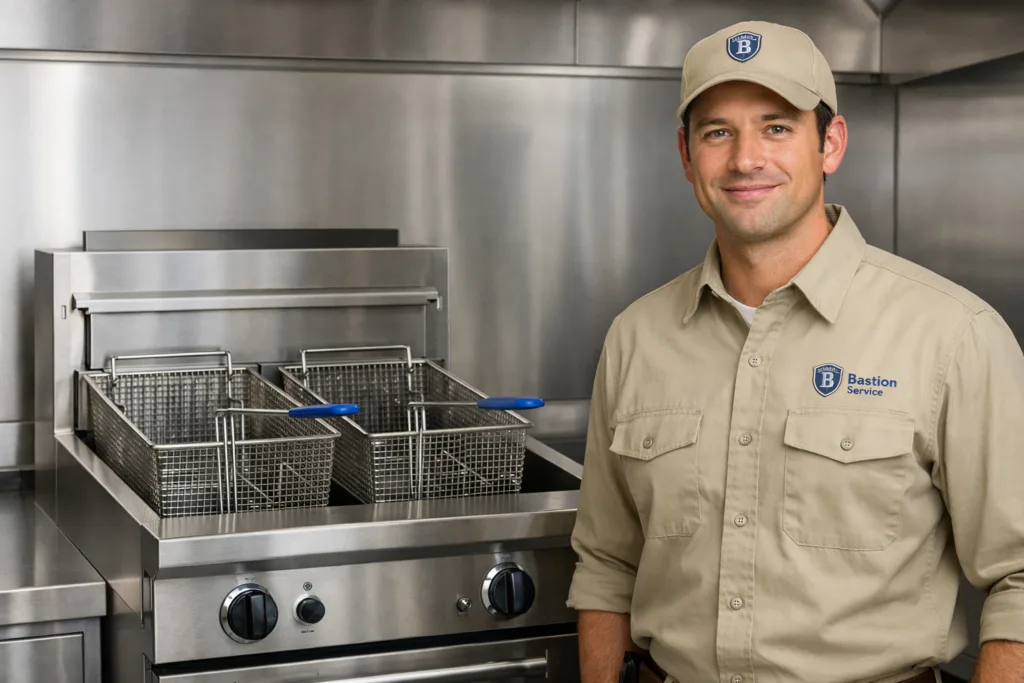




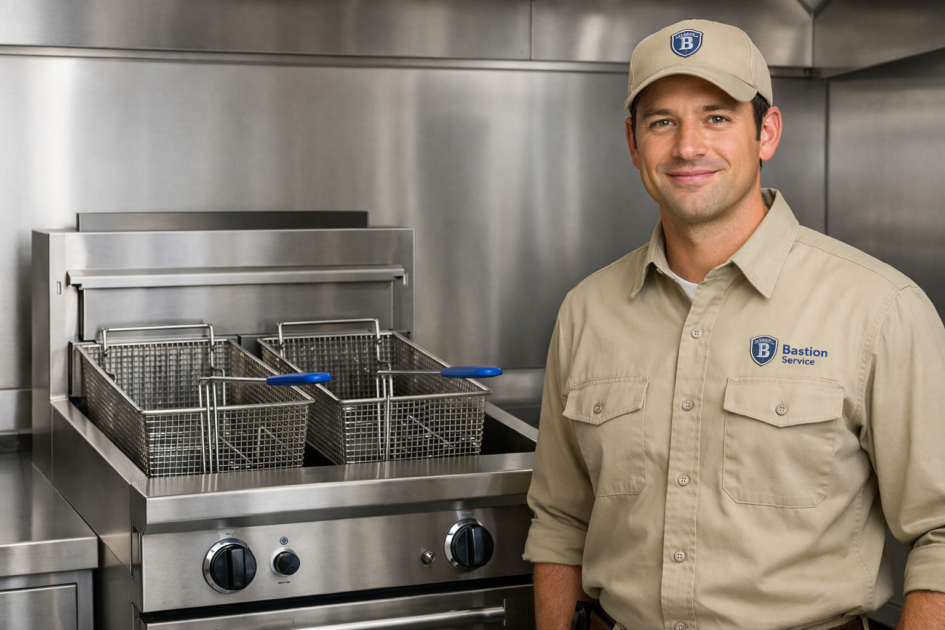
Fryer problems usually show up first in production: slower ticket times, uneven color, longer recovery between batches, or a unit that suddenly stops heating during service. For businesses in Rancho Palos Verdes, the right next step is to have the problem tied to the actual failed system rather than guessing at parts. Bastion Service provides Wolf fryer repair based on symptom pattern, operating behavior, and what the unit is doing under load so repair scheduling can match the urgency of the downtime.
Related commercial service paths in Rancho Palos Verdes include Wolf Commercial Repair in Rancho Palos Verdes, Commercial Fryer Repair in Rancho Palos Verdes, and Wolf Oven Repair in Rancho Palos Verdes.
If your fryer is still running but no longer performing the way it should, that change matters. A unit that drifts off temperature, struggles to recover, or shuts down intermittently can waste oil, affect product consistency, and turn a manageable repair into a larger outage. Early service is often the most efficient way to protect workflow and avoid unnecessary strain on controls, burners, sensors, and other heat-related components.
Why a Wolf Fryer Stops Heating or Recovers Temperature Poorly
When a Wolf fryer does not heat correctly, the problem is not always the same from one unit to the next. Poor heat performance can come from failed heating elements on electric models, burner and ignition faults on gas configurations, temperature sensor problems, thermostat or control failure, power supply issues, or wiring defects that interrupt normal operation.
Recovery problems are slightly different. A fryer may reach temperature eventually but fail to bounce back fast enough between loads. In daily kitchen use, that often points to weak heat output, incorrect temperature feedback, control issues, restricted burner performance where applicable, or a component beginning to fail only after it has warmed up. The symptom may look like “slow cooking,” but the repair depends on what part of the heating cycle is breaking down.
Signs the issue is heat-related
- The fryer takes much longer than normal to preheat
- Oil temperature drops sharply and does not recover on time
- Food comes out pale, greasy, or inconsistent from batch to batch
- The unit never reaches the selected setpoint
- The fryer needs repeated resets before it will run again
Temperature Swings and Inconsistent Frying Results
One of the most disruptive fryer complaints is unstable oil temperature. The unit may overshoot, run too cool, or alternate between normal and poor performance without a clear pattern. In practice, this often shows up as uneven browning, changing cook times, shortened oil life, and more frequent operator adjustments just to keep output usable.
These symptoms can point to a drifting sensor, thermostat inaccuracy, control board faults, relay problems, or interruptions in the heating cycle. If the fryer appears to heat but cannot maintain a steady operating range, replacing parts without confirming the source can leave the original problem unresolved. Temperature regulation issues should be treated as a repair priority because they affect both food quality and safe operation.
What businesses often notice first
- First batch is acceptable, later batches are not
- Cooking times keep changing during the day
- Product color varies even when procedures stay the same
- Oil seems too hot one cycle and too cool the next
- Staff compensate by changing settings more than usual
Ignition Failure, Burner Trouble, and Mid-Shift Shutdowns
On gas fryer configurations, ignition-related problems can prevent startup, delay heating, or cause the unit to stop after it has already been operating. Burner faults can also reduce heat output even when the fryer appears to be running. A weak flame pattern, inconsistent ignition sequence, or safety-related shutdown can all produce the same end result: lost production and unreliable temperature control.
Unexpected shutdowns are especially important to diagnose correctly because they are often intermittent at first. The fryer may work for part of the day, then cut out once it reaches operating temperature or after several batches. That pattern can involve ignition components, flame-sensing issues, overheating protection, electrical interruptions, failing controls, or loose connections that worsen with heat and vibration.
If the fryer is dropping offline during service, forcing it back into use without inspection can increase downtime later. Intermittent shutdowns rarely stay intermittent for long.
Control Faults, Error Codes, and Unresponsive Operation
Modern fryer performance depends on more than raw heat. If the control interface becomes unreliable, error codes appear, or the display stops responding normally, the problem may involve the control board, wiring harnesses, sensor inputs, switches, or communication faults within the unit. What looks like a simple display problem can actually affect heating logic, safety response, and temperature regulation.
Control-related issues are often suspected when the fryer behaves unpredictably, such as starting inconsistently, ignoring setting changes, showing fault messages, or shutting down without a clear mechanical reason. Because those symptoms can overlap with sensor and heat-source failures, proper testing is important before any repair decision is made.
Leaks, Odors, and Visible Signs the Fryer Should Be Checked
Not every service call starts with a no-heat complaint. Oil around fittings or valves, unusual odors, overheated smells, residue near operating components, or visible wear around high-use areas can all signal a fryer that needs attention. Even if the unit is still cooking, those conditions may point to developing failure that can spread to adjacent components.
For businesses in Rancho Palos Verdes, these issues are more than housekeeping concerns. Leaks and overheating can create sanitation problems, inconsistent performance, and avoidable wear on controls or nearby parts. If a fryer shows physical warning signs along with heat or recovery trouble, it is usually best to stop treating the issue as minor.
When to Schedule Service Instead of Waiting
Scheduling repair sooner is usually the better choice when the fryer is:
- not heating at all
- heating slowly or recovering too slowly for normal output
- showing oil temperature swings
- shutting down during operation
- displaying fault codes or control problems
- leaking or showing signs of overheating
Waiting is risky because fryer issues tend to spread operationally before they spread mechanically. A unit that still works “well enough” can already be hurting consistency, labor flow, and oil cost. Once the fryer reaches full failure, scheduling becomes more urgent, production options narrow, and the repair may involve more than the original fault.
Repair or Replacement: How Businesses Usually Decide
Many Wolf fryer problems are good repair candidates when the failure is limited to a specific component or small group of related parts. If the cabinet, tank, and core structure remain in good condition, restoring normal heat performance can make sense from both an operational and cost standpoint.
Replacement becomes more likely when the fryer has repeated breakdowns, multiple major issues at once, advanced wear, or a pattern of unreliable performance that continues after prior service. The real question is not just whether the unit can be fixed, but whether the repair is likely to return stable daily operation. That decision is easier once the symptom pattern has been traced to confirmed causes instead of assumptions.
Preparing for a Wolf Fryer Service Visit
Before service is scheduled, it helps to note exactly what the fryer is doing. Useful details include whether the unit fails to start, heats too slowly, recovers poorly after baskets are dropped, shows a code, shuts down after warming up, or produces inconsistent cooking results at certain times of day. If the issue is intermittent, knowing when it happens can shorten the diagnostic process.
It also helps to know whether the problem began suddenly or developed gradually, whether anyone has already reset the unit repeatedly, and whether other changes have been noticed such as odors, leaks, or unusual sounds. The more specific the symptom history, the faster the repair path can be narrowed.
Service-Oriented Support for Wolf Fryer Problems in Rancho Palos Verdes
When a Wolf fryer starts disrupting kitchen output, the most useful approach is to connect the symptom to a repair decision quickly: identify the failed system, determine whether continued use is likely to worsen the problem, and schedule the right service based on actual operating behavior. For Rancho Palos Verdes businesses, that means treating no-heat conditions, recovery issues, ignition trouble, control faults, and shutdowns as equipment problems that directly affect daily workflow, not just isolated inconveniences.
If your fryer is affecting consistency, uptime, or safe operation, the next practical step is to arrange diagnosis while the symptoms are still clear. That gives you a better chance of limiting downtime, avoiding unnecessary part replacement, and getting the unit back into reliable service with a repair plan that matches how the equipment is used.


