
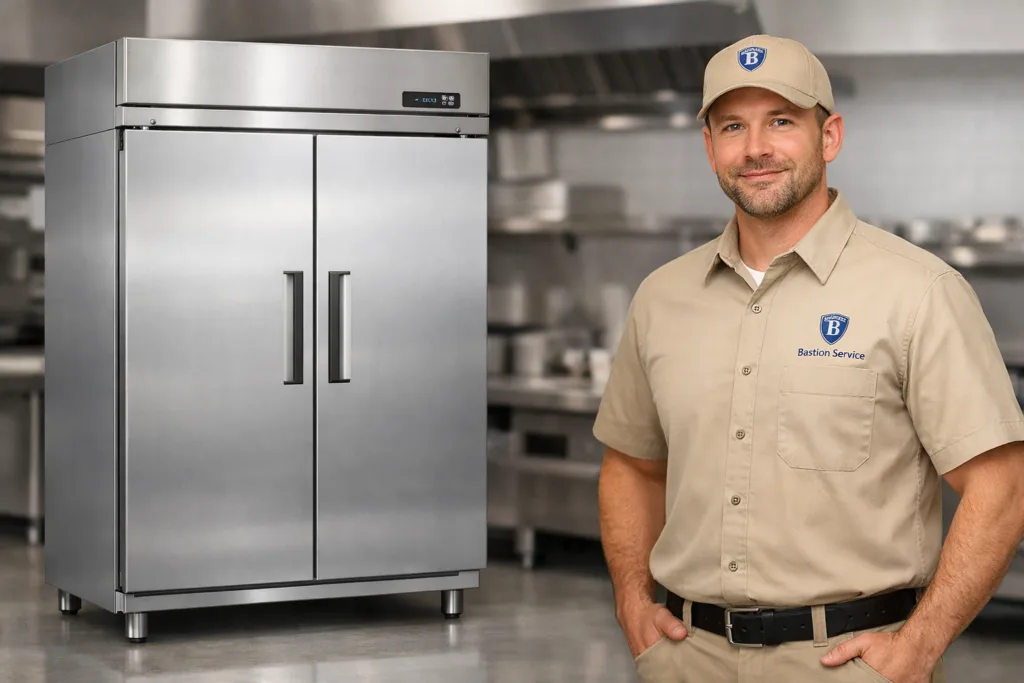




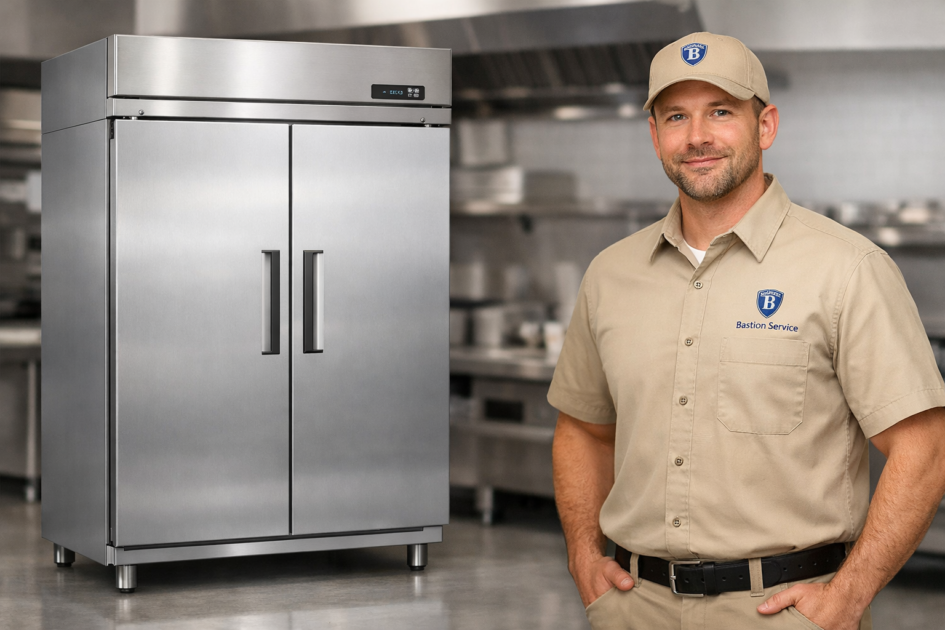
Temperature drift, frost buildup, and constant run time usually point to a deeper performance problem rather than a simple nuisance. In a commercial setting, those symptoms can affect food safety, inventory control, prep timing, and staff workflow, so the real priority is identifying why the freezer is losing stability and what needs to happen to restore dependable operation.
Related commercial equipment paths in Hermosa Beach include Beverage-Air Freezer Repair in Hermosa Beach.
Common commercial freezer problems and what they often mean
Commercial freezers tend to fail in recognizable patterns. A cabinet that is not holding temperature may be dealing with restricted airflow, worn door gaskets, sensor or control issues, dirty condenser coils, fan motor problems, or a refrigeration system fault. Heavy frost can suggest a defrost issue, warm air leaking through the door, moisture intrusion, or an evaporator airflow restriction. Water around the unit may come from a blocked drain, melting ice, or condensation caused by temperature imbalance.
Noises also matter. Buzzing, clicking, rattling, or unusually loud fan sound can point to compressor stress, a failing motor, loose components, or electrical problems that should be inspected before they lead to a full shutdown. What looks minor during one shift can become a much larger interruption if the unit starts losing recovery speed or cannot return to set temperature after the door is opened.
Why symptom-based diagnosis matters
Two freezers can show the same symptom for very different reasons. For example, a warm cabinet may be caused by a failing evaporator fan, a faulty control, a door that is not sealing, or a sealed-system problem. Frost on the back panel might indicate a defrost failure, but it can also result from repeated warm air intrusion that changes how the coil performs. Treating every cooling complaint as the same repair often leads to repeat service calls and longer downtime.
A useful service visit should clarify temperature behavior, inspect frost patterns, verify fan operation, evaluate condenser and evaporator airflow, and check whether controls and electrical components are responding as they should. In busy commercial environments, the goal is not just to get the unit running again, but to make sure it can maintain stable holding conditions during normal daily use.
Freezer-specific signs that should not be ignored
Some symptoms are especially important because they usually signal worsening strain inside the system. If product is softening, the evaporator area is icing over, the freezer runs for long periods without cycling off, or temperatures recover slowly after the door opens, service should be scheduled promptly. If cooling problems are centered more in the fresh-food section than the freezer compartment, Commercial Refrigerator Repair in Hermosa Beach may be the better service path.
Another warning sign is uneven performance within the cabinet. If one section is holding while another is warm, airflow or fan issues may be preventing proper circulation. If frost keeps returning shortly after being cleared, the problem is likely not cosmetic. It usually means the unit is still pulling in moisture, failing to defrost correctly, or struggling to move air across the evaporator as designed.
How freezer problems affect business operations
Commercial freezer issues rarely stay limited to the machine itself. Inventory may need to be rotated early, staff may spend extra time monitoring temperatures, and service disruptions can affect prep schedules, storage capacity, or compliance procedures. Even when the freezer has not completely failed, unstable performance creates uncertainty that slows operations and increases waste risk.
In Hermosa Beach, that operational impact is often the reason businesses call before a total breakdown happens. A freezer that still cools somewhat can be more disruptive than one that is fully down, because inconsistent holding temperatures make it harder to trust the equipment from hour to hour.
When ice-related symptoms point to a different equipment issue
Not every ice complaint starts in the freezer cabinet itself. If the main concern is low ice production, poor cube formation, fill problems, water supply issues, or leaks tied to the ice-making system, Commercial Ice Machine Repair in Hermosa Beach may be more relevant than freezer service. Separating freezer cooling faults from dedicated ice-system problems helps avoid misdirected repairs and unnecessary downtime.
Repair or replace?
Repair is often the better choice when the issue is isolated and the cabinet, insulation, and core system are still in solid operating condition. That can include fan motor failures, control problems, gasket issues, defrost component faults, or airflow-related problems that can be corrected without replacing the entire unit.
Replacement becomes a stronger consideration when repairs are becoming frequent, parts are difficult to source, the cabinet has structural wear, or the freezer still cannot maintain stable temperatures after previous work. For business owners and facility managers, the decision usually comes down to reliability, downtime risk, and whether the equipment can return to a predictable service life after repair.
What businesses should expect from service
Effective commercial freezer repair should leave you with a clear understanding of the failure, the condition of the surrounding components, and whether the equipment is likely to return to stable operation. That includes identifying whether the issue is related to airflow, controls, electrical components, defrost operation, door sealing, or the refrigeration system itself.
For businesses in Hermosa Beach, the most useful outcome is a service recommendation that matches how the freezer is actually used day to day. That makes it easier to decide whether the unit can be restored confidently, whether interim operating steps are needed, or whether replacement planning is the safer long-term move.


