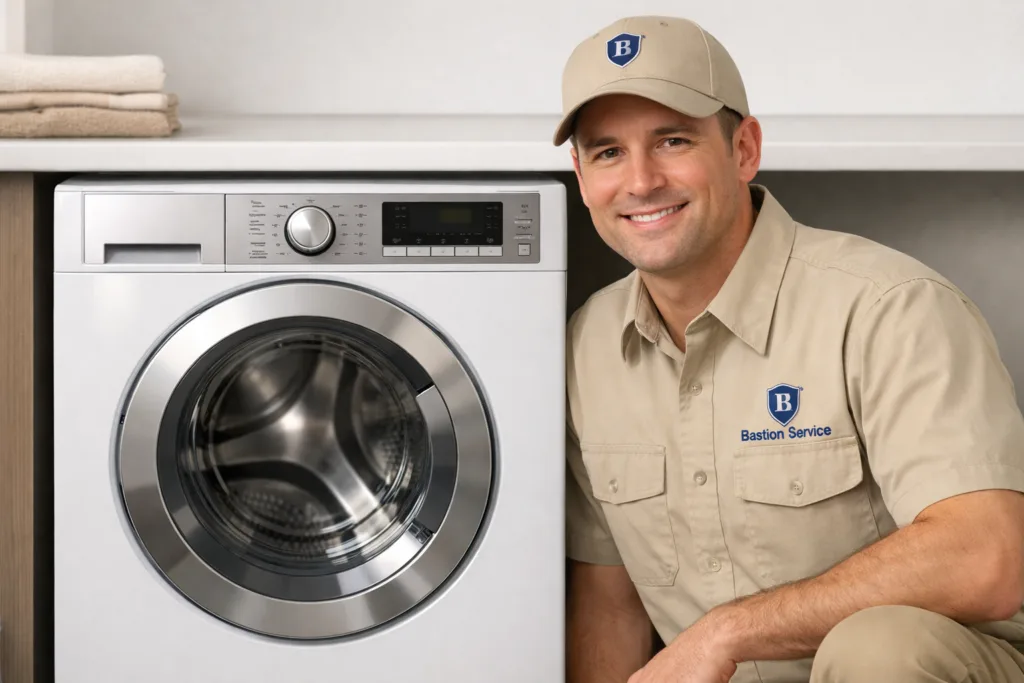
A Blomberg washer that stops mid-cycle, leaves clothes dripping, or leaks onto the floor usually gives warning signs before it fails completely. Paying attention to when the problem happens during fill, wash, drain, or spin can make the next step much easier and can help avoid extra wear on the machine.
Common washer symptoms and what they often mean
Many washer problems look similar at first, but the cause can be very different depending on the symptom pattern. A machine that will not start may have a door latch problem, a control issue, or trouble completing one of its safety checks. A washer that starts normally but quits before the cycle ends may be struggling with draining, load sensing, motor operation, or an intermittent electrical fault.
If clothes come out wetter than normal, the issue is not always the spin system alone. Poor draining, an off-balance condition, a pump restriction, or a control that never reaches the final spin stage can all lead to the same result. That is why symptom-based repair is more useful than guessing at parts.
Not draining or leaving water in the tub
Drain complaints are one of the most common reasons homeowners seek washer service in El Segundo. If water stays in the drum after the cycle, drains slowly, or returns with an error code, possible causes include a clogged drain path, a failing pump, a kinked or restricted hose, or a control issue that interrupts the drain sequence.
Using the washer repeatedly with standing water inside can create additional problems, including odor, residue buildup, and extra strain on the pump. If the appliance hums, pauses for a long time, or stops with the door locked and water still present, it is usually best to stop normal use until the cause is checked.
Weak spin, shaking, or loud noise
Excess vibration is not always just a heavy load. A Blomberg washer that bangs, walks, squeals, or thumps during spin may have suspension wear, leveling issues, bearing problems, or damage related to repeated imbalance. In some homes, the sound starts gradually and becomes more obvious over time, especially during high-speed spin cycles.
New grinding, rumbling, or scraping sounds should not be ignored. Those noises can point to internal wear that may become more expensive if the washer keeps running under strain. If the machine is also leaking or failing to complete cycles, the noise may be part of a larger repair issue rather than a standalone problem.
Leaks, odors, and door-related problems
Water around the washer does not always come from the same place. A leak during fill often points in a different direction than a leak during drain or spin. Common sources include inlet connections, the door boot, dispenser components, drain hoses, pump housing issues, or an overfill condition.
Noting exactly when the water appears can be helpful. Water near the front of the machine may suggest a seal or boot problem, while water that shows up later in the cycle can indicate drainage or pump-related trouble. Even a small leak is worth addressing quickly to reduce the risk of floor damage and hidden moisture problems.
Musty odors are also common with front-load washers. In many cases, the smell comes from trapped moisture, detergent residue, incomplete draining, or buildup around the door seal. If the odor is paired with slow drain behavior or frequent cycle interruption, cleaning alone may not solve it.
Door lock and cycle interruption issues
If the door stays locked, the washer will not begin, or the cycle pauses without finishing, the fault may involve the latch assembly, control communication, drainage performance, or a safety condition the machine is not able to clear. Repeated resets sometimes get the washer running once, but they rarely fix the root issue for long.
When the same interruption happens load after load, the appliance is usually telling you something specific about what stage of operation is failing. That pattern is often more useful than the symptom by itself.
Poor wash results and fill problems
If clothes are not getting clean, detergent is left behind, or the washer seems to use too little or too much water, the issue may involve inlet valves, water level sensing, dispenser flow, or cycle control problems. Poor wash performance can also happen when the washer advances through the cycle incorrectly or drains at the wrong time.
Some homeowners notice that loads come out with residue, tangling, or uneven wetness. That can point to incomplete rinsing, overloading, restricted water flow, or an emerging mechanical issue that affects how the drum moves during the cycle.
A washer that fills slowly, overfills, or stops filling too soon should be checked before regular use continues. Fill problems can affect cleaning, rinsing, cycle timing, and in some cases can contribute to leaks.
When repair usually makes sense
Repair is often worthwhile when the issue is isolated to a pump, hose, valve, latch, suspension component, or another serviceable part and the washer is otherwise in solid shape. A good repair candidate typically has one main fault rather than several unrelated symptoms happening at once.
Replacement becomes more likely when the appliance has major internal wear, repeated control failures, severe vibration damage, or repair cost that gets too close to the value of the unit. Age alone does not decide it. Overall condition, symptom history, and the scope of the failure matter more.
Signs the washer should not keep running
- Standing water remains in the tub after the cycle
- The washer leaks during normal use
- Spin noise has become much louder than before
- The machine trips a breaker or shuts off unexpectedly
- The door will not unlock after repeated attempts
- There is a burning smell or visible electrical irregularity
When these symptoms show up, continued use can turn a smaller repair into a larger one.
What helps before a service visit
If possible, make note of what the washer is doing right before it fails. Helpful details include whether the problem appears during fill, wash, drain, or spin; whether there is an error code; whether the door stays locked; and whether the issue changes with load size. If the machine is leaking, note where the water appears and at what point in the cycle it starts.
These details can help narrow down whether the problem is mechanical, electrical, drainage-related, or tied to balance and suspension. For homeowners in El Segundo, that often leads to a faster and more useful repair decision.
Focused Blomberg washer repair in El Segundo
Blomberg washers can show familiar symptoms, but the right repair path depends on how the machine behaves in real use. A washer that will not start, a unit that leaves water behind, and a machine that shakes violently may each require a very different fix even when the complaint sounds simple at first.
For households in El Segundo, the goal is to determine whether the problem is a manageable repair, an installation-related issue, or a sign of broader wear inside the washer. That makes it easier to decide whether to repair now or avoid putting more money into an appliance that is already declining.