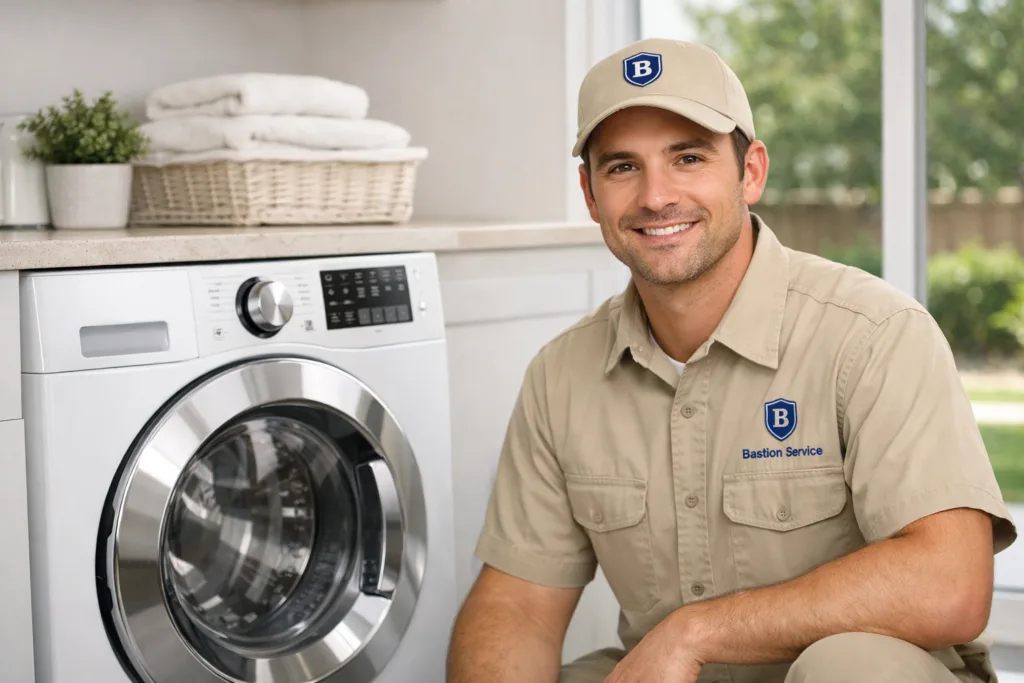
Washer problems tend to show up in the middle of normal household routines: a load that will not start, water that stays in the tub, or clothes that come out much wetter than expected. In El Segundo homes, the most helpful approach is to match the symptom to the part of the wash cycle where the failure happens. That usually makes it easier to tell whether the issue is related to filling, agitation, draining, spinning, balance, or a developing leak.
Common washer problems and what they may indicate
A washer that will not start may be dealing with a power supply issue, a failed door or lid lock, a damaged control, or a switch that is no longer responding correctly. If the machine starts but stalls early in the cycle, the problem may involve sensing functions, water inlet trouble, or an electronic fault that interrupts the program before washing begins.
When a washer fills but does not agitate or move the load properly, likely causes include drive-related wear, motor trouble, a broken coupling, or a control issue that prevents the machine from advancing through the cycle. If it drains slowly or not at all, the most common causes are a blocked drain path, a pump problem, or an obstruction affecting how water exits the machine.
Leaks should be addressed quickly because the source is not always obvious. Water near the front, back, or underneath the washer can come from supply hoses, drain connections, overfilling, door boot damage on front-load units, or internal seals that are beginning to fail. A machine that shakes, bangs, or walks during spin may only need leveling or load correction, but it can also point to worn suspension parts, damaged shocks, or support wear inside the drum system.
Symptoms to stop using the washer for
Some warning signs suggest the machine should be turned off until it is inspected. These include a burning smell, repeated breaker trips, heavy leaking, sharp grinding noises, a drum that will not turn normally, or a spin cycle that becomes violent enough to move the washer. Continued use in those situations can lead to bigger part failures and possible damage to flooring or nearby walls.
How to read problems by stage of the wash cycle
Looking at when the failure occurs is often more useful than focusing on one symptom by itself. A washer that will not fill points in a different direction than one that fills normally but cannot drain. A machine that washes but will not spin has a different repair path than one that spins but leaves a puddle after the cycle is done.
- No fill or slow fill: often tied to inlet valves, hose screens, water supply issues, or controls.
- Won’t drain: commonly caused by a clogged pump path, drain hose restriction, or pump failure.
- Won’t spin: may involve the lid lock, motor, belt, drive system, suspension, or control.
- Leaves clothes too wet: often points to partial draining, weak spin performance, or imbalance problems.
- Leaks during or after the cycle: can involve hoses, tub seals, door components, overfilling, or drain issues.
For households managing frequent loads, it also helps to look at the full laundry setup. If the washer problem is being noticed alongside poor drying, long dry times, weak heat, or moisture left in fabrics after the laundry workflow is finished, Dryer Repair in El Segundo may also be worth considering.
Drain, spin, and water-related issues
Drain and spin complaints are among the most common reasons homeowners schedule service. If the washer hums but does not remove water, the pump may be obstructed or failing under load. If water drains out but the basket still will not reach full spin speed, the problem may be tied to balance sensing, suspension wear, a drive component, or a lock mechanism that prevents high-speed operation.
Water-related faults can also overlap. A washer that drains slowly may then skip or shorten the spin cycle, leaving clothes heavy and wet. A machine with a small leak may appear to work normally at first, but each load increases the chance of water spreading under the appliance where it is harder to notice right away. In those cases, washer repair is not only about performance but also about preventing avoidable household damage.
When repair makes sense
Repair is often a practical option when the issue is limited to a pump, valve, latch, hose, switch, suspension part, or another isolated component and the rest of the machine is in good shape. Many washers still have plenty of useful life left when the failure is confined to one system rather than multiple major assemblies at once.
Replacement becomes more likely when there is severe rust, tub or bearing damage, repeated unrelated failures, major structural wear, or repair costs that no longer line up with the age and condition of the appliance. The decision is usually less about one part and more about overall reliability for regular household laundry.
What homeowners should expect from a service visit
A useful appointment should identify which function has failed, explain why that symptom is happening, and outline whether the washer can be used safely before repair is completed. That is especially important with no-drain complaints, leaks, and spin problems, where continued operation can strain other components or create water exposure inside the laundry area.
It should also separate true part failure from installation or usage issues. Not every vibration complaint means the washer needs internal parts, and not every drainage problem means the pump itself is bad. Leveling, hose routing, load balance, and buildup in the drain path can sometimes mimic more serious failures. A careful diagnosis helps avoid replacing parts that are not actually causing the problem.
Why early attention helps
Washer issues rarely improve on their own. A minor leak can become flooring damage, a weak spin can turn into repeated wet-load complaints, and intermittent draining can eventually lead to a full tub that will not empty at all. Catching the problem earlier usually gives homeowners more options and reduces the chances of a small repair turning into a larger laundry-room disruption.
For El Segundo homeowners, the goal is straightforward: restore normal washing performance, address water and cycle issues before they spread, and get the machine back to dependable everyday use.