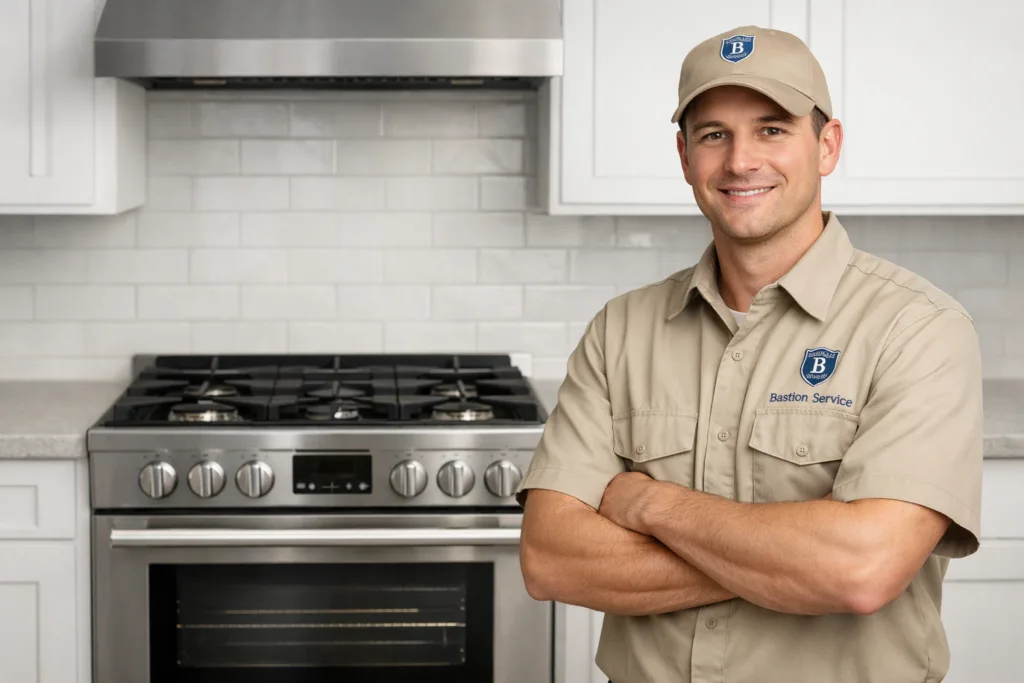
Range problems usually reveal themselves through a pattern. A burner may click several times before lighting, the oven may preheat slowly, or baking results may change even when you use the same settings. On a Blomberg range, those details help narrow the cause and separate a minor service issue from a component failure that needs prompt attention.
Start with the symptom, not the assumption
Different faults can create similar cooking problems. An oven that seems too cool might have a sensor issue, a heating problem, or a control fault. A burner that will not light could be dealing with moisture, misalignment, ignition trouble, or a wiring issue. Looking at the full symptom pattern is the best way to avoid replacing the wrong part.
It also helps to note whether the problem is constant or intermittent. A range that fails every time often points to a different repair path than one that works normally for days and then acts up again. Intermittent issues usually need closer testing because they can involve controls, switches, or unstable electrical connections.
Common Blomberg range problems in West Hollywood homes
Burner will not ignite
If a gas burner does not light at all, lights only after repeated clicking, or ignites with an uneven flame, the issue may involve the igniter, burner cap position, burner head openings, spark module, or related wiring. In some cases, food residue or moisture interferes with normal ignition.
If the burner eventually lights but takes longer than usual, that is still worth attention. Delayed ignition can get worse over time and make everyday cooking less predictable.
Continuous clicking
Clicking that continues after ignition often points to an ignition system problem rather than a simple one-time misfire. Moisture around the igniter area can cause it temporarily, but persistent clicking may mean a switch or ignition component is not behaving correctly. If the clicking returns often, the range should be evaluated before regular use continues.
Oven not heating properly
When the oven does not reach temperature, takes far too long to preheat, or cooks unevenly, several parts may be involved depending on the model. Typical possibilities include the bake element, broil element, igniter, temperature sensor, relay, or electronic control.
Homeowners often notice this first through food results rather than a complete failure. Cookies brown unevenly, casseroles stay undercooked in the center, or roasting times suddenly become unreliable. Those are useful clues because they help identify whether the problem is weak heating, poor temperature sensing, or inconsistent control operation.
Temperature swings during baking
Some temperature cycling is normal, but wide swings that affect cooking results are not. If your Blomberg range seems hotter than the setting one day and cooler the next, the cause may be sensor drift, control trouble, or a heating component that is not cycling as it should. This kind of issue is especially frustrating because the range may appear to work, just not accurately.
Display or control problems
Unresponsive buttons, a flickering display, random shutdowns, or error codes can point to problems in the interface, control board, wiring, or power supply. These faults often show up as inconsistent behavior rather than a single obvious breakdown. For example, the oven may start but not maintain heat, or a cooking mode may select correctly one time and fail the next.
Signs the problem may be getting worse
Some range issues begin mildly and become more disruptive over time. It is a good idea to schedule service if you notice:
- Burners taking longer and longer to ignite
- Flames that look uneven or unstable
- Oven preheat times increasing noticeably
- Food cooking inconsistently on familiar settings
- Clicking that continues after ignition
- Controls that respond only sometimes
- Error messages that appear repeatedly
Waiting can turn a targeted repair into a larger one, especially if the range continues operating under unstable heating or ignition conditions.
When to stop using the range until it is checked
Some symptoms call for faster action. If the oven cannot hold temperature, a burner repeatedly fails to ignite, or the controls behave unpredictably, continued use is not a good workaround. A range is central to daily meal preparation, but it also needs to operate consistently to be useful and safe in a household setting.
Repeatedly trying to start a burner, ignoring unreliable heating, or pushing through electrical symptoms can add wear to surrounding parts. Addressing the issue early usually gives you better repair options.
Repair or replacement depends on the exact failure
Many Blomberg range problems are still repairable when the issue is limited to one serviceable part and the rest of the appliance is in solid condition. Burner ignition components, sensors, heating parts, and some control-related failures can often be addressed without replacing the entire range.
Replacement becomes a more serious consideration when there are multiple major faults, extensive electronic failure, or overall wear that makes further investment hard to justify. The most helpful answer comes from the condition of the specific unit in your kitchen, not from a general rule.
What homeowners should expect from a service visit
A useful appointment should do more than confirm that the range is malfunctioning. It should identify what failed, explain how that failure affects cooking performance, and outline whether the repair path makes sense. That is especially important with symptom overlap, where ignition, heating, and control issues can look similar at first.
For West Hollywood homeowners, the goal is not just to get the appliance running for the moment, but to understand whether the repair is likely to restore normal household use in a lasting way.
Helpful details to note before scheduling service
If you are preparing for a diagnosis, it helps to keep track of what the range is doing. Useful details include:
- Whether the problem affects the cooktop, the oven, or both
- Whether the issue happens every time or only occasionally
- If clicking continues after a burner lights
- Whether the oven is slow to preheat or never reaches temperature
- Any error codes or display behavior you have seen
- Whether the problem started suddenly or developed gradually
These observations can make the diagnosis more efficient and help connect the symptom to the most likely repair path.
If your Blomberg range is no longer lighting, heating, or responding the way it should, the next step is to have the actual fault pinned down and the repair options explained in plain terms. That makes it easier to decide whether service is the right move for your home in West Hollywood.