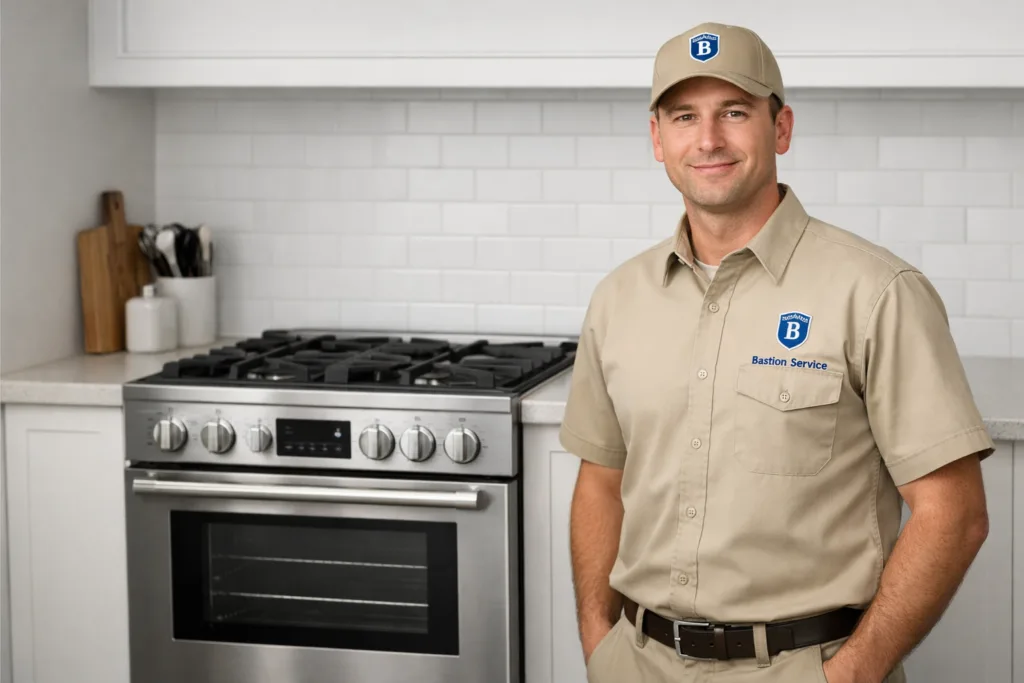
Range problems are easiest to solve when the symptom is described precisely. A burner that clicks constantly, an oven that preheats slowly, or temperature control that suddenly feels unpredictable can each point to different failures, even when the appliance seems to have one simple issue on the surface. With Blomberg ranges, the most useful next step is identifying whether the fault involves ignition, heat generation, sensing, controls, or power.
Start with what the range is actually doing
One of the most common reasons repairs get delayed is that similar cooking problems can come from different causes. An oven that seems “not hot enough” may have a weak igniter, a failing bake element, a sensor reading problem, or a control issue affecting heat cycles. A burner that will not light may be dealing with moisture around the igniter, poor cap alignment, a bad spark switch, or a gas flow problem.
That is why symptom patterns matter. It helps to notice whether the problem is constant or intermittent, whether it affects the cooktop or the oven, and whether it appears only after the range has been running for a while. Those details often narrow the repair path much faster than guessing based on one bad cooking result.
Common Blomberg range problems in Rancho Palos Verdes homes
Burner will not ignite
If a surface burner does not light at all, lights only after several tries, or ignites with a noticeable delay, the problem may involve the ignition system, burner cap placement, debris in the burner assembly, or a switch fault. On gas models, delayed ignition should not be ignored, especially if the issue is becoming more frequent.
In some cases, the burner lights but the spark continues clicking. That can happen when the ignition area is wet, when food residue interferes with the spark path, or when a switch continues sending the wrong signal after ignition.
Oven takes too long to preheat
Slow preheat is a common complaint because the oven may still warm up enough to seem usable while performing poorly in everyday cooking. On many ranges, this can point to weak heat production rather than total heat loss. Gas models may have an igniter that glows but is not strong enough to open the gas valve reliably. Electric configurations may have a bake element that is failing under load even if it does not look completely broken.
If preheat times keep getting longer, the issue usually does not improve on its own.
Oven is heating unevenly
When cookies brown unevenly, casseroles cook faster on one side, or recipes that used to work suddenly become inconsistent, the cause may be sensor drift, poor heating cycles, a damaged door gasket, or a problem with one of the heating components. Uneven heat often appears gradually, which makes it easy to overlook until daily cooking becomes frustrating.
Temperature rises too high or swings widely
If the oven seems to overshoot the set temperature, burn food unexpectedly, or cool off too much between cycles, the fault may be tied to the sensor, control board, or heating regulation. Wide swings are more noticeable with baking than with roasting, so homeowners sometimes spot this problem first through recipes that stop coming out the way they should.
Control panel or display problems
A blank display, buttons that do not respond, settings that change on their own, or functions that stop mid-cycle can indicate a control issue, wiring problem, or incoming power problem. If the display cuts in and out, or certain modes fail while others still work, that pattern can help separate a full control failure from a more localized electrical problem.
Burner heat is hard to regulate
A burner that runs too high, stays too low, or does not respond normally to adjustment can make everyday cooking difficult. Depending on the model, this may involve a switch, valve, regulator, sensor, or control fault. If one burner behaves differently from the rest, that is often a clue that the problem is isolated rather than system-wide.
Signs it is better to stop using the range until it is checked
Some performance issues are inconvenient but manageable for a short time. Others can lead to more wear, unreliable cooking, or safety concerns if the appliance keeps being used. It makes sense to schedule service when the range is no longer operating predictably or when the symptom is getting worse.
- Ignition is delayed, inconsistent, or accompanied by repeated clicking
- The oven struggles through every preheat cycle
- One burner overheats or cannot be adjusted normally
- The control panel shuts off, freezes, or changes settings unexpectedly
- The range loses power during use or trips the circuit
- Cooking results have become consistently unreliable
These symptoms often indicate more than a one-time glitch, especially when they repeat under normal household use.
Repair or replace?
For many homeowners in Rancho Palos Verdes, repair is worth considering when the problem is isolated to a defined part such as an igniter, element, sensor, switch, or valve and the rest of the range is in solid condition. A focused repair can restore normal daily cooking without the cost and disruption of replacement.
Replacement becomes a more realistic conversation when the range has multiple major failures at once, when both the control system and heating system are compromised, or when breakdowns keep returning in a way that makes the appliance unreliable. The key question is not only whether the range can be repaired, but whether the repair restores stable long-term function.
What to note before scheduling Blomberg range repair in Rancho Palos Verdes
A few observations can make the service visit more productive. Try to note:
- Whether the issue affects the cooktop, oven, or both
- Whether the problem happens every time or only occasionally
- Any unusual sounds such as repeated clicking or buzzing
- Whether the oven reaches temperature eventually or not at all
- Whether one burner is affected or several
- Any display errors, flashing lights, or shutdown behavior
- Whether the problem started suddenly or became worse over time
Even small details can help distinguish between similar symptoms that come from very different failures.
Practical guidance for everyday cooking disruptions
When a range starts failing, the impact is immediate because it affects routine meals, baking, and any cooking that depends on steady temperature control. In residential kitchens, the most helpful approach is to address the exact symptom before the problem spreads to other components through continued strain or repeated failed ignition attempts.
Blomberg range repair in Rancho Palos Verdes is usually most worthwhile when the appliance still has good overall condition and the problem can be traced to a specific system. When that happens, a targeted repair is often the quickest path back to reliable cooking.