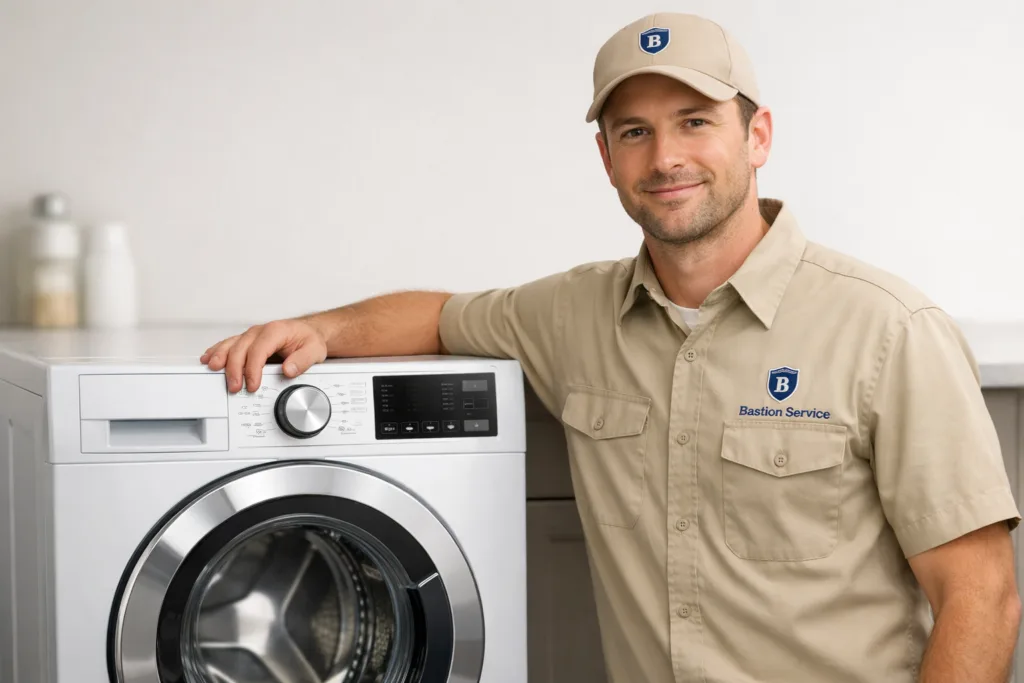
Common Blomberg washer problems in Hawthorne homes

Blomberg washers are designed for efficient household laundry, but everyday use can still lead to drain issues, cycle interruptions, leaks, and performance problems. In many cases, one symptom can point to several possible causes, so the pattern of what the machine is doing matters just as much as the complaint itself.
Not draining or not spinning properly
If the drum still holds water at the end of the cycle or clothes come out unusually wet, the problem may involve a restricted drain path, a failing drain pump, a filter blockage, a door lock issue, or a control problem that prevents the washer from reaching full spin speed. A washer that pauses with water inside often needs attention sooner rather than later, because repeated attempts to run it can put extra strain on the pump and motor system.
Will not start or stops mid-cycle
When a washer powers on but will not begin, or starts and then quits partway through, the issue may be tied to the door latch, water inlet function, user interface, sensor feedback, or the main control. If the machine appears completely dead, the diagnosis may also need to include the power supply path and internal electrical components. Mid-cycle shutdowns are especially important to address because they can leave laundry trapped behind a locked door or interrupt draining.
Leaks during fill, wash, or drain
Leaks are easier to narrow down when you notice when the water appears. A leak during fill may suggest an inlet hose or valve-related problem. Water showing up while the washer is tumbling can point to the door boot, soap oversudsing, or internal hose issues. A leak near the end of the cycle may be related to draining. Even a small recurring leak should be taken seriously, since laundry room moisture can damage flooring, trim, and nearby walls.
Excessive shaking, banging, or movement
Some vibration is normal, especially with bulky loads, but repeated banging or a washer that shifts position during spin usually indicates more than a simple balance issue. Leveling problems, worn suspension parts, installation errors, or drum-related wear can all contribute. If the machine is striking the cabinet hard during spin, it is better to stop using it until the cause is identified.
Poor wash results, residue, or odors
If clothes do not come out clean, detergent residue remains on fabrics, or the washer develops a musty smell, the cause may be related to drainage, detergent buildup, limited water flow, or a component issue affecting normal cycle performance. These complaints are easy to ignore at first, but they often signal that the washer is no longer completing key parts of the cycle correctly.
How symptom patterns help narrow the cause
A useful service visit starts with what the washer is actually doing, not just the final result. For example, “not draining” means something different if the machine hums and does nothing, drains slowly, or stops before it even reaches the drain portion of the cycle. The same is true for no-start complaints, leaks, and unusual noises.
Specific details that help narrow the fault include:
- Whether the washer fills with water normally
- Whether the door locks and unlocks as expected
- Whether the drum tumbles before the problem begins
- If the unit drains partially, fully, or not at all
- When noise occurs: fill, wash, drain, or spin
- Whether an error code appears consistently
- Whether the issue happens on every cycle or only certain loads
These symptom patterns often reveal whether the problem is more likely mechanical, electrical, drainage-related, or tied to sensing and control.
When continued use can make the problem worse
Some washer issues stay inconvenient for a while. Others tend to spread into larger repairs if the machine keeps running in that condition. A leaking washer can lead to household water damage. A partial drain problem can overwork the pump. Repeated heavy banging during spin can affect suspension components and nearby parts. A door lock fault can eventually leave the washer unable to begin or complete cycles at all.
It makes sense to stop using the washer and schedule service if you notice any of the following:
- Standing water remaining in the drum
- Water collecting on the floor
- Grinding, scraping, or harsh banging sounds
- Repeated mid-cycle shutdowns
- A door that will not lock or unlock properly
- Recurring error codes after restart attempts
- Power loss or breaker trips during operation
Repair or replace? What usually matters most
For many Hawthorne homeowners, the real question is not just what failed, but whether the repair is worth doing. That usually depends on the age of the washer, the overall condition of the machine, whether the problem is limited to one serviceable part, and whether there have been multiple recent breakdowns.
Repairs are often reasonable when the washer is otherwise in solid condition and the fault is isolated to a component such as a pump, latch assembly, valve, hose, or sensor-related part. Replacement becomes a more serious consideration when the washer has major structural wear, repeated control-related problems, significant bearing or tub issues, or several failing systems at once.
A proper diagnosis helps separate a repairable single-fault problem from a machine that is showing broader age-related decline.
Helpful checks before scheduling service
There are a few simple observations homeowners can make before service that may help speed up troubleshooting. Check whether the water supply valves are open, whether the drain hose appears kinked, and whether the load is unusually heavy or unbalanced. If the washer shows an error code, write it down exactly as displayed. If there is a leak, note whether it happens during fill, wash, spin, or drain.
It is usually best to avoid forcing repeated restarts, running the machine through multiple failed cycles, or continuing to use it while leaking or making severe noise. Those steps rarely solve the root problem and can add wear that was not there at the beginning.
Blomberg washer service focused on household laundry problems
When laundry equipment starts failing, the disruption is immediate. Clothes stay wet, loads back up, and a small issue can quickly turn into a more expensive one if it is ignored. Bastion Service helps Hawthorne homeowners evaluate Blomberg washer problems based on the actual symptom, the condition of the appliance, and the most sensible repair path.
Whether the issue involves draining, filling, spinning, leaking, heating, or cycle completion, the goal is to identify the cause clearly and help you decide on the next step with realistic expectations about repair.