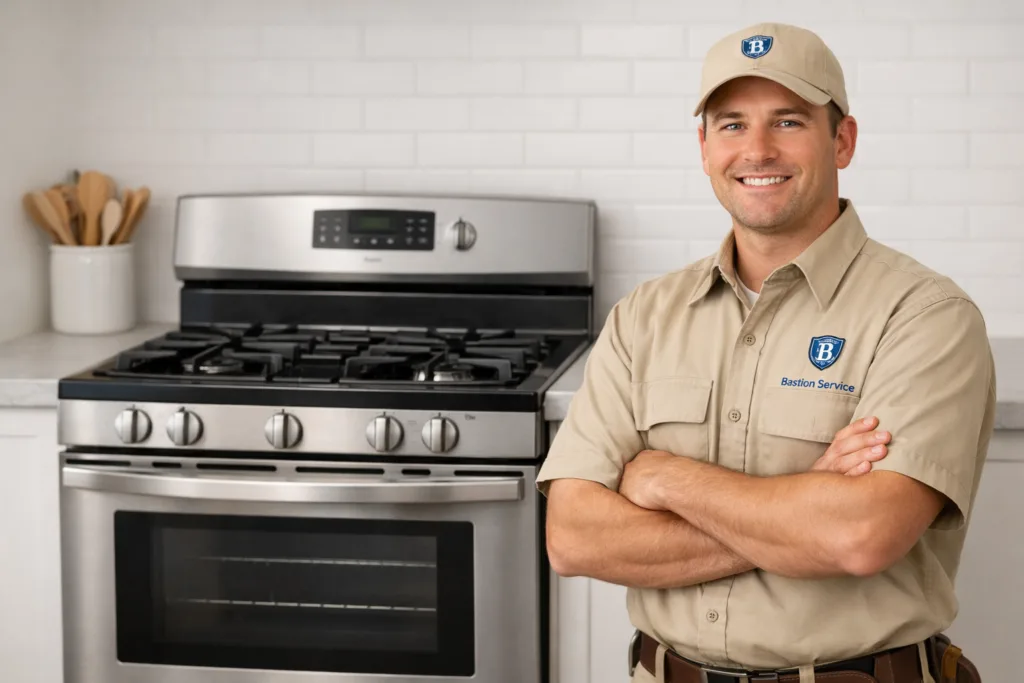
Cooking problems usually show up in patterns before a range fails completely. A front burner may heat intermittently, the oven may take longer to preheat each week, or the control panel may respond one day and not the next. On an Amana range, those patterns matter because the same symptom can come from different components, and the most effective repair depends on narrowing down what the appliance is actually doing.
Symptoms that help identify the real problem
Small details often separate one fault from another. If the oven is off by 25 degrees, that points in a different direction than an oven that never gets hot at all. If a gas burner clicks continuously but lights eventually, that suggests a different repair path than a burner that stays completely silent. Paying attention to what happens first, what happens next, and whether the issue affects one function or several can speed up diagnosis.
Surface burner won’t heat or ignite
On electric Amana ranges, a burner that stays cold may have a failed element, a damaged receptacle, a bad infinite switch, or a wiring problem. If the burner works only in certain settings, the switch becomes more likely. If the element cuts in and out when moved, the connection point may be worn.
On gas models, a burner that clicks but does not light may be dealing with blocked burner ports, moisture, misalignment, or a weak ignition component. If the flame is uneven after ignition, the burner head may need attention or the gas flow may not be distributing properly.
Oven takes too long to preheat
Slow preheating is a common complaint because it starts subtly. Meals just seem delayed, then baking becomes unreliable. On electric ranges, a hidden bake failure or partial heating issue can cause long warm-up times. On gas ranges, a weakening igniter may glow but still fail to draw enough current to open the gas valve correctly. In both cases, the oven may appear to work while never performing the way it should.
Oven temperature is inaccurate
If food repeatedly comes out underdone or overdone despite normal cook times, the issue may be related to the temperature sensor, control calibration, a weak heating component, or cycling problems during operation. This often shows up as inconsistent baking rather than a total no-heat condition. Homeowners in Fairfax often notice it first with cookies, casseroles, and anything that depends on stable oven temperature.
Clicking that won’t stop
Continuous clicking on a gas range can happen after spills, cleaning, humidity exposure, or ignition component failure. Sometimes the burner still lights; sometimes it does not. Repeated clicking should not be ignored, especially if it affects multiple burners or continues after the knob is turned off. That can point to a switch harness or ignition system issue rather than a simple burner cleaning matter.
Control panel not responding
A blank display, unresponsive keypad, flashing error behavior, or settings that change on their own may indicate a failing electronic control, touchpad issue, or power supply problem inside the range. If the surface burners and oven are both affected, the fault may be broader than a single cooking component. Intermittent control problems tend to get worse over time, not better.
What uneven cooking usually means
Uneven results are one of the easiest problems to dismiss, but they usually indicate that something is no longer operating as designed. If the back of the oven browns faster than the front, or one rack cooks dramatically faster than another, possible causes include:
- A bake or broil element that is weakening
- A temperature sensor sending inaccurate readings
- An igniter that is not opening the gas system consistently
- Control issues affecting heat cycling
- Airflow disruption inside the oven cavity
These problems can make cooking frustrating because the range still appears usable. In reality, the appliance may be drifting further out of spec with each use.
Signs the range should be checked soon
Some range issues can wait a short time. Others should be addressed promptly to avoid added damage or safety concerns. Schedule service if you notice any of the following:
- Burners that only work intermittently
- Gas ignition that requires repeated attempts
- Preheat times that are much longer than normal
- An oven that cannot maintain a consistent temperature
- A control panel that cuts in and out
- Sparking, burning odors, or repeated breaker trips
- Clicking that continues after ignition
Electrical heat damage, worn connections, and weak ignition parts can progress from an inconvenience to a complete failure. Early service is often simpler than waiting for the range to stop working altogether.
Repair decisions depend on the failed part, not just the symptom
Two ranges with the same complaint may not need the same solution. “Oven not heating” could mean an igniter on one unit, a control problem on another, and a failed element on a third. That is why parts-swapping based on guesswork often leads to extra expense without fixing the problem.
For many Amana range issues, repair is still the sensible option when the fault is limited to a burner element, igniter, sensor, switch, receptacle, or electronic control component and the rest of the appliance is in good condition. Replacement becomes more worth considering when there are multiple major faults, repeated repair history, or signs of broader wear throughout the unit.
How Fairfax homeowners can describe the problem more accurately
Before service, it helps to note a few specifics:
- Whether the issue affects the cooktop, the oven, or both
- If the problem is constant or intermittent
- Whether the display shows errors, flickers, or goes blank
- If a gas burner clicks without lighting or lights late
- How far off the oven seems during normal cooking
- Whether the problem started after cleaning, a spill, or a power interruption
That kind of symptom-based explanation makes it easier to focus on likely causes and avoid unnecessary delays.
Common household impact of a failing range
Range problems affect more than one meal. They can lead to wasted groceries, unreliable weeknight cooking, and uncertainty about whether the appliance is safe to keep using. In homes where the oven is used regularly, even a mild temperature issue can quickly become expensive and disruptive. The goal of service is not just restoring heat, but restoring predictable cooking performance.
What a useful service visit should accomplish
For homeowners in Fairfax, the most helpful outcome is understanding exactly which component has failed, whether continued use is reasonable, and whether repair is practical for the appliance’s age and condition. That gives you a straightforward next step instead of a vague guess.
When an Amana range is acting up, the best results usually come from matching the repair to the exact symptom pattern rather than treating every no-heat or ignition complaint as the same problem. That approach protects the appliance, avoids unnecessary parts replacement, and helps get the kitchen back to normal with less trial and error.