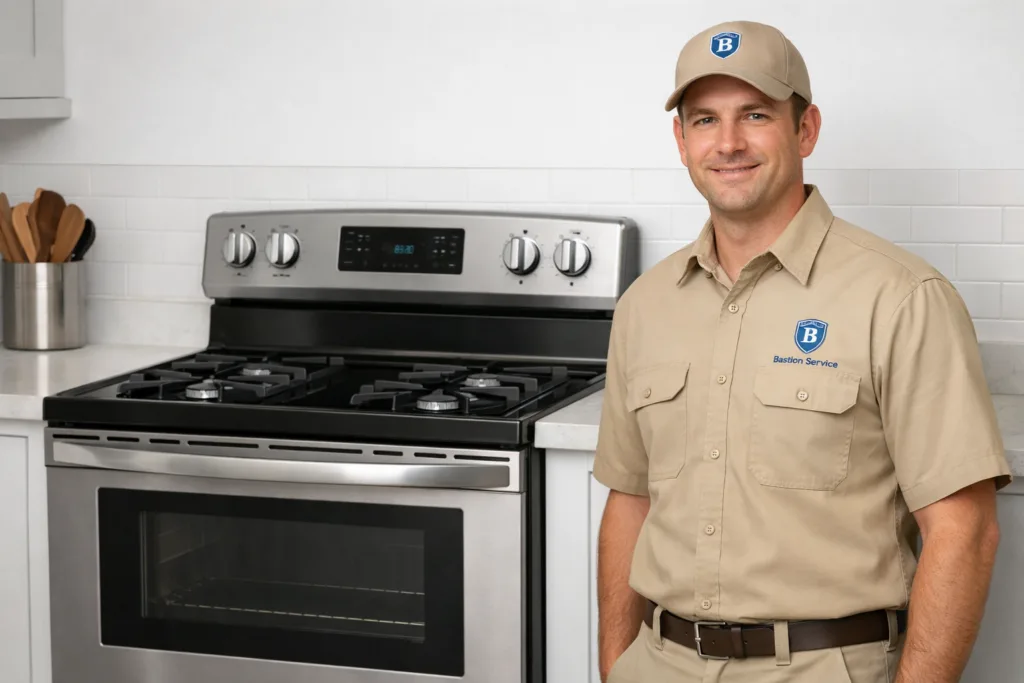
Cooking problems with a range often start small. A burner may click longer than usual, the oven may take too long to preheat, or the temperature may drift enough to affect everyday meals. With Amana ranges, those symptoms can point to several different components, so the most useful approach is to match the repair plan to the exact behavior of the appliance.
Common Amana range issues homeowners notice
Most range failures fall into a few categories: surface burner trouble, oven heating problems, temperature inaccuracy, or control issues. The challenge is that similar symptoms can come from different causes. A burner that will not heat may involve the switch, igniter, element, receptacle, or wiring. An oven that seems underpowered may have a sensor issue on one model and an igniter or element problem on another.
Surface burner will not ignite or keeps clicking
On gas Amana ranges, continuous clicking usually points to the ignition system. Sometimes the issue is simple, such as a burner cap sitting out of place or moisture around the igniter after cleaning. In other cases, the spark electrode, switch, or related wiring may be at fault. If a burner clicks but does not light consistently, the problem should be checked before regular use continues.
If there is a strong or persistent gas smell, stop using the range and address safety first. Delayed ignition is not something to ignore.
Electric burner not heating properly
On electric models, a surface element may stop heating completely, cycle unevenly, or work only at certain settings. That can happen when the element itself fails, but it can also be caused by a worn receptacle, damaged connection, or faulty infinite switch. A burner that heats intermittently often gets worse with continued use because repeated heating can damage surrounding contacts.
Oven not heating, slow preheat, or no bake function
If the oven does not heat at all, takes an unusually long time to preheat, or never reaches the selected temperature, the fault may involve the bake element, broil element, igniter, temperature sensor, or electronic control. Gas ovens commonly show weak ignition before complete failure. Electric ovens may still appear to run even when one heating element is partially failed, which can make the problem less obvious at first.
Uneven baking or temperature drift
When food comes out overcooked on one side, underdone in the middle, or consistently different from the set temperature, the range may have a calibration issue, a failing sensor, or a control problem. Temperature complaints are especially frustrating because the oven can seem functional while producing unreliable results. That usually means the problem is not about whether the oven turns on, but whether it can regulate heat correctly through the full cooking cycle.
Display, keypad, or control problems
An Amana range with an unresponsive keypad, flashing error code, dim display, or settings that reset on their own may have a control board issue, a touchpad fault, or an electrical connection problem. These failures can affect more than convenience. If bake, broil, timer, or lock functions stop responding correctly, the appliance may not complete cycles as expected.
Why the exact symptom pattern matters
Ranges often give clues before they fail completely. A weak oven igniter may cause long preheat times before the oven stops heating altogether. A worn burner switch may work on low settings but fail on high heat. A sensor problem may only show up after the oven has been running for a while. Paying attention to when the issue happens helps narrow down whether the likely fault is mechanical, electrical, or control-related.
This matters because replacing the wrong part is common when the symptom is broad. “Oven not heating” sounds straightforward, but the failed component can differ widely by model and fuel type. A proper diagnosis helps determine whether the repair is simple, whether multiple parts are involved, and whether the appliance is still a good candidate for repair.
Signs you should stop using the range until it is checked
Some problems are more than an inconvenience. It is best to pause normal use if you notice:
- Repeated sparking or clicking that does not stop
- Delayed burner ignition
- A strong gas odor
- Burners that cut in and out unpredictably
- Scorching around an element or burner connection
- The oven overheating far beyond the set temperature
- Tripped breakers associated with range use
- Error codes combined with heating failure
Continuing to cook through these symptoms can worsen damage to switches, wiring, igniters, receptacles, or controls.
What to note before scheduling Amana range repair in Del Rey
A few details can make the issue easier to identify. Before service, it helps to note:
- Whether the problem affects the oven, one burner, or several functions
- Whether the issue is constant or intermittent
- If the oven preheats at all or stalls partway
- Whether a gas burner clicks without lighting
- If an electric burner only works at certain heat levels
- Any visible error codes on the display
- Whether the problem started after cleaning, a power outage, or recent heavy use
Those observations do not replace testing, but they often help connect the symptoms to the most likely repair path.
Repair or replace?
Many Amana range problems are worth repairing when the fault is limited to an igniter, element, sensor, burner switch, spark component, or similar part. Repair tends to make sense when the range is otherwise in solid condition and the issue is isolated.
Replacement becomes a more realistic option when the appliance has multiple major failures, recurring control board problems, extensive wear, or repair costs that no longer fit the condition of the unit. For most homeowners in Del Rey, the decision comes down to the age of the range, the specific failed component, and whether this is a one-time issue or part of a larger pattern.
How a service-focused evaluation helps
A good service visit should do more than confirm that the range is malfunctioning. It should identify which system has failed, whether the problem has affected other components, and whether the unit can be repaired without chasing symptoms from one part to another. That is especially important with cooking appliances, where intermittent operation can make a problem seem smaller than it is.
For households in Del Rey, the most useful next step is usually based on what the range is actually doing in daily use: not lighting, not heating, heating unevenly, or losing control functions. Once that pattern is pinned down, the repair decision becomes much clearer.