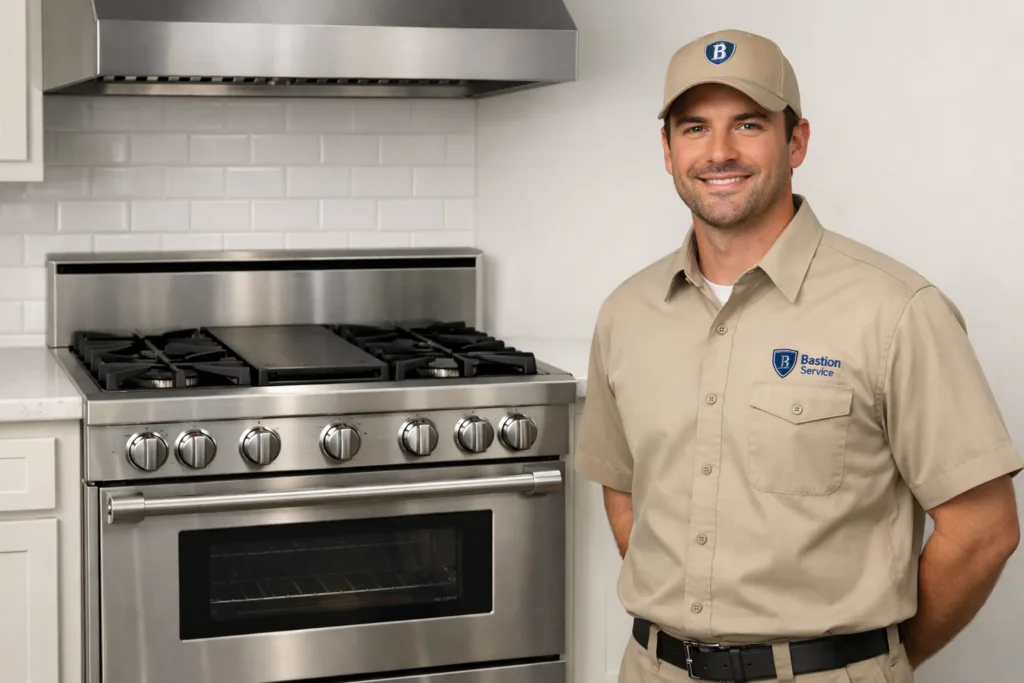
Cooking problems usually show up before a Wolf range fully stops working. You may notice a burner taking several tries to light, an oven that no longer bakes evenly, or controls that respond inconsistently. Those smaller changes matter because they often point to a specific failing part or system rather than a whole-appliance problem.
In Del Rey homes where the range is used daily, symptom patterns can help narrow the issue quickly. Whether the problem involves ignition, temperature control, gas flow, or electronics, the most useful repair path starts with what the appliance is actually doing during normal use.
Start with the symptom you can see
Wolf ranges can develop similar-looking problems from different causes. A burner that clicks nonstop may have a misaligned cap, moisture in the ignition area, a worn spark component, or a switch fault. An oven that seems too cool may have a sensor problem, a heating issue, or a control board that is not regulating temperature correctly.
Instead of guessing based on one bad meal or one missed ignition, it helps to look at the pattern:
- Does the problem happen every time or only occasionally?
- Is it affecting one burner or more than one?
- Does the oven miss temperature in both bake and broil modes?
- Do the controls fail randomly, or only after the range has been on for a while?
Those details often make the difference between a minor adjustment, a targeted part replacement, and a larger repair decision.
Common Wolf range issues in Del Rey homes
Burner clicking that will not stop
Repeated clicking is one of the most common complaints on gas ranges. Sometimes the cause is simple, such as a burner cap that is not seated properly after cleaning. In other cases, the ignition system may be reacting to moisture, food debris, or a failing switch.
If the clicking continues even after the burner is dry and correctly assembled, the range may need service. Ongoing misfiring can make lighting less reliable and put extra wear on ignition components.
Burner ignites slowly or not at all
When a burner sparks but does not light promptly, the issue may involve the igniter, gas flow, burner ports, or the switch that triggers the spark. If one burner is affected while the others work normally, that usually points to a localized problem. If several burners behave the same way, the diagnosis may need to include shared ignition or power-related components.
Homeowners often first notice this problem when they have to turn the knob multiple times, listen for longer clicking than usual, or hold the control in place longer to get flame.
Oven takes too long to preheat
Longer preheat times can be easy to dismiss at first, especially if the oven eventually gets hot. But delayed heating often signals a component that is weakening rather than working normally. Depending on the configuration, the cause may involve a sensor, igniter, control issue, or another heating-related part.
If preheat times are becoming less predictable, that is worth checking before the oven starts missing temperatures more dramatically.
Food cooks unevenly
Uneven baking is often where homeowners first realize something has changed. Cookies may brown on one side but not the other. Roasts may take longer than expected. Casseroles may come out overdone at the edges and cool in the center.
Uneven results can be tied to inaccurate temperature sensing, weak heating performance, poor cycling, or heat retention issues such as a worn door gasket. The repair depends on which system is causing the inconsistency.
Oven runs too hot or too cool
If recipes that used to work now come out undercooked or overbaked, the oven may not be regulating temperature correctly. Sometimes the issue is a calibration adjustment. In other situations, the problem involves a sensor, relay, control board, or another component that affects heat cycling.
Because temperature drift can be gradual, many homeowners adapt for a while by adding extra cook time or lowering the setting. When that adjustment stops working, service is usually the next step.
Display problems or unresponsive controls
A blank display, flashing panel, intermittent buttons, or fault codes can point to electrical or control-related trouble. These problems may appear on and off at first, then become more frequent. If the range powers up but will not respond normally, or if settings change unpredictably, continued use is not a good idea until the fault is identified.
Signs the problem is getting worse
Some range problems stay stable for a while. Others gradually spread from a minor annoyance into a more disruptive repair. Warning signs include:
- Burners that need more attempts to light than they did last month
- Clicking that continues after ignition
- Oven temperature that drifts farther from the set point over time
- Error codes appearing more often
- Controls that work sometimes and fail at other times
- Preheat times that keep getting longer
When the symptom is changing, it usually means the failing part is not recovering on its own. Addressing it earlier can prevent a smaller issue from creating a more involved repair later.
When to stop using the range
Not every issue requires immediate shutdown, but some do. Stop using the range and arrange service if you notice any of the following:
- Burners that do not ignite reliably
- Oven overheating or cooking far hotter than the setting
- Controls acting unpredictably
- The appliance tripping power
- A persistent error state that prevents normal operation
If there is a strong or lingering gas smell, stop using the appliance right away. Leave the area if necessary and contact the gas utility or emergency services before scheduling appliance repair. Gas odor should always be treated as a safety issue first.
Repair or replace: what usually makes sense?
For many households in Del Rey, repairing a Wolf range is worth considering when the appliance is otherwise in solid condition and the fault is limited to a specific system. A premium range often justifies repair when the issue is isolated and the repair path is straightforward.
Replacement may make more sense when several major problems appear at once, when the range has a long history of repeated breakdowns, or when the expected repair cost is too close to the cost of moving on to a different solution. Age alone does not decide it. Condition, performance history, and the nature of the current failure matter more.
A good service recommendation should help answer a few practical questions:
- Is the problem isolated or part of a larger pattern?
- Is continued use likely to cause more damage?
- Does the repair restore normal function in a meaningful way?
- Is the appliance still a good candidate for continued use after repair?
What to check before scheduling service
There are a few simple observations homeowners can make before a visit, without taking the appliance apart:
- Note whether the issue affects one burner, all burners, or only the oven
- Write down any error codes exactly as shown
- Pay attention to whether the problem happens during startup, mid-cook, or shutdown
- Check whether burner caps are seated correctly after cleaning
- Notice whether the problem began suddenly or developed gradually
This information can make the diagnosis more efficient and reduce guesswork about what the appliance is doing in real conditions.
What a service visit should accomplish
The goal of service is not just to confirm that the range has a problem. It should identify the affected system, determine whether the symptom matches a repairable fault, and explain whether continued use risks further damage. That is what turns an uncertain appliance problem into a practical repair decision.
If your Wolf range in Del Rey is dealing with burner ignition trouble, oven heating issues, clicking, or control failures, the next step is to evaluate the exact symptom pattern and whether a targeted repair is the right fix for your kitchen.