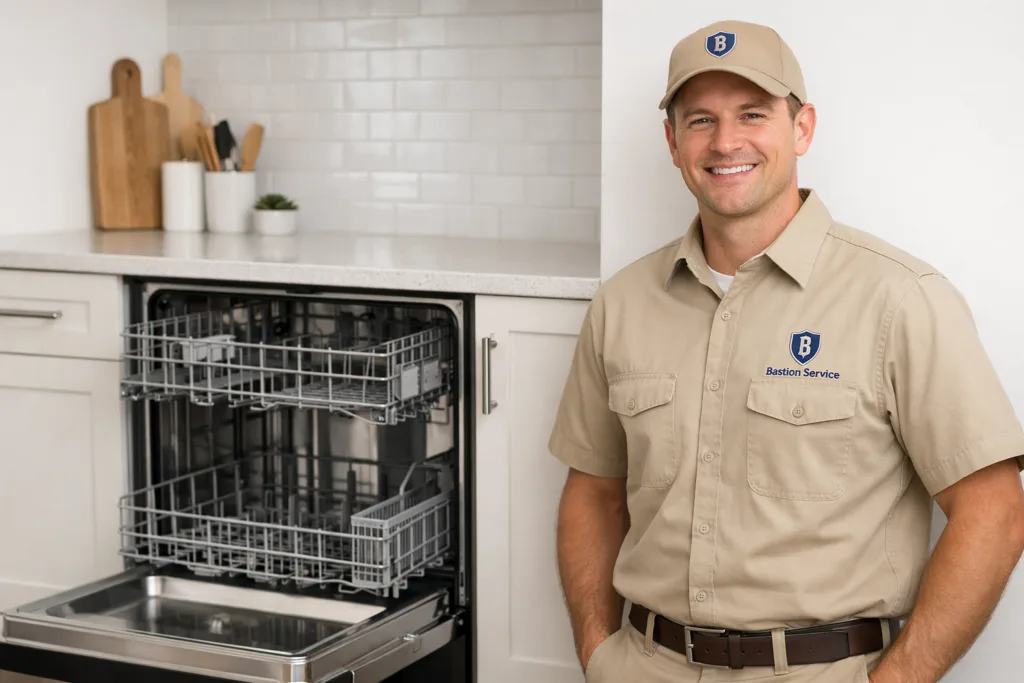
Dishwasher trouble rarely stays limited to one inconvenience. A machine that starts by leaving a few spots on glassware can soon begin running long, holding water in the tub, or leaking under the door. With Amana units, the most useful approach is to match the symptom to the system involved so the repair decision is based on evidence rather than guesswork.
Common Amana dishwasher issues homeowners notice first
Most problems show up in everyday use. You may open the door and find dishes still dirty, hear the cycle run without much water movement, or see water left behind after the load is finished. In other cases, the dishwasher may not respond at all when you press start, or it may stop partway through the cycle.
These symptoms can point to very different causes. A no-start complaint may involve the door latch, control panel, incoming power, or a failed switch. Poor cleaning can come from blocked spray arms, weak circulation, a heating problem, incorrect fill level, or buildup in the filter area. Because several faults can create nearly identical results, symptom-based testing matters.
Poor wash results and residue on dishes
If plates come out with food still attached or glasses look cloudy, the problem is not always the detergent. An Amana dishwasher may be filling with too little water, washing with weak pump pressure, or failing to heat water enough to dissolve detergent properly. Lower spray arm damage can also reduce wash coverage, especially on the bottom rack.
Signs that help narrow it down include:
- Powder or pod residue left in the dispenser area
- Top rack items staying dirty while the bottom rack looks better
- Greasy film after a full cycle
- Dishes that feel cool and wet long after the cycle ends
When these patterns repeat, the issue is usually more than loading technique. It often points to circulation, heating, or water delivery that needs attention.
Standing water and drain problems
Water left at the bottom of the tub after the cycle is one of the most common service concerns. Sometimes the cause is simple, such as debris in the filter area or a restriction in the drain path. In other cases, the drain pump is not moving water properly, the hose is kinked, or the dishwasher is not receiving the signal to drain at the correct time.
A partial drain problem can be easy to miss at first. Homeowners may notice a sour smell, damp residue on dishes, or cloudy water collecting below the filter. If the condition continues, the machine may begin draining slower with each use until it eventually stops clearing the tub altogether.
Leaks around the door or under the machine
Leaks do not always mean the same part has failed. Water at the front edge can come from a worn door gasket, an overfill issue, a cracked spray arm sending water in the wrong direction, or a dishwasher that is not sitting level. Water underneath the unit may involve a hose connection, pump seal, inlet valve area, or internal crack.
Even a small leak deserves attention. Repeated moisture under a dishwasher can affect flooring, cabinet bases, and nearby trim long before the leak becomes obvious during a cycle.
Noise, humming, and interrupted cycles
Different sounds often give clues about what is happening inside the machine. A grinding or rattling sound may mean debris has reached the pump area. A loud hum can point to a motor that is trying to run but struggling. Repeated clicking without a normal wash action can indicate a control or relay problem.
If the cycle starts and then stops, flashes lights, or seems to stall for long periods, the dishwasher may be having trouble with draining, sensing water level, heating, or completing one stage before moving to the next.
What certain symptoms often mean
While only testing can confirm a fault, some symptom patterns are especially useful when deciding whether to schedule service.
The dishwasher runs, but dishes stay dirty
This often suggests one of four areas: low water fill, weak circulation, blocked spray arms, or inadequate heat. If the machine sounds quieter than usual during the wash portion, reduced pump performance may be part of the problem. If detergent is not fully dissolving, water temperature or dispenser operation may also be involved.
The dishwasher will not start
When the control appears dead or the cycle will not begin, likely causes include latch failure, power supply interruption, control board issues, or a user interface problem. If lights come on but nothing happens after the door is closed, the latch system is often worth checking first.
The dishwasher keeps stopping mid-cycle
This can happen when the machine cannot complete a drain step, senses a fill problem, fails to heat as expected, or loses communication between electronic components. A cycle interruption that happens at roughly the same point each time is often a helpful clue.
The dishwasher leaks only during part of the cycle
If leaking happens mainly during active washing and not while filling or draining, spray pattern issues, gasket wear, or overfill conditions become more likely. If it leaks after the cycle is over, trapped water or a slow seep from a connection may be involved.
When to stop using the dishwasher
Some issues are inconvenient but not urgent. Others should put the appliance out of service until it is checked. Continued use is not a good idea when:
- Water is leaking onto the floor
- The dishwasher smells hot or electrical
- The unit will not stop filling
- It repeatedly trips power
- Standing water remains after every cycle
- You hear grinding or harsh mechanical noise that was not there before
Running extra cycles through a machine with a drain, pump, or heating problem can turn a limited repair into a broader one. For households in Del Rey, catching the problem early often means a better chance of repairing a single failed part before additional wear develops.
Why diagnosis matters before replacing parts
Dishwashers are often misdiagnosed because several failures can create the same visible symptom. Poor drying does not automatically mean the heating element is bad. A drain complaint does not always mean the pump has failed. A dishwasher that appears dead may still have an intact main control but a bad latch or power interruption.
A useful inspection checks how the machine fills, whether spray pressure is normal, how it drains, whether heat is present when expected, and whether electronic controls are responding correctly. That process helps separate a clog or isolated component failure from broader internal wear.
Repair or replace: how to make the call
Many Amana dishwasher repairs are worthwhile when the fault is limited to one system and the rest of the machine is in solid condition. Pumps, inlet valves, latches, drain components, and some control-related parts can often be addressed without treating the whole appliance as a loss.
Replacement becomes more reasonable when the dishwasher has multiple active issues, recurring leak history, heavy internal wear, or repair costs that are too close to the value of the machine. Age alone does not decide it. Condition, symptom pattern, and the number of failing systems matter more.
For Del Rey homeowners, the best decision usually comes from looking at three things together:
- Whether the problem is isolated or part of a larger pattern
- Whether the machine has been reliable up to this point
- Whether the repair is likely to restore normal washing, draining, and drying
What a productive service visit should answer
By the end of a service call, you should have a plain explanation of what failed, how that failure matches the symptoms you noticed, and whether the dishwasher is a good repair candidate. That is especially important when problems overlap, such as poor cleaning combined with long cycle times or leaking combined with drain trouble.
Good repair guidance should also make clear whether the issue is primarily mechanical, electrical, or blockage-related. That gives you a better basis for deciding on the next step instead of authorizing parts based only on the most obvious symptom.
Practical signs it is time to schedule Amana dishwasher repair in Del Rey
It makes sense to arrange service when your dishwasher is no longer consistently cleaning, draining, drying, or finishing cycles the way it should. A machine does not need to be completely dead to justify repair. In many cases, inconsistent performance is the warning stage before a full breakdown.
If your Amana dishwasher in Del Rey is leaking, leaving standing water, making unusual noises, or failing to wash dishes normally, addressing the cause sooner usually protects both the appliance and the surrounding kitchen area. The goal is not only to get it running again, but to restore normal operation with a repair path that makes sense for the condition of the machine.