




Common Wolf cooking appliance problems and what the symptoms usually mean
Wolf cooking appliances are often judged by precision, so even small changes in ignition, temperature, or control response tend to show up quickly in daily use. A burner that hesitates, an oven that bakes unevenly, or a wall oven that flashes an error may all seem straightforward at first, but the visible symptom is not always the failed part. Looking at the full pattern of behavior helps narrow the issue before any repair decision is made.
For specific Wolf appliance paths in Mar Vista, review Wolf Oven Repair in Mar Vista, Wolf Wall Oven Repair in Mar Vista, and Wolf Range Repair in Mar Vista.
That matters in Mar Vista homes where cooking appliances are used heavily and performance problems can disrupt routines right away. Instead of treating every no-heat or clicking complaint the same way, it helps to separate gas ignition issues, temperature regulation problems, door and seal concerns, and electronic control faults.
Cooktop symptoms that should not be ignored
Repeated clicking or delayed ignition
If a Wolf cooktop keeps clicking after the burner lights, clicks without lighting, or takes longer than normal to ignite, the problem may involve moisture, residue around the burner head, poor burner cap alignment, an igniter issue, or a spark system fault. In some cases, careful cleaning and drying helps. In others, the clicking returns because the underlying ignition components are failing.
When the same burner repeatedly misfires while the others work normally, that often points to a localized issue rather than a whole-unit failure. If several burners begin acting up at once, broader ignition or control problems become more likely.
Weak, uneven, or unstable flame
A flame that looks inconsistent, burns unevenly, or seems weaker than usual can affect cooking speed and temperature control. This may be caused by blocked burner ports, burner assembly misalignment, contamination, or gas-flow-related problems within the appliance. If a burner suddenly behaves differently than it did before, that change is worth checking instead of working around it.
When a gas smell changes the situation
If there is a strong or persistent gas odor, stop using the appliance. Do not continue testing burners to see whether the smell goes away. Safety comes first, and gas-related concerns should be addressed before normal troubleshooting continues.
Oven problems that often point to heating or control issues
Slow preheat or no heat
A Wolf oven that takes too long to preheat, never reaches the selected temperature, or stays completely cold can have several different causes. Depending on the design and symptom pattern, the issue may involve the heating system, sensor, relay, control board, or power supply. What matters most is whether the oven is failing consistently, intermittently, or only in certain modes.
For example, an oven that bakes poorly but broils normally suggests a different fault path than an oven that appears unresponsive across every setting. That distinction helps guide the repair plan.
Uneven baking, overheating, or temperature drift
Some ovens still heat, but not accurately. Homeowners may notice food browning too fast on one side, longer cooking times than expected, or dishes finishing early even when the set temperature seems correct. Those complaints can point to sensor drift, control calibration issues, convection-related faults, or uneven heat distribution inside the cavity.
If cooking results have changed noticeably without any change in cookware or recipe, the oven may already be outside its normal operating range even though it has not failed completely.
Shutoffs, error displays, or unresponsive controls
An oven that shuts off mid-cycle, shows recurring error codes, or responds inconsistently to commands may have an electronic control issue rather than a simple heating problem. Intermittent faults are especially frustrating because the appliance may work once and fail the next time. In those cases, the timing of the symptom matters: whether it happens during preheat, after reaching temperature, or only during certain cooking modes.
Range issues can involve more than one system at once
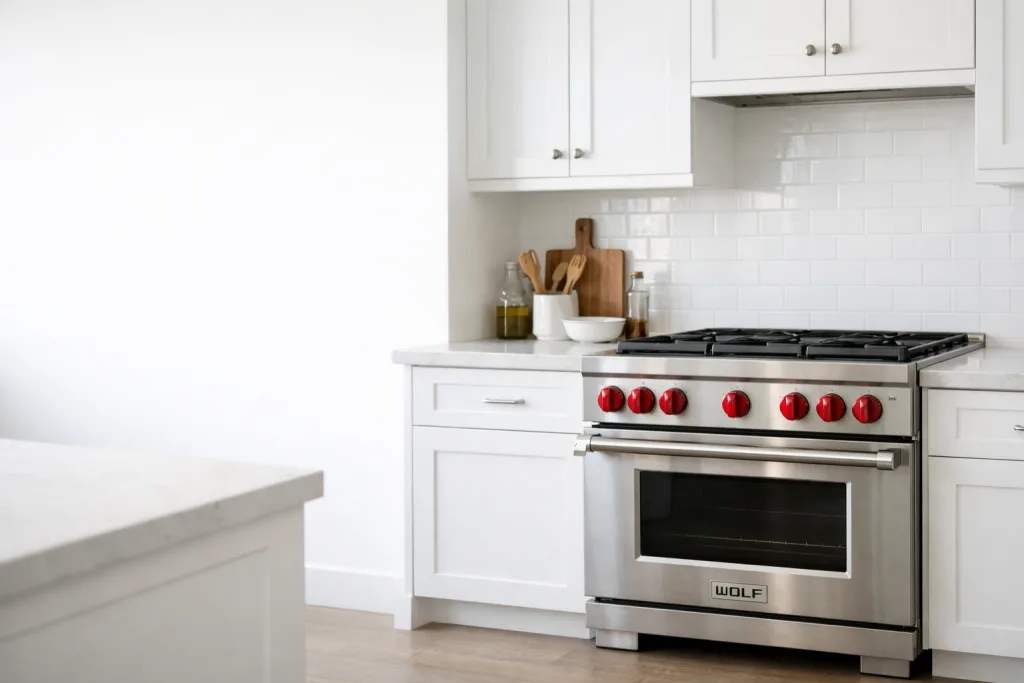
A Wolf range combines top burners and oven functions in one appliance, which means performance complaints can overlap. A homeowner may notice burner ignition trouble and oven temperature inconsistency at the same time, or assume one broad failure is happening when the actual faults are separate.
Ranges also tend to show wear through daily use patterns. A door that no longer closes tightly, controls that feel inconsistent, or burners that behave differently from one another can all affect how the appliance performs long before it stops working entirely. If the range is still operating but no longer predictable, that is usually the point where diagnosis becomes more useful than guesswork.
Wall oven complaints often start as reliability problems
Wolf wall ovens often show trouble through uneven heating, repeated fault codes, latch or door problems, or convection performance changes. Because they are built into cabinetry, homeowners sometimes keep using them despite obvious symptoms simply to avoid interruption. But a wall oven that cycles oddly, runs hotter than expected, or loses heat during cooking is already telling you something important about its condition.
Door seal problems matter too. If heat escapes around the door, preheat times may lengthen and cooking consistency can suffer. A wall oven does not need to be completely dead to need service; poor reliability is often enough to justify a closer look.
Why symptom patterns matter more than part guesses
Two appliances can show what looks like the same problem and still need completely different repairs. One oven that “is not heating right” may have a sensor-related issue, while another may have a control fault. One cooktop that clicks nonstop may have residue affecting ignition, while another may have a failing switch or spark module. That is why symptom-based diagnosis is the smart first step.
For homeowners in Mar Vista, this approach helps separate a contained repair from a larger concern. It also helps answer practical questions: Is the appliance safe to use right now? Is the issue likely to worsen with continued use? Does the failure appear isolated, or is it part of broader decline?
Signs it makes sense to schedule service
- The appliance works inconsistently from one use to the next.
- Basic cleaning or reset attempts did not change the problem.
- The oven cannot hold temperature reliably.
- A burner ignites only intermittently or keeps clicking.
- Error codes return after clearing.
- The appliance shuts off unexpectedly during use.
- Normal operation seems likely to stress other components.
Many households wait until total failure, but that is not always the most efficient point to act. Problems that begin as temperature drift, delayed ignition, or sporadic control issues can become more disruptive if the appliance is pushed through repeated use.
When continued use is not a good idea
Some symptoms move beyond inconvenience. If flames become erratic, the oven overheats, controls behave unpredictably, the unit trips power repeatedly, or unusual smells appear during operation, it is better to stop using the appliance until it is checked. A unit that is “mostly working” can still create poor cooking results, added wear, or avoidable safety concerns.
This is especially true with gas cooking equipment. If ignition is unreliable or the burner behavior changes suddenly, it is better to pause use than to keep relighting and retesting the appliance.
Repair or replacement depends on the overall condition
Not every problem leads to the same outcome. Repair is often the sensible path when the fault is limited, the appliance is otherwise performing well, and restoring function is likely to return the unit to reliable everyday use. Replacement becomes more relevant when the appliance has recurring issues, multiple systems are failing, or the pattern suggests broader reliability decline rather than one correctable fault.
In Mar Vista homes, that decision usually comes down to what the symptom pattern reveals after inspection. A single ignition issue is very different from repeated control failures, temperature instability, and ongoing performance complaints across the same appliance.
A practical way to think about Wolf appliance repair in Mar Vista
The most useful approach is to start with what the appliance is actually doing: how it ignites, heats, cycles, responds, and holds temperature during real use. That makes it easier to understand whether the problem is minor, whether continued use is reasonable, and whether repair is likely to restore dependable performance.
Whether the issue involves a cooktop, oven, range, or wall oven, the goal is the same: identify the failing system, avoid unnecessary part replacement, and choose the repair direction that matches the appliance’s real condition.


