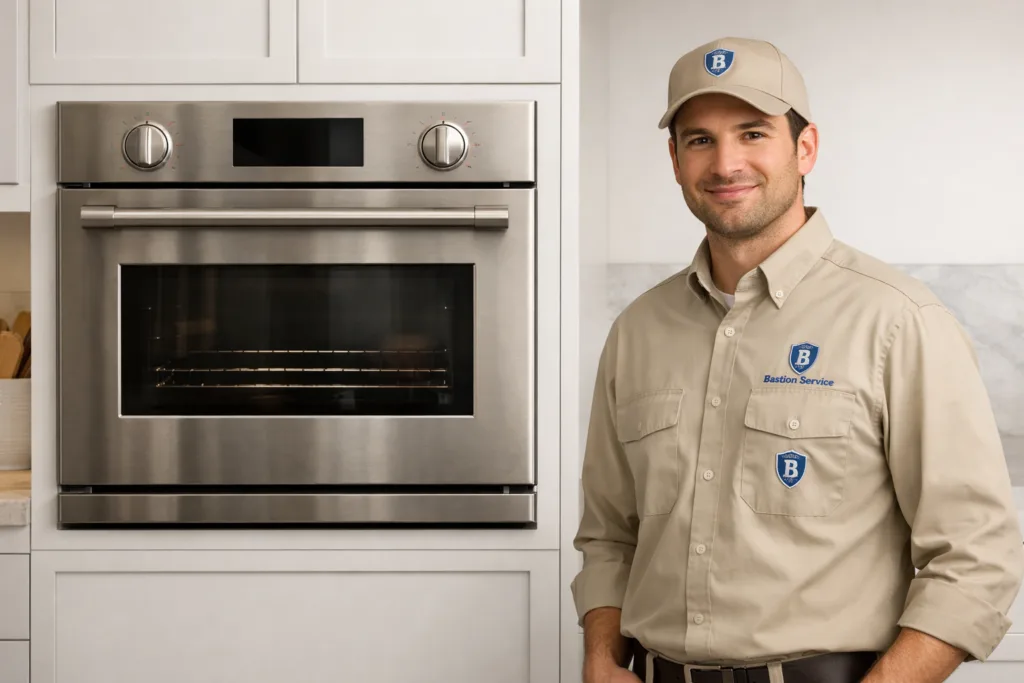
What different Wolf oven symptoms usually mean

Wolf ovens are built for consistent cooking, so when performance changes, the pattern of the symptom matters. An oven that will not heat at all is a different problem from one that heats slowly, cycles unevenly, or drifts away from the set temperature during longer cooking times. Looking at how the issue appears in daily use is often the fastest way to narrow down the repair path.
Not heating or only partially heating
If the control responds but the cavity stays cool, the fault may involve a heating element, igniter on gas models, temperature sensor, relay, wiring issue, or the main control. In some cases, the oven still warms slightly because one part of the heating circuit is working while another has failed. That can make the problem seem minor at first, even though cooking performance is already compromised.
Slow preheat
A slow preheat complaint often points to weak heat output rather than a total loss of heat. One element may be failing, the sensor may be reading incorrectly, or the control may not be energizing the oven properly through the full cycle. If preheat times keep getting longer in a Venice home where the oven is used often, it is usually a sign that the problem is progressing.
Uneven baking and temperature swings
Cookies browning on one side, casseroles finishing unevenly, or food needing much longer than expected can all indicate temperature regulation trouble. Causes may include sensor drift, convection fan problems, element weakness, poor door sealing, or a control issue that causes the oven to overshoot and then drop too far. The oven may still appear usable, but unreliable temperature control can make everyday cooking frustrating.
Error codes, display issues, and intermittent operation
When the display flashes, buttons stop responding, or the oven shuts off mid-cycle, the problem is often electronic rather than purely mechanical. Control boards, communication faults, loose connections, and power-related issues can all create intermittent symptoms. These cases are worth addressing early because they tend to become less predictable over time.
Door, hinge, and latch problems
A door that will not close squarely can affect much more than convenience. Heat escapes, preheat slows down, and the oven may struggle to hold a stable temperature. Worn hinges, damaged gaskets, misalignment, or latch issues can all contribute to poor cooking results and extra strain on the appliance.
Signs the issue is getting worse
Some oven problems stay small for a while, then become more expensive once related parts are affected. It makes sense to stop treating the issue as a one-time glitch when you notice the same behavior repeatedly.
- Preheat times keep increasing from week to week
- The oven reaches temperature but cannot maintain it
- Error codes return after being cleared
- The unit works on some cycles but not others
- The breaker trips during preheat or high-heat cooking
- The door no longer seals tightly
- You notice new buzzing, clicking, or hot electrical odors
These patterns usually point to a real fault rather than normal variation in cooking performance.
When to stop using the oven until it is checked
Some symptoms are more than an inconvenience. If the oven overheats, fails to shut off properly, produces a strong burning smell, or shows signs of electrical stress, limiting use is the safer choice. Gas models with a persistent gas odor should not be used until the source of the problem is identified. In those situations, a clear diagnosis and a practical repair plan based on the exact symptom pattern helps you decide what should be fixed now and whether the appliance can be used safely afterward.
Repair versus replacement
Many Wolf oven issues are repairable, especially when the failure is limited to one component or system. Sensor problems, igniter failures, certain element issues, door hardware problems, and some control-related faults are commonly worth addressing when the rest of the oven is in solid condition.
Replacement becomes a more serious consideration when there are multiple major failures, recurring electronic problems, severe wear, or repair costs that no longer make sense for the appliance’s overall condition. For homeowners in Venice, the smartest decision usually comes from comparing the exact fault, the age and condition of the oven, and whether the problem appears isolated or part of a larger reliability decline.
What a useful service visit should answer
Good oven service should do more than confirm that something is wrong. It should explain what failed, how that failure connects to the symptom you noticed, and whether additional wear is present. That gives you a realistic picture of the repair instead of a guess based only on the most visible symptom.
During service, homeowners should expect attention to issues such as:
- Whether the oven is heating through all required stages
- Whether temperature readings match actual cavity performance
- Whether controls, relays, and wiring are behaving consistently
- Whether door seal and hinge condition are affecting results
- Whether continued use could damage other components
Why symptom details matter before service
If you are scheduling Wolf oven repair in Venice, a few observations can help make the visit more productive. Try to note whether the oven fails during preheat or later in the cycle, whether the issue affects bake, broil, or convection specifically, and whether the problem is constant or intermittent. Also pay attention to any recent error codes, unusual noises, or changes in cooking times.
Those details often help separate a heating problem from a sensor issue, a control fault, or a door-related heat loss problem. For a premium household oven, that distinction matters because the right repair depends on the actual cause, not just the most obvious symptom.
For everyday cooking, consistency is the real goal
Most homeowners do not need their oven to be perfect on paper; they need it to preheat normally, hold temperature, and cook meals the way they expect. When a Wolf oven stops doing that, the most helpful next step is finding out whether the issue is isolated and repairable or part of a broader decline. A focused evaluation can turn a frustrating cooking problem into a straightforward decision.