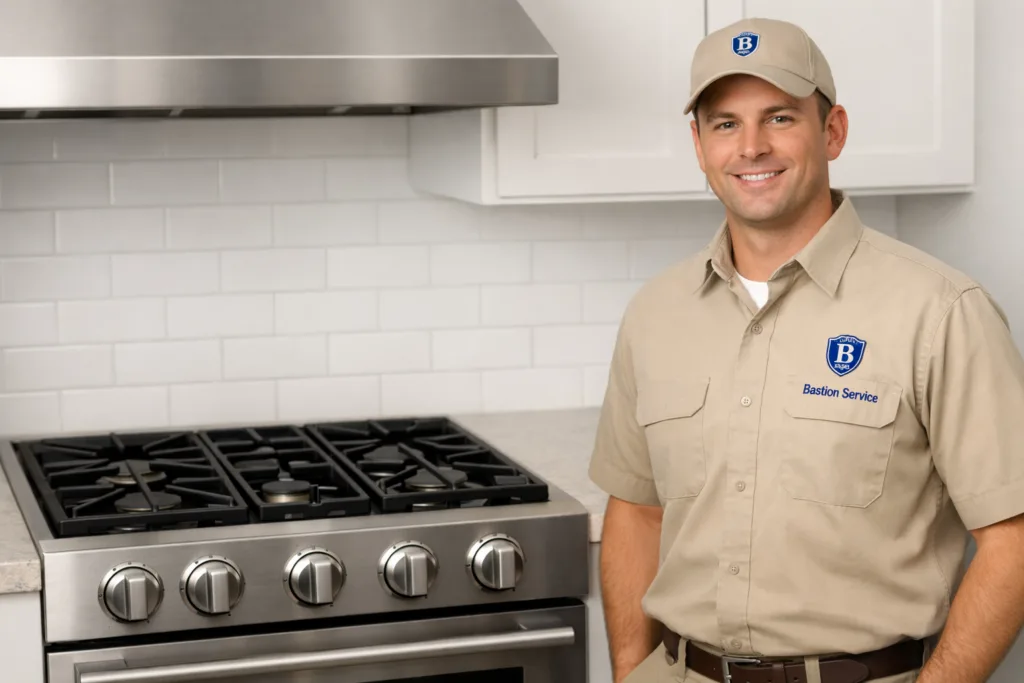
Cooktop problems tend to show up in ways that interrupt normal routines fast: a burner that clicks and will not light, a flame that suddenly looks weak, or controls that stop behaving predictably while you are cooking. On a Wolf unit, those symptoms can come from several different sources, so the most useful next step is to match the repair plan to the exact behavior of the appliance rather than assume one part is at fault.
Common Wolf cooktop issues homeowners notice
Some faults are obvious right away, while others start small and gradually become harder to ignore. Paying attention to what changed, when it happens, and whether it affects one burner or all of them can help narrow down the cause.
Ignition that clicks but does not light
One of the most common complaints is constant clicking with delayed ignition or no ignition at all. In many cases, the problem may involve the igniter, burner cap alignment, moisture around the burner, clogged ports, or a fault in the spark system. If the clicking continues after the flame is lit, that can also point to an ignition switch issue or contamination affecting normal sensing.
Because several conditions can produce the same symptom, replacing parts without testing often leads to wasted time. If you also notice a persistent gas odor, stop using the cooktop until the problem is properly evaluated.
Burners heating unevenly or producing a weak flame
When a gas burner does not distribute flame evenly, cooking results become inconsistent. You may see one side of the burner running stronger than the other, simmer control becoming unreliable, or pans taking much longer to heat. Causes can include blocked burner openings, burner head wear, gas flow problems, or regulator-related issues.
On electric-style or induction cooking surfaces, uneven heating can point to element, sensor, or control trouble instead. The symptom may feel similar from the user side, but the repair path is different, which is why symptom-based testing matters.
Burners that stay too hot or do not adjust correctly
If a burner is stuck on high, fails to lower properly, or responds unpredictably when you turn the control, the issue may be tied to the switch, control assembly, wiring, or related electronic components. This is not just a cooking performance problem. It can also affect safety and make the appliance difficult to use with confidence.
Intermittent power or control failure
A cooktop that loses power, responds only sometimes, or behaves differently from one use to the next may have a fault in the incoming power path, internal connections, fuse protection, user interface, or main control system. Intermittent issues are especially frustrating because the appliance may seem normal during one meal and fail during the next.
Cracked glass or surface damage
If the cooktop surface is cracked, chipped, or visibly damaged, it should be taken seriously. Surface damage can affect safe operation, heat distribution, and long-term reliability. In some cases, the damage is cosmetic; in others, it changes whether continued use is advisable. A proper inspection helps determine whether repair is realistic and what components may also have been affected.
What the symptom pattern can reveal
The details matter. A single burner failing often points toward a localized problem such as a burner assembly, igniter, or switch. Multiple burners acting up at once can suggest a shared ignition fault, power issue, or broader control problem. A failure that happens only after cleaning may indicate trapped moisture or burner cap misalignment, while a problem that gets worse over weeks may suggest wear or heat-related component breakdown.
Even small differences in behavior help separate simple corrections from more involved repairs. That is why homeowners in Venice usually benefit most from describing the exact sequence: whether the unit clicks first, whether the flame appears then goes out, whether the control feels loose, or whether the issue affects low heat more than high heat.
When repair is often worth pursuing
Many Wolf cooktop problems are repairable when the issue is limited to a serviceable component and the rest of the appliance is in good condition. That may include ignition-related parts, switches, burner components, certain wiring faults, or specific control-related failures. If the cooktop has otherwise been performing well, restoring it can make sense financially and functionally.
Repair decisions become less straightforward when there are several active problems at once, significant surface damage, signs of repeated overheating, or a major control failure on an older unit. In those situations, the condition of the full appliance matters as much as the individual symptom.
Signs you should stop using the cooktop for now
Some symptoms call for caution rather than continued trial use. It is smart to pause normal operation if you notice:
- a strong or recurring gas smell
- a burner that will not regulate heat properly
- clicking that continues abnormally
- sparking behavior that seems irregular
- intermittent electrical loss or controls cutting out
- visible cracking or damage on the cooking surface
Continuing to use the appliance in these conditions can make the fault worse and may create additional safety concerns.
What to check before scheduling service
A few basic observations can be helpful before a repair visit. Make sure burner caps are seated correctly, note whether the issue affects one burner or several, and pay attention to whether the problem is constant or only happens after cleaning or heavy use. If the cooktop lights but performance is poor, notice whether the flame is weak, uneven, or unusually high.
You do not need to disassemble anything to be helpful. The most useful information is simply what the appliance is doing, how often it happens, and whether the behavior has changed recently.
What homeowners in Venice should expect from a repair visit
A good service process should focus on the actual complaint, verify the symptom, and test the components most likely connected to that failure. With Wolf Cooktop Repair in Venice, that means looking beyond the obvious symptom to determine whether the problem is isolated or part of a larger wear pattern. This gives homeowners a practical repair plan based on the unit’s condition, the likely fix, and whether the expected result justifies the work.
That approach is especially useful when the cooktop is still an important part of daily cooking and the goal is to restore steady, predictable performance without guesswork. In many homes, a well-targeted repair can return normal burner response, reliable ignition, and better heat control without turning a manageable issue into a larger one.