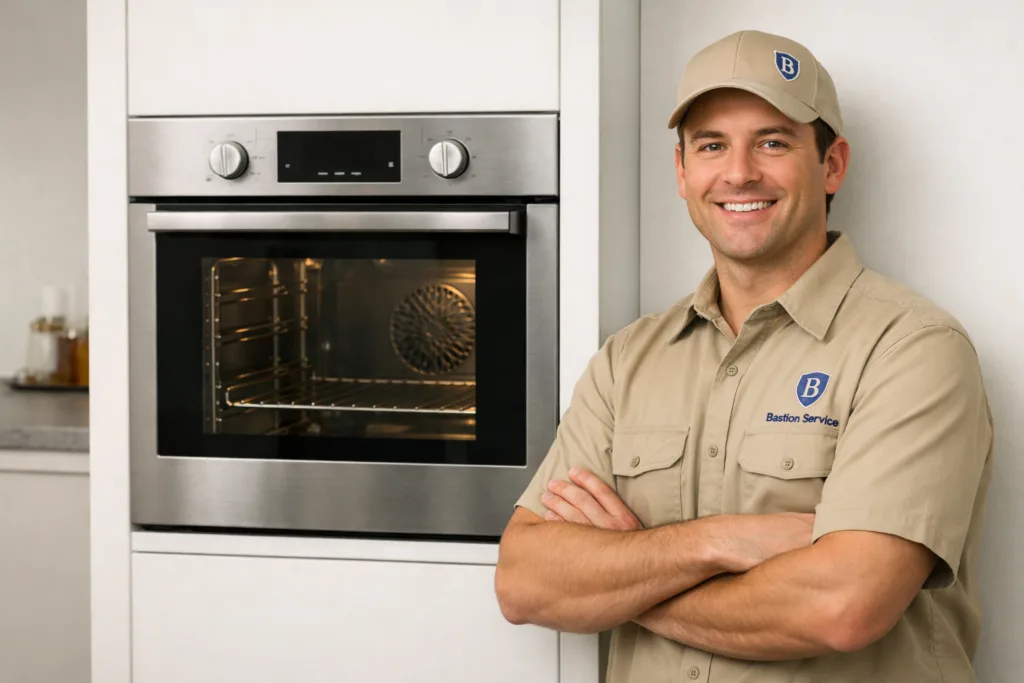
Oven problems often show up first as everyday cooking frustrations: a casserole that never finishes, cookies that brown unevenly, or a preheat cycle that seems to drag on forever. With Asko ovens, those symptoms can come from heating components, temperature sensing, door sealing, fan operation, or electronic controls, so the most useful next step is identifying the actual source instead of assuming the part that failed.
What different oven symptoms usually point to
Several issues can produce similar results in the kitchen. An oven that feels “off” is not always suffering from the same failure from one home to another. Looking at the symptom pattern helps narrow the likely repair path and gives homeowners a better sense of urgency.
Not heating at all
If the display powers up but the oven cavity stays cold, the problem may involve a bake element, broil element, igniter, thermal protection component, wiring fault, or control failure. In some cases, only one cooking function stops working, which can help isolate whether the issue is tied to a specific heating circuit.
Slow preheat
When an Asko oven eventually reaches temperature but takes much longer than normal, that can suggest a weak heating element, an igniter that is aging, a sensor that is reading incorrectly, or a problem with how the control is cycling heat. Slow preheat is easy to dismiss at first, but it often gets worse over time.
Uneven baking
Food that comes out burnt at the edges and underdone in the center may indicate poor temperature regulation, a failing convection fan, weak heat output, or a door seal problem that allows heat to escape. This is especially noticeable when recipes that used to be predictable suddenly stop turning out right.
Temperature swings
Some fluctuation is normal during baking, but wide swings can point to a faulty sensor, control relay issue, or heating system problem. Homeowners may notice this as inconsistent results from one meal to the next, even when using the same settings and cookware.
Control or display problems
Unresponsive buttons, flashing errors, settings that change unexpectedly, or a panel that works intermittently may involve the touch interface, main control board, wiring connections, or moisture-related electrical issues. These problems are usually best addressed early, before repeated resets or partial operation create additional stress on the appliance.
Common Asko oven issues in daily household use
Many service calls begin with a simple complaint like “it cooks too slowly” or “the temperature feels wrong.” In practice, the most common household patterns tend to include:
- Preheating that takes much longer than before
- Food finishing unevenly on different racks
- One cooking mode working while another does not
- The oven turning off during use
- Error codes appearing during baking or self-clean
- A door that will not close, lock, or unlock properly
- Burning smells, sparks, or breaker trips
These symptoms do not all carry the same urgency. A slightly inaccurate temperature may be annoying but manageable for a short time, while tripping power or showing signs of electrical damage should be treated as a stop-use issue until the oven is checked.
Why oven temperature complaints can be tricky
Temperature complaints are among the most common and also among the easiest to misread. Homeowners may suspect the thermostat, but the real issue could be a weak element, poor airflow, sensor drift, or a door gasket that no longer seals properly. Even pan placement and convection performance can change how the oven appears to behave.
That is why symptom details matter. If the oven overshoots heat at startup, struggles to recover after the door opens, or only bakes unevenly in convection mode, each pattern points in a slightly different direction. For households in Venice, that kind of symptom-based explanation is often more useful than jumping straight to part names.
Door, latch, and self-clean problems
Not every oven issue starts with heat. A door that will not shut fully can affect cooking times and temperature consistency because heat escapes throughout the cycle. A failed latch or lock assembly can interfere with self-clean operation or leave the door stuck when the cycle ends.
Common signs of a door or latch problem include:
- The door sitting unevenly or springing back open
- Visible wear around hinges or gasket areas
- Lock errors during or after self-clean
- The oven refusing to start because it does not detect the door correctly
These issues are more than convenience problems. If the oven cannot maintain a proper seal, heat performance may suffer even when the rest of the heating system is in working order.
When to stop using the oven right away
Some symptoms justify pausing use instead of trying one more meal. That is especially true when there are signs of electrical trouble or when the appliance behaves unpredictably.
Stop using the oven and arrange service if you notice:
- A burning electrical smell
- Visible sparking
- The breaker tripping repeatedly
- The oven shutting off during normal cooking
- A control panel that acts erratically
- Door lock problems that trap the door closed or leave it insecure
For gas-equipped models, any persistent gas odor should be treated as a safety issue first. Do not continue testing the appliance. Address the gas concern immediately before moving forward with repair.
Repair or replace: what usually makes sense
For many Venice homeowners, the decision comes down to the nature of the failure rather than the symptom alone. Repairs are often worthwhile when the issue is limited to a sensor, igniter, element, latch component, fan motor, or another isolated part and the oven is otherwise in good condition.
Replacement becomes more likely when there are repeated breakdowns, significant electronic failures, multiple worn components at once, or a long history of inconsistent performance. Age matters, but so do condition, prior repairs, and how much confidence the appliance still offers for everyday use.
What to note before scheduling service
A few details can make the visit more productive and help narrow the problem faster:
- Whether the oven fails in bake, broil, convection, or all modes
- If preheat is slow every time or only at certain temperatures
- Any error codes shown on the display
- Whether the issue began suddenly or gradually worsened
- If the door, lock, or control panel also seems affected
- Whether the oven has recently tripped power or shut off mid-cycle
Even simple observations like “top browns too fast but bottom stays pale” or “it reaches 350 but struggles at higher settings” can help connect the symptom to the likely repair path.
What homeowners in Venice usually want from oven service
Most people are not looking for a long technical breakdown. They want to know what failed, whether the oven is safe to keep using, what the repair is likely to involve, and whether fixing the current unit makes financial sense. A diagnosis-first appointment is usually the fastest way to answer those questions without replacing parts on guesswork.
If your Asko oven in Venice is no longer heating correctly, baking evenly, or responding reliably to controls, getting the problem assessed early can prevent more disrupted meals and help keep a smaller issue from turning into a broader repair.