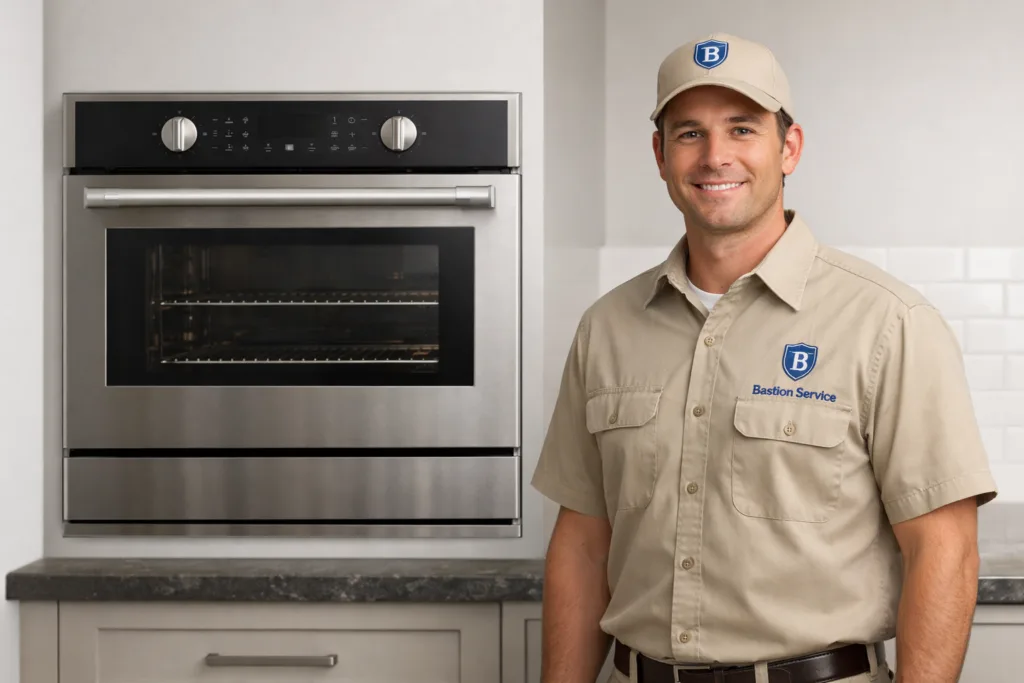
Common Dacor oven problems in Venice homes

Dacor ovens tend to give useful clues before they fail completely. The pattern matters. An oven that runs but bakes poorly is a different problem from one that stays cold, shuts off mid-cycle, or ignores commands on the control panel. Looking at the exact symptom helps narrow whether the issue is related to heat production, temperature reading, airflow, controls, or the door system.
Oven not heating at all
If the oven turns on but never produces heat, the cause may be a failed bake element, a weak igniter on gas models, a damaged sensor circuit, a control relay fault, or a power issue. In some cases the display appears normal while the heating system never actually starts. That usually points to a component failure behind the scenes rather than a simple setting mistake.
Slow preheat
A long preheat time is one of the most common complaints because it can start gradually and become easy to dismiss at first. A weak igniter, a partially failing element, inaccurate temperature sensing, or a control issue can all make the oven seem functional while still performing far below normal. If preheat keeps getting slower, the problem usually does not correct itself.
Uneven baking and hot spots
When food browns too quickly on one side, stays pale on another, or comes out differently from the top and bottom racks, heat is not circulating or cycling the way it should. That can come from a convection fan problem, sensor drift, element trouble, or an issue with how the oven is regulating temperature. These symptoms are frustrating because the oven still runs, but results become unreliable.
Temperature swings
Some normal cycling is expected during oven use, but wide swings are a warning sign. If the cavity gets much hotter or cooler than the selected setting, baking times become unpredictable and delicate dishes are more likely to fail. Temperature instability may point to a sensor problem, relay issue, calibration drift, or a control board that is no longer managing heat correctly.
Control panel or display problems
If buttons do not respond, the display flickers, settings reset, or the oven will not start a cycle, the issue may involve the touch interface, control board, wiring, or power delivery to the controls. Electronic faults can appear inconsistent at first, which makes them easy to overlook until the oven stops cooperating altogether.
Door and latch issues
An oven door that will not close fully, does not seal well, or has trouble latching can affect both performance and safety. Heat loss through the door can cause long cook times and uneven results. On models with self-clean or lock functions, latch trouble may also keep the oven from starting or finishing a cycle properly.
What each symptom usually suggests
While only testing can confirm the failed part, symptom patterns often point in a useful direction:
- No heat: possible element, igniter, sensor, wiring, relay, or power problem
- Slow preheat: often linked to weak ignition, failing elements, or sensor/control inaccuracies
- Uneven baking: commonly related to heat distribution, convection, or temperature regulation
- Temperature too high or too low: sensor or control issues are common suspects
- Display errors or nonresponsive controls: often tied to interface boards, main controls, or electrical faults
- Door not sealing: hinges, gasket, latch, or alignment issues may be involved
This is why accurate diagnosis matters more than replacing parts based on guesswork. Several different failures can create the same cooking complaint.
When the problem is urgent
Some oven issues can wait a short time for service, but others call for stopping use right away. Do not keep using the oven if it trips the breaker repeatedly, shuts off unexpectedly during heating, smells like gas, sparks, shows signs of overheating around the controls, or displays recurring errors that interrupt operation. Those conditions can lead to further component damage and may create a safety concern.
If the issue is limited to inaccurate baking results, you may still be able to use the oven cautiously for simple tasks, but only if there are no signs of electrical or ignition trouble. Even then, inconsistent temperature usually gets worse with time.
Why Dacor oven issues should be diagnosed by symptom
Dacor ovens often combine electronic controls, temperature sensing, and model-specific heating behavior. That means one complaint, such as food taking too long to cook, can come from very different causes. Replacing an element will not solve a bad sensor reading, and replacing a sensor will not fix a failing relay or weak igniter. Matching the repair to the symptom pattern saves time and reduces the risk of spending money on the wrong part.
A good service approach should identify what failed, whether related parts were affected, and whether the oven is likely to return to stable performance after repair. That matters even more when the appliance still turns on but no longer cooks consistently.
Repair or replacement in a Venice household
For many homeowners in Venice, repair makes sense when the fault is limited to a single component or a contained system issue, such as an igniter, bake element, temperature sensor, convection fan, latch assembly, or select control-related part. If the oven is otherwise in good shape and the repair restores reliable heating, keeping it in service is often the better value.
Replacement becomes more likely when there are multiple electrical problems, recurring control failures, severe wear, or costs that approach the value of the appliance. Age alone does not decide it. The better question is whether the current problem is isolated or part of a larger pattern.
What to check before scheduling service
Before arranging a repair visit, it helps to note a few details:
- Whether the oven fails completely or only during certain modes
- How long preheat is taking compared with normal
- Whether the issue affects bake, broil, or convection differently
- Any error codes shown on the display
- Whether the door closes and seals normally
- Any recent power interruptions or breaker trips
These observations can make the diagnosis more efficient and help separate a heating problem from a control or power problem.
What homeowners in Venice should expect from oven repair
Useful oven service should do more than restore power to the unit for the moment. It should explain the failed part, how that failure caused the cooking symptom you noticed, whether the appliance can be used safely before repair is completed, and whether the overall condition of the oven supports fixing it. That gives you a realistic basis for deciding what to do next.
If your Dacor oven is not heating, baking unevenly, taking too long to preheat, or acting unpredictably at the controls, the next step is to have the fault isolated correctly so the repair choice is worth making.