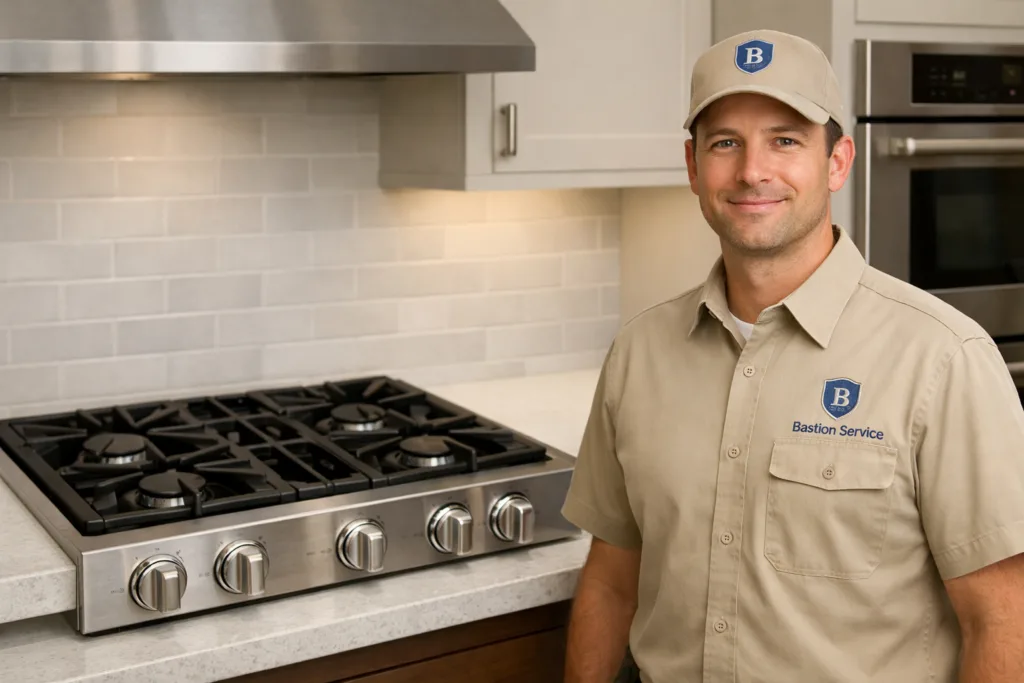
Cooktop problems are easiest to solve when you look at the exact way the failure shows up in normal use. A burner that never lights is different from one that lights after several clicks, and both are different from a burner that starts normally but loses heat after a few minutes. On Wolf units, those details often point to very different repair paths.
For homeowners in Sawtelle, that means it helps to notice whether the issue affects one burner or several, whether it happens on every use or only sometimes, and whether the symptom involves ignition, heat output, glass, or controls. Small clues can narrow the problem quickly and help determine whether the fix is likely to be straightforward or more involved.
Common Wolf cooktop problems and what they may indicate
Burner will not ignite
When a gas burner will not light, the cause may be as simple as misalignment at the burner cap or buildup around the ports. In other cases, the problem is related to the igniter, spark module, switch, or wiring. If only one burner is affected, the fault is often isolated to that burner assembly. If multiple burners stop igniting properly, the issue may be tied to a shared ignition component.
If the burner eventually lights with a match but not through normal ignition, that is still a sign the cooktop needs attention. Delayed ignition and repeated sparking can put extra strain on components and make day-to-day cooking less predictable.
Continuous clicking after the flame lights
Clicking that continues after ignition is one of the more common complaints on gas cooktops. Moisture from cleaning, residue around the burner area, a wet igniter, or a failing ignition switch can all cause this symptom. Sometimes the clicking stops after the area dries out, but persistent or recurring clicking usually points to a part that should be inspected.
If the sound comes and goes without a clear reason, intermittent switch faults are often worth checking. These can seem minor at first, then become more frequent until the cooktop becomes frustrating to use.
Weak flame or uneven heating
A weak, lopsided, or inconsistent flame can affect everything from simmering to high-heat searing. Common causes include clogged burner ports, burner head alignment issues, fuel flow problems, or wear in components that regulate ignition and performance. If cookware starts heating unevenly or cooking times suddenly change, the flame pattern may already be telling you something is off.
When one burner runs much differently than the others, the problem is often local to that burner. When several burners show similar behavior, a broader system check is usually needed.
Electric or induction zones not heating correctly
On electric or induction-style Wolf cooktops, a heating zone that stays cold, overheats, cycles unpredictably, or responds poorly to setting changes may involve the element, sensor, control board, or related wiring. Some failures are obvious and constant. Others appear only after the cooktop warms up, which can make the unit seem fine during a quick test but unreliable during real cooking.
If the problem only appears at certain heat levels, that detail matters. It can help separate a control issue from a heating component failure.
Controls not responding normally
Loose knobs, settings that do not match the actual heat level, indicator lights that behave oddly, or touch controls that fail to register input can all point to switch or control faults. These issues can be easy to overlook at first, especially if the cooktop still works part of the time, but control problems rarely improve on their own.
Intermittent control issues are especially important because they can lead to unpredictable heating. If the cooktop does not respond consistently, it becomes harder to cook safely and accurately.
Symptoms that should not be ignored
Some issues are inconvenient. Others are a sign to stop using the cooktop until it is checked. It is wise to pause use if you notice:
- burners that repeatedly fail to ignite
- sparking or clicking that does not stop
- a smell of gas when a burner does not light properly
- electrical tripping during cooktop use
- a burner or zone that overheats without normal control
- cracked glass on a radiant or induction surface
A cracked glass top is more than a cosmetic problem. Even a hairline crack can affect safe operation, especially when heat and daily use continue to stress the surface. If the glass is damaged, further use is usually not a good idea until the condition is evaluated.
How a symptom-based diagnosis helps
Many cooktop failures look similar from the outside. For example, “not heating” might mean a bad element, a failed switch, a control issue, or a wiring problem. “Keeps clicking” could come from moisture, contamination, a switch problem, or a fault in the spark system. Replacing parts based only on the broad symptom can lead to extra cost without fixing the real cause.
A practical repair plan starts by narrowing the symptom pattern. Does the issue affect one burner or all of them? Did it start suddenly or gradually? Is it worse after cleaning, after heavy use, or only on one setting? Those details can make the difference between a contained repair and a more complex one.
Repair or replace?
For many households in Sawtelle, repair makes sense when the Wolf cooktop is otherwise in solid condition and the problem is limited to one burner, one control, one ignition component, or one heating zone. That is often the case with isolated ignition faults, worn switches, failed elements, or burner-specific issues.
Replacement becomes a more serious consideration when there are multiple system failures, recurring control problems, widespread performance issues, or physical damage that changes the value of further repair. Age matters, but condition matters more. A well-kept cooktop with one contained failure is a very different situation from a unit with several unrelated problems developing at the same time.
The best decision usually comes down to three questions:
- Is the failure isolated or part of a larger pattern?
- Is the unit likely to return to stable daily use after repair?
- Does the repair make sense compared with the overall condition of the cooktop?
What to check before service
Before assuming the cooktop has a major failure, a few basic checks can be helpful:
- make sure burner caps are seated correctly
- look for food debris blocking burner ports
- consider whether recent cleaning left moisture around igniters
- note whether the issue affects one burner or several
- pay attention to whether the problem is constant or intermittent
These steps do not replace repair work, but they can help describe the problem more accurately. That makes service more efficient and can shorten the path to the right fix.
What homeowners in Sawtelle can expect from Wolf cooktop service
Good service stays centered on the complaint you are actually living with at home. That may be a front burner that clicks constantly, a rear burner that will not stay lit, a zone that overheats, or controls that have become unreliable. The point is not to guess from the brand name or model family, but to trace the symptom back to the failed component and any related parts that may also be contributing.
That approach is especially important with premium cooking appliances, where performance changes are often noticeable before a complete breakdown happens. Addressing the problem early can help prevent added wear and keep a smaller repair from turning into a larger one.
When it is time to schedule repair
If your Wolf cooktop is no longer heating evenly, lights inconsistently, keeps clicking, shows control problems, or has visible glass damage, waiting usually does not make the appliance easier or cheaper to fix. The most sensible next step is to have the symptom evaluated while the problem is still specific and easier to track.
For Sawtelle homeowners, the goal is simple: restore safe, predictable cooking without unnecessary parts replacement or guesswork. When the symptom is identified correctly, it becomes much easier to decide whether repair is the right move for your household.