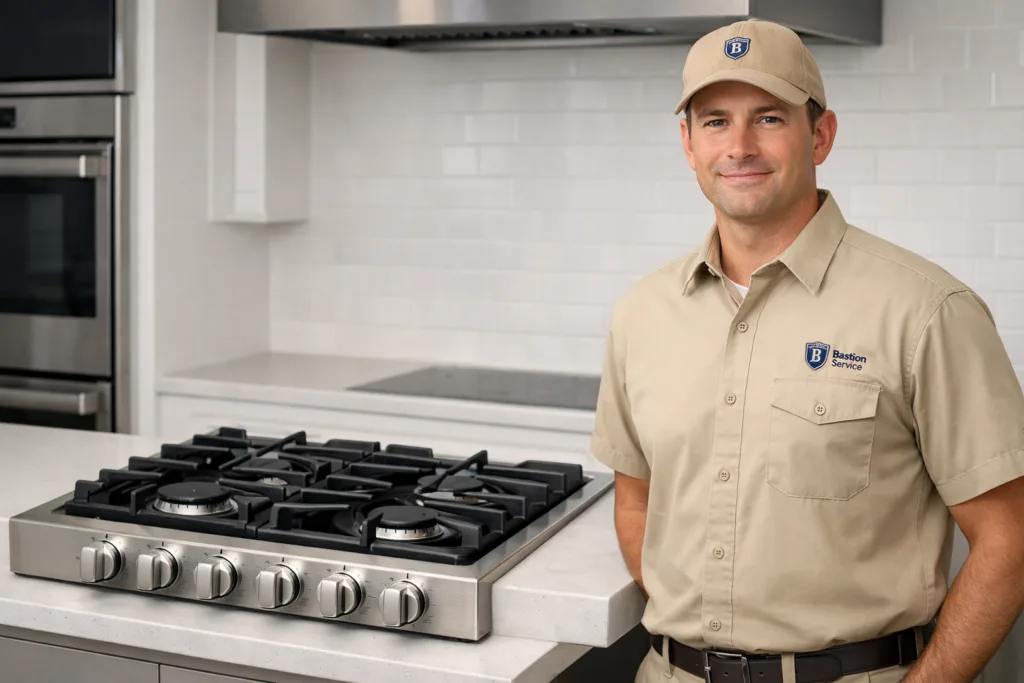
Cooktop problems tend to show up in ways that feel inconsistent at first: a burner lights only after several tries, a flame looks smaller than usual, or the surface no longer holds a steady simmer. On a Dacor unit, those details matter. The exact symptom pattern often points to whether the problem is isolated to one burner, tied to the ignition system, or connected to controls that are no longer responding the way they should.
What Certain Cooktop Symptoms Often Mean
Clicking but no flame
When you hear repeated clicking and the burner does not ignite, several conditions may be involved. Burner caps can sit slightly out of position, ports may be blocked by cooking residue, or the spark may not be reaching the gas correctly. Moisture after cleaning can also interfere with ignition. If more than one burner behaves the same way, the issue may be less about a single burner head and more about the shared ignition system or supply conditions affecting operation.
Burner lights slowly
Delayed ignition is different from total failure. The burner may eventually light, but only after extra clicking or after turning the knob more than usual. That can be a sign that the flame is not catching where it should, often because of buildup, poor alignment, or a weakening ignition component. This is worth addressing early, since repeated delayed lighting can become less reliable over time.
Uneven flame or poor heat output
If a pan heats unevenly or it becomes harder to maintain a low, steady setting, the problem may be in flame distribution, burner ports, or heat regulation. On some cooktops, the symptom appears as one side of the pan heating faster than the other. In daily use, that often means longer cook times, trouble simmering sauces, or hotspots that were not there before.
Burner keeps clicking after it lights
A burner that ignites but continues clicking should not be ignored. In many cases, the ignition area may be damp, dirty, or affected by a switch problem that keeps the spark system engaged. Even if the cooktop still works, constant clicking is a sign that normal burner communication is not happening the way it should.
One burner fails while others work
This usually suggests a localized fault rather than a full cooktop failure. The issue could involve that burner’s cap, igniter, switch, or related component. By contrast, when several burners fail at once, the repair path often shifts toward a broader system issue. That difference is one reason symptom-based testing matters before any parts are chosen.
Controls feel inconsistent
If the knobs or control responses no longer match the heat you expect, the fault may involve switches, internal control parts, or wear from repeated heat exposure. Some homeowners notice this first when a burner runs hotter than the setting suggests or fails to change output smoothly. Intermittent control issues often start small and become more noticeable with regular use.
Gas and Electric Dacor Cooktop Issues Can Present Differently
Dacor cooktops can show different failure patterns depending on configuration. On gas models, the most common complaints usually involve ignition, flame quality, clicking, or uneven burner performance. On electric configurations, the symptoms may look more like a burner not heating, cycling unpredictably, or staying too hot for the selected setting.
That distinction matters because the same basic complaint, such as “not heating right,” can lead to very different repair steps depending on the cooktop design. A useful diagnosis looks beyond the surface complaint and checks how the unit starts, heats, adjusts, and shuts down.
Signs the Problem Should Not Be Put Off
Some cooktop issues remain stable for a short time. Others get worse with continued use. If a burner needs repeated attempts to light, the cooktop clicks constantly, heat output changes from day to day, or one burner runs unpredictably high, it is smart to stop treating the issue as a minor annoyance.
- Ignition that takes longer than normal
- Flame that looks uneven or unusually weak
- Burners that stop working intermittently
- Controls that do not match actual heat level
- Surface heating that cycles erratically
These problems can lead to harder cooking control, extra wear on related components, and a larger repair if the original fault begins affecting surrounding parts. If there is a strong or persistent gas smell, stop using the cooktop and address safety before scheduling any repair.
How Homeowners in Sawtelle Can Describe the Problem More Clearly
Good repair decisions often start with a better symptom description. Instead of saying the cooktop “is not working,” it helps to note exactly what happens during use. For example, does the clicking start immediately? Does one burner fail only after the appliance has been in use for a while? Does the issue happen every time or only occasionally?
For households in Sawtelle, details like these can help narrow the likely cause more quickly:
- Whether the problem affects one burner or several
- Whether the burner lights at all or lights slowly
- Whether the clicking stops after ignition
- Whether the heat stays stable once cooking starts
- Whether the issue began after cleaning, a spill, or recent heavy use
Repair or Replace: What Usually Decides It
The choice between repair and replacement is usually less about one dramatic symptom and more about the overall condition of the cooktop. A single burner problem on an otherwise solid Dacor unit is often a reasonable repair. The same is true for isolated ignition faults or a specific control issue when the rest of the appliance is performing normally.
Replacement becomes more likely when there are multiple developing problems at once, significant control-related failure, physical damage that affects safe use, or repair needs that begin to approach the value of the appliance. Age matters, but age alone does not settle the question. What matters more is whether the fault is isolated and whether the rest of the cooktop remains in good working condition.
Cracked Glass, Physical Damage, and Surface Concerns
If the cooktop has a cracked glass surface, chipped components around the burner area, or visible damage after impact, the issue should be evaluated before continued use. Cosmetic wear is one thing, but cracks and structural damage can affect safety, heating consistency, and the long-term reliability of the appliance.
Even when the burners still operate, physical damage can change how heat is distributed or expose surrounding parts to added stress. In these cases, the condition of the surface is part of the repair decision, not just the burner symptom itself.
What a Service Visit Should Help You Understand
A worthwhile appointment should do more than confirm that the cooktop has a problem. It should identify where the fault is occurring, explain why the symptom appears the way it does, and clarify whether repair is the right next step. For a household that relies on the cooktop daily, that kind of practical explanation is often just as important as the actual part replacement.
Whether the issue is unreliable ignition, weak heat, ongoing clicking, or controls that no longer feel accurate, the best outcome is a repair plan based on the actual condition of the unit rather than guesswork. That gives Sawtelle homeowners a more realistic path back to safe and predictable cooking.