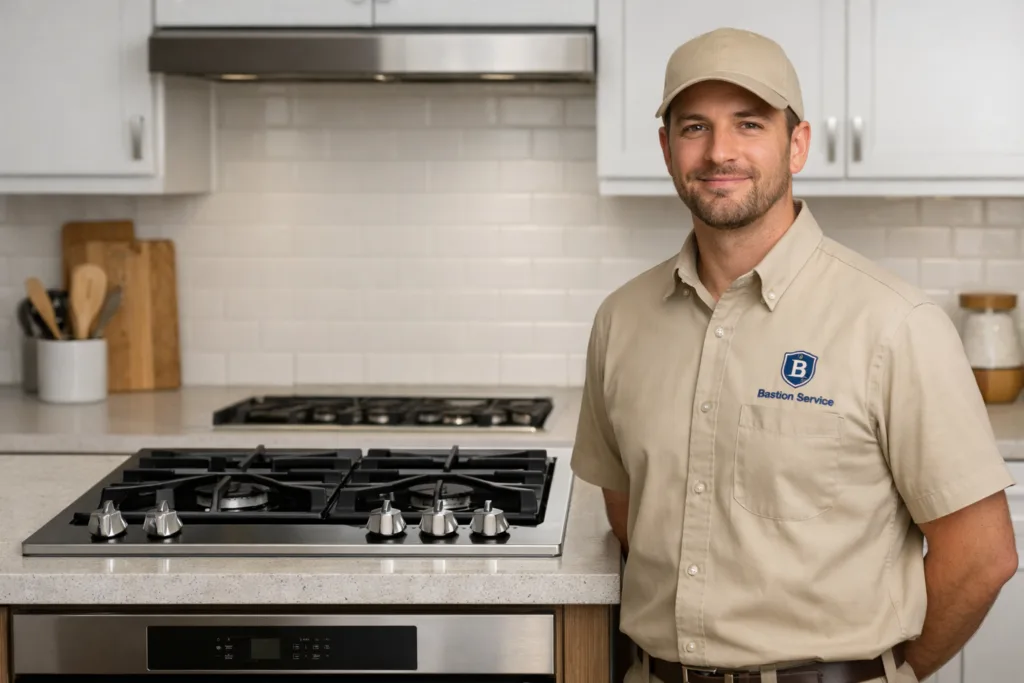
Cooktop problems are easier to solve when the symptoms are narrowed down before parts are replaced. On a Kenmore unit, the same complaint can come from very different failures depending on whether the cooktop is electric or gas, whether one burner is affected or several, and whether the issue is constant or intermittent.
How Kenmore cooktop problems are usually diagnosed
A useful service visit starts with what the cooktop is doing in real use. Does one burner fail every time, or only once the surface gets hot? Does ignition clicking happen on a single burner, or whenever any knob is turned? Does a burner stay too hot even when the setting is lowered? These details help separate a simple component failure from a wiring, control, or ignition-system problem.
On many Kenmore cooktops, diagnosis focuses on the heating element or burner assembly, the control switch, the igniter and spark system, surface wiring, and the condition of the top itself. If the symptom changed after cleaning, after a spill, or after a breaker trip, that timing can also point the repair in the right direction.
Common symptoms and what they can mean
One burner will not heat or ignite
If only one burner has stopped working, the problem is often isolated to that position. Electric models may have a failed radiant element, a bad receptacle connection, damaged wiring, or a worn control switch. Gas models may have clogged burner ports, an ignition failure, or a burner cap that is no longer sitting correctly.
When the rest of the cooktop works normally, repair is often more straightforward because the fault can be traced to a smaller set of parts.
Several burners stopped working at the same time
When multiple burners fail together, the issue may be less about one burner and more about shared power, a control fault, or an ignition-system problem. On electric units, this can include supply or wiring issues. On gas units, it may involve the spark module or another shared component.
This pattern matters because replacing a single burner part will not solve a problem that affects the whole system.
Burner heats unevenly or takes too long
Uneven heat can show up as slow boiling, inconsistent sautéing, or a pan that develops hot and cool areas. Electric cooktops may have a weakening element or control problem that causes poor heat regulation. Gas cooktops may have partial blockage in the burner head, poor flame spread, or an issue with burner alignment.
If cooking results have been gradually getting worse, that usually suggests wear or buildup rather than a sudden complete failure.
Burner stays too hot
A burner that runs on high even at lower settings usually points to a control-related problem. On electric cooktops, the infinite switch is a common suspect. This is not a symptom to ignore. A burner that cannot regulate heat can damage cookware, scorch food quickly, and create a safety concern during normal meal prep.
Clicking without ignition
On gas Kenmore cooktops, repeated clicking without a steady flame often means the igniter is sparking but ignition is not happening correctly. Moisture, food residue, burner cap misalignment, worn ignition parts, or spark module issues can all cause this. If the clicking is constant or begins even when a burner is not being used, the cooktop should be checked soon.
Delayed ignition or popping at startup
If a burner lights late, flares, or pops when it finally ignites, the gas flow and ignition sequence may be off. This can happen when burner ports are dirty, the cap is seated incorrectly, or ignition components are weakening. Delayed lighting should not be treated as normal wear, because it can get worse over time.
Cracked glass or visible surface damage
A cracked glass cooktop is more than a cosmetic issue. Impact damage, heat stress, and hidden problems beneath the surface can affect safe operation. If the glass is cracked, using the appliance can risk further breakage and may expose underlying components to spills or heat-related damage.
Knobs feel loose or controls respond inconsistently
When a knob turns strangely, feels stripped, or does not match the burner response, the problem may involve the control stem, switch, or mounting hardware beneath the surface. Intermittent control response often gets worse rather than better, especially in a busy household kitchen.
Signs the problem may be getting worse
- A burner that works only after several tries
- Heat levels that no longer match the dial setting
- Ignition clicking that has become more frequent
- Breakers tripping when the cooktop is used
- Burners that cut out once the surface warms up
- Visible scorching, charring, or cracking near controls or burner areas
These patterns often suggest a problem that is progressing, not a one-time glitch.
What homeowners in Sawtelle can check first
Before scheduling service, it can help to note whether the issue affects one burner or several, whether it happens every time, and whether the symptom started after cleaning or a spill. For gas models, make sure the burner cap is seated properly and the ports are not visibly blocked. For electric models, pay attention to whether the burner gets no heat at all or simply poor heat control.
What usually does not help is guessing at parts based only on the surface symptom. A burner that will not heat may need an element, but it may also need a switch or wiring repair. Clicking may be caused by moisture in one case and a failing ignition component in another.
When to stop using the cooktop
Some symptoms call for immediate caution. Stop using the cooktop if a burner overheats, sparks, trips the breaker repeatedly, or behaves unpredictably. On gas models, if there is a strong or persistent gas smell, stop using the appliance and address the gas concern first through the proper emergency channel before arranging appliance repair.
Continuing to use a cooktop with unstable heat control or ignition trouble can make the eventual repair larger and can create unnecessary risk in the kitchen.
Repair or replace?
Many Kenmore cooktop problems are repairable when the issue is limited to a burner, switch, igniter, spark component, or localized wiring fault. Repair tends to make sense when the cooktop is otherwise in solid condition and the top surface and controls have not suffered widespread damage.
Replacement becomes a more realistic option when there is major glass damage, repeated failures across several systems, severe internal wear, or poor parts availability for the exact model. The key is to compare the present condition of the appliance with the scope of the current fault, rather than assuming every nonworking burner means the whole unit is done.
Why symptom details matter
The most helpful information is often simple: which burner is affected, what the knob was set to, whether the problem happens cold or hot, and whether the issue appeared suddenly or gradually. In a Sawtelle home, that level of detail can make the difference between a quick repair path and unnecessary trial and error.
For Kenmore cooktop issues, the best next step is usually a symptom-based inspection that determines whether the problem involves heat generation, ignition, controls, or power delivery, and whether the repair is practical for the condition of the appliance.