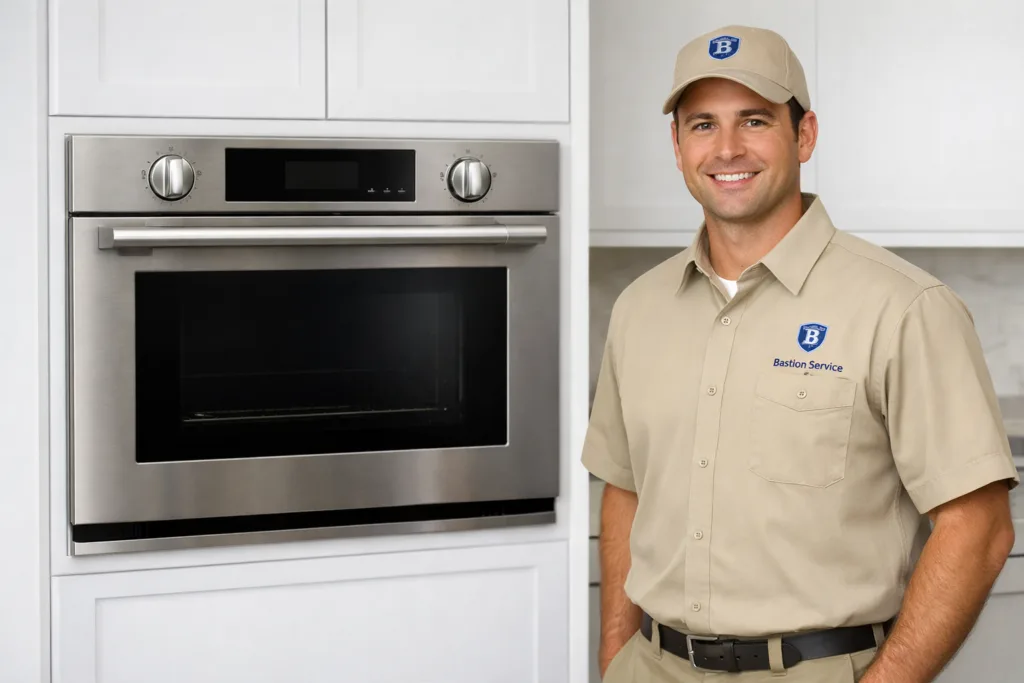
Built-in wall ovens tend to fail in ways that affect everyday cooking fast. A preheat problem can throw off weeknight meals, a temperature issue can ruin baking, and an intermittent control fault can make the oven feel unreliable even when it still powers on. With Wolf models, the most useful approach is to match the symptom pattern to the heating, sensing, door, or control system most likely involved.
Common Wolf wall oven symptoms and what they may mean
Different faults can create similar complaints, so it helps to look at exactly how the oven is misbehaving. Whether the problem happens every cycle or only once in a while often matters just as much as the symptom itself.
Oven not heating at all
If the display works but the cavity stays cold, the issue may be tied to the bake circuit, broil circuit, temperature sensor, relay, or electronic control. Power supply problems can also be part of the picture, especially when the oven appears alive but cannot produce normal heat. On some units, one heating function fails while another still works, which can narrow down the diagnosis.
Slow preheating
A Wolf wall oven that takes much longer than usual to preheat may have a weak element, a sensor that is reading inaccurately, or a control issue that is not driving the heat correctly. Slow preheat is easy to ignore at first, but it often shows up before a more obvious no-heat failure. If preheat times keep increasing, service is usually worth scheduling before the oven stops performing altogether.
Uneven baking or temperature swings
When cookies brown unevenly, casseroles need extra time, or food cooks differently from rack to rack, the problem may involve temperature regulation rather than total heat loss. Common causes include a drifting sensor, an element that is heating inconsistently, or a convection-related issue on models with fan-assisted cooking. These problems can make the oven feel unpredictable even though it technically still heats.
Overheating or burning food unexpectedly
If dishes come out overdone despite familiar settings, the oven may be running hotter than the displayed temperature. This can happen when the sensor is out of range, the control is misreading temperature, or the heating system is not cycling properly. Overheating should not be treated as a minor calibration issue until the actual cause is confirmed.
Error codes, beeping, or unresponsive controls
Electronic symptoms often point to the control board, user interface, sensor feedback, or wiring connections. Some Wolf wall ovens may start a cycle and stop midway, flash an error, or respond inconsistently to touch controls. Intermittent control problems can be especially frustrating because the oven may seem normal during one use and fail on the next.
Door, latch, and self-clean problems
If the door will not close tightly, the oven will not unlock, or a self-clean cycle triggers a new fault, the issue may involve the latch assembly, hinges, switches, or control logic. A door that does not seal correctly can also affect heating performance because the oven loses heat it should be retaining. In built-in installations, even a small alignment issue can become noticeable during regular cooking.
Why symptom details matter
Two ovens can share the same complaint and still need different repairs. “Not heating” might mean a failed element in one unit and a control failure in another. “Uneven baking” might be a sensor issue, but it could also come from weak heat output or a convection problem. Paying attention to the exact behavior helps separate likely causes.
Useful details include:
- whether the problem happens on bake, broil, or both
- how long preheat now takes compared with normal use
- whether the display shows an error code
- if the oven shuts off during cooking
- whether the door closes firmly and seals well
- if the issue started after self-cleaning or a power interruption
For homeowners in Sawtelle, these observations can make service more efficient and help determine whether the fault is isolated or part of a larger electrical or control problem.
When to stop using the oven and schedule service
Some wall oven issues are inconvenient but manageable for a short time. Others should be checked before continued use. If the oven trips a breaker, gives off a burning smell, overheats, shuts off unexpectedly, or shows repeated error codes, it is best not to keep testing it through normal cooking. Continued use can sometimes increase heat damage or stress additional components.
It also makes sense to book service when:
- preheat is noticeably slower than it used to be
- results are inconsistent from one cooking cycle to the next
- the control panel freezes or responds only sometimes
- the oven runs but never reaches the selected temperature
- the door latch or lock behavior has changed
Repair or replacement: what usually makes sense
Many Wolf wall oven problems are still good repair candidates, especially when the issue is limited to a sensor, element, switch, latch, or single control-related component. Built-in appliances are part of the kitchen layout, so repairing the existing unit is often simpler than replacing it if the rest of the oven is in solid condition.
Replacement becomes more worth considering when multiple major systems are failing, electronic issues keep returning, or the overall cost of restoring the oven approaches the practical value of keeping it in service. Age alone is not the only factor. The better question is whether the repair is likely to restore stable, everyday performance for the household.
What a service visit should help clarify
A worthwhile visit should identify which system is failing, whether the oven is safe to continue using, and what repair path fits the symptom pattern. That can include confirming whether the problem is isolated to heating, sensing, controls, or the door and latch assembly. It should also answer whether the current issue appears to be a one-part failure or a sign of broader wear inside the unit.
For Wolf wall oven repair in Sawtelle, homeowners usually benefit most from straightforward findings: what is wrong, what it affects, and whether repair is practical based on the condition of the oven. That keeps the decision focused on real performance rather than guesswork.
Helpful preparation before service
If the oven is still operating intermittently, it can help to note the temperature selected, how long preheating took, and whether the problem appeared during bake, broil, or convection use. If an error code appears, writing it down can also be useful. These details can make it easier to trace a fault that does not show up consistently on every cycle.
It is also helpful to avoid repeated test runs once the oven shows clear signs of trouble. A single failed cycle may be one thing, but repeated overheating, shutdowns, or electrical symptoms should be treated as a sign that the appliance needs professional attention.