
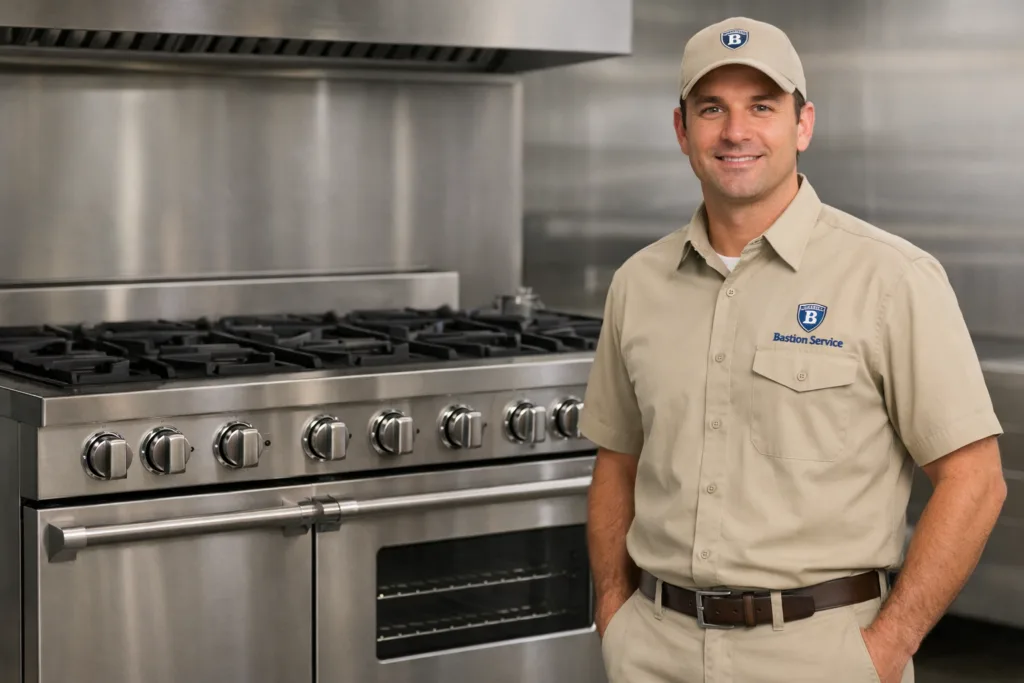




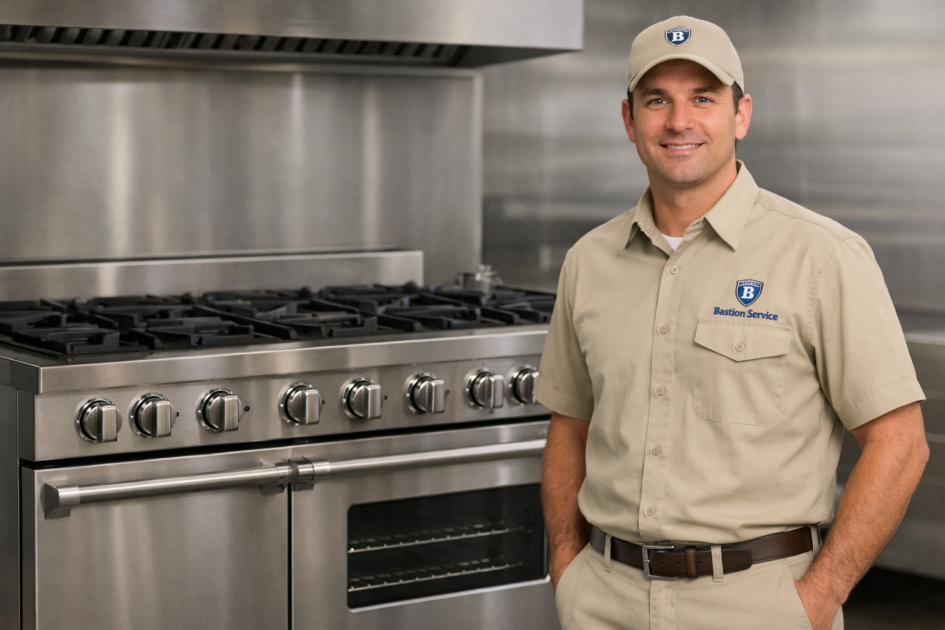
Range problems can disrupt service quickly when burners stop lighting, heat output drops, or temperature control becomes unpredictable. For businesses in Torrance, the most useful response is to schedule service based on the actual symptom pattern, how often the issue appears, and whether the unit is still safe to operate during daily production. Bastion Service works on Wolf range issues with a diagnosis-first approach so repair decisions are based on the fault itself rather than trial-and-error part replacement.
Related commercial service paths in Torrance include Wolf Commercial Repair in Torrance, Wolf Oven Repair in Torrance, and Wolf Fryer Repair in Torrance.
Start with the symptom pattern before deciding on repair
A Wolf range may show the same outward problem for very different reasons. A burner that clicks without lighting can involve ignition parts, wiring, switch failure, gas delivery restrictions, or buildup affecting flame carryover. A unit that heats but does not hold temperature may point to a sensor issue, control fault, calibration drift, or a component that breaks down once the range is fully hot.
That is why symptom details matter. It helps to note whether the problem affects one burner or several, whether it happens at startup or after the range has been running, and whether staff can reproduce the issue consistently. For Torrance businesses, those details help shorten troubleshooting time and make scheduling easier when the range is tied directly to daily output.
Why a Wolf range stops lighting, heating, or holding temperature
Ignition that clicks repeatedly or lights late
Repeated clicking, delayed ignition, or burners that light only after several attempts often indicate an ignition-related fault. Common causes include worn electrodes, spark problems, dirty burner components, moisture, damaged wiring, or a gas flow issue that prevents normal lighting. If staff are relighting the same burner over and over, the unit should be evaluated before the problem grows into a no-light condition.
Burners with weak flame or uneven output
If flames look low, irregular, or inconsistent across the burner, the range may not deliver heat evenly to cookware. This can happen because of clogged burner ports, valve problems, regulator issues, or wear that affects gas distribution. In a working kitchen, the result often shows up as slower cook times, inconsistent searing, and difficulty keeping pace during busy periods.
Temperature that drifts during use
When a Wolf range runs hotter or cooler than the setting suggests, the issue may involve sensing components, control regulation, switches, or internal electrical problems. Staff may notice that normal recipes suddenly need adjustment, recovery time gets longer, or the same setting produces different results from one shift to the next.
Intermittent shutdowns under load
Some ranges operate normally at first and then begin failing after the line gets busy. Intermittent operation can point to loose connections, heat-sensitive electrical components, failing controls, or parts that work when cool but stop performing as temperatures rise. These faults are easy to overlook because the range may appear normal during part of the day.
Controls or indicators that do not respond correctly
Unresponsive controls, inconsistent indicators, or functions that stop working on part of the range often suggest a control assembly problem, interface fault, damaged wiring, or power-related issues. Even when the unit still turns on, partial control failure can make the range unreliable for consistent production.
Signs the problem is getting worse
Some range issues begin as minor disruptions and then become a full service stoppage. Warning signs include more frequent clicking, burners that take longer to light, heat that fluctuates during cooking, a growing difference between burners, or operators making constant adjustments to maintain results. If the same workaround is being used every day, the problem has usually moved beyond observation and into repair territory.
Continued use can also expand the repair scope. Repeated failed ignition attempts can wear ignition components further. Poor flame quality can affect heating performance and stress nearby parts. Electrical irregularities can lead to broader control or wiring damage if the underlying fault is not corrected.
When to take the range out of service
A Wolf range should be evaluated promptly if there is unreliable ignition, unstable flame, unexplained overheating, burner sections that stop responding, or temperature behavior that creates inconsistent cooking results. If staff cannot predict how the range will perform from one use to the next, the unit can affect both workflow and food quality.
- One or more burners fail to light consistently
- The range clicks continuously without normal ignition
- Heat output is noticeably weaker than usual
- Temperature swings require constant operator adjustment
- Controls respond inconsistently or stop working during operation
- The problem appears more often during peak use
What to document before scheduling service
Useful service calls start with a few practical observations. It helps to know which section is affected, what the unit does when the problem occurs, whether the issue is constant or intermittent, and if there were recent changes in performance. If a burner lights late only in the morning, or a control fault appears only after hours of use, that timing can help narrow the diagnosis.
Operations teams in Torrance can also speed up the repair process by noting whether the issue affects all cooking positions or only one area, whether the range loses performance gradually or suddenly, and whether the fault changes under heavier kitchen demand.
Repair or replace: how the decision is usually made
Repair is often the better option when the fault is isolated and the range is otherwise in solid working condition. A targeted fix can restore dependable operation when the issue is tied to ignition, burner performance, controls, or temperature regulation rather than overall equipment decline.
Replacement becomes more likely when the range has repeated failures across multiple systems, extended downtime, or heavy wear that makes new repairs less cost-effective. The key is not guessing from the symptom alone. A proper assessment shows whether the problem is a single failing component or part of a broader reliability issue.
What businesses in Torrance should expect from range service
Good service should explain what failed, how the symptom supports that conclusion, and whether continued operation is advisable while parts or follow-up work are being arranged. That matters for kitchens planning staffing, production flow, and temporary adjustments during downtime.
If your Wolf range is not lighting properly, heating evenly, or holding temperature during service, the best next step is to arrange diagnosis before the issue affects more of the unit or interrupts another shift. For businesses in Torrance, timely repair scheduling helps limit downtime, protect output, and move from recurring symptoms to a defined repair plan.


