
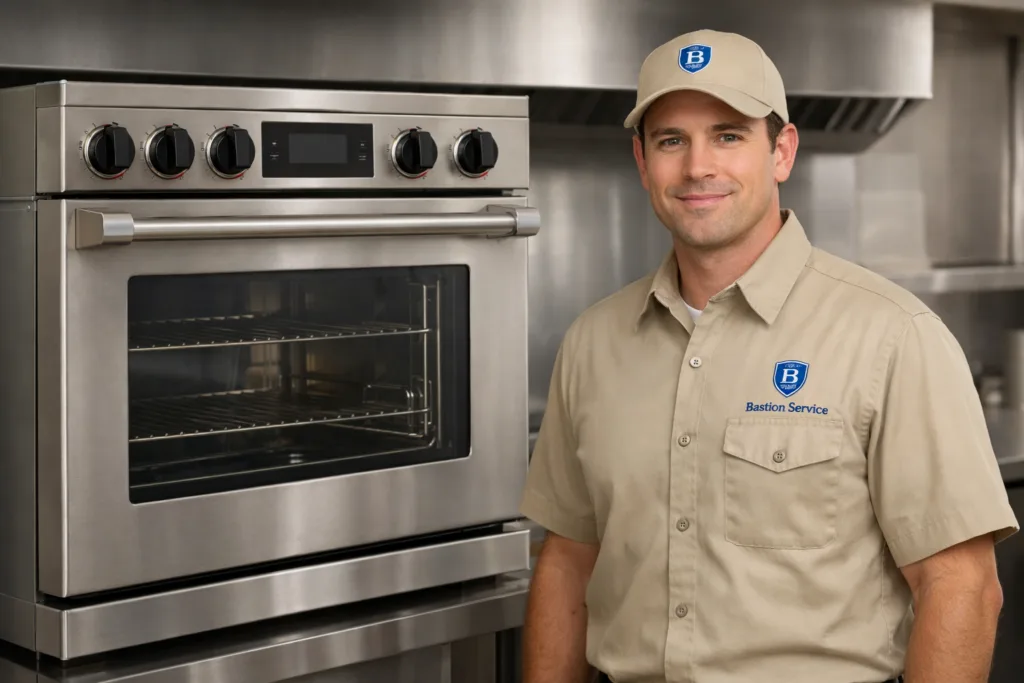




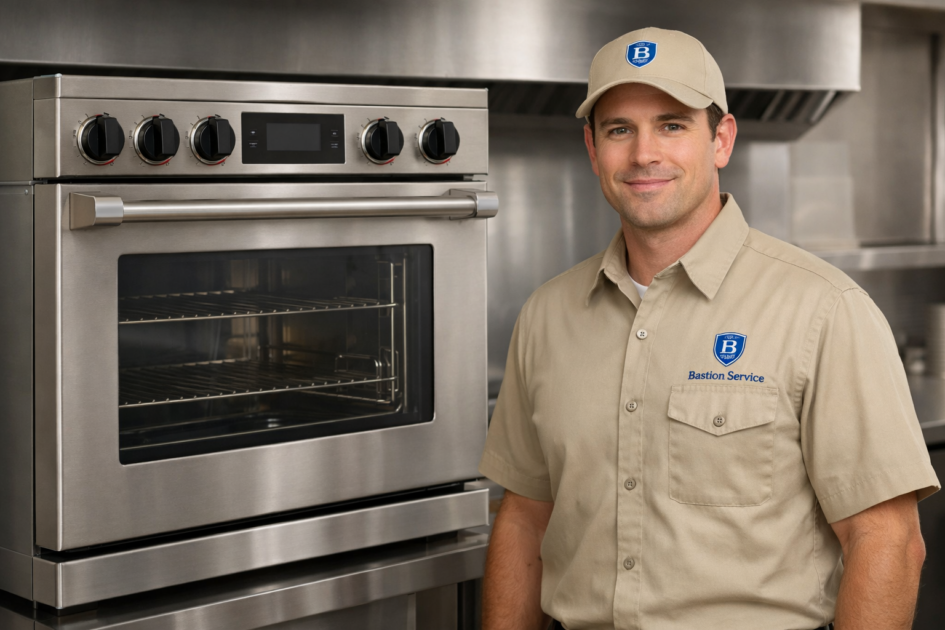
When a Wolf oven begins missing temperature targets, baking unevenly, or stopping during a cycle, the issue can affect output quality, prep timing, and staff workflow almost immediately. For businesses in Torrance, service is most useful when it starts with the exact symptom pattern rather than assumptions about a single failed part. Bastion Service works on Wolf oven problems with that goal in mind: identify what is actually causing the disruption, determine the repair scope, and help schedule the next step before downtime spreads into the rest of the kitchen.
Related commercial service paths in Torrance include Wolf Commercial Repair in Torrance, Commercial Oven Repair in Torrance, and Wolf Range Repair in Torrance.
Why Wolf oven problems need symptom-based diagnosis
Several different faults can produce the same day-to-day complaint. An oven that seems too cool may have a sensor problem, a control issue, weak heating performance, door heat loss, or an ignition fault that prevents normal heat delivery. An oven that works some of the time may be dealing with wiring problems, intermittent controls, overheating protection, or a failing component that drops out only under load.
That is why it helps to document what staff are seeing in real use. Useful details include whether the oven is slow from a cold start, whether it drifts off temperature during a long cook, whether the issue affects every rack, whether fault codes appear, and whether the problem is getting worse. Those details guide parts planning and help avoid wasted time replacing components that are not actually causing the failure.
Why is my Wolf oven not heating evenly or reaching set temperature?
This is one of the most common service calls because uneven heat can come from more than one source. In many cases, the problem involves the temperature sensor, calibration drift, control response, heating elements, ignition-related heat delivery, or heat escaping around the door. Even when the display shows the selected temperature, actual cavity performance may be off enough to affect food consistency.
In a busy kitchen, the first signs are often operational rather than technical. Staff may start rotating pans more often, extending cook times, avoiding certain rack positions, or adjusting recipes to compensate. Those workarounds usually mean the oven is no longer producing stable heat and should be inspected before the inconsistency becomes a broader failure.
- Products browning too fast on one side
- Center temperatures lagging behind normal cook times
- Top and bottom heat behaving differently than expected
- Results varying from batch to batch with the same settings
- Preheat completing, but actual cooking still feeling underpowered
Common Wolf oven symptoms and what they may indicate
Slow preheat
If preheat takes much longer than normal, the oven may not be developing full heat output. Possible causes include weak heating components, ignition trouble, electrical supply issues, control faults, or restricted airflow. Slow preheat matters because it often points to a system working harder than it should, which can increase wear while still failing to deliver normal performance.
Temperature swings during operation
An oven that overshoots, drops too low, or cycles erratically can create major consistency problems during production. Sensor readings, relay behavior, control board issues, or heat retention problems can all contribute. When the temperature is unstable, the practical concern is not just food quality but also whether staff can trust the equipment during service windows.
Not heating at all
A full no-heat condition usually calls for prompt diagnosis because the fault may involve power supply, controls, heating components, ignition systems, safety cutoffs, or wiring failures. If the oven is completely down, documenting the last normal cycle, any unusual noises, and any control messages can help narrow the service path.
Intermittent shutdowns
If the oven starts normally and then stops mid-cycle, the failure may be tied to overheating protection, unstable electrical connections, failing controls, or components that drop out once they warm up. Intermittent shutdowns are important to address early because they tend to become more frequent and harder on related parts over time.
Ignition or burner-related problems
Gas-heated Wolf ovens can show delayed ignition, unreliable burner lighting, weak flame behavior, or repeated attempts to start. These symptoms should not be ignored. Besides interrupting production, ignition-related faults can place extra strain on components and create unsafe operating conditions. If there is a persistent gas odor, stop using the oven and address safety first.
Door seal, hinge, or closure problems
A damaged gasket or poor door alignment can let heat escape and reduce recovery time between opens. The oven may still run, but cooking becomes less predictable and energy use can rise. In kitchens that depend on consistent output, what looks like a minor door issue can have a larger impact than expected.
Signs the oven should be serviced before the next busy shift
Some problems do not put the oven fully out of service, but they still justify repair scheduling because they signal declining reliability. Waiting may turn a manageable repair into a longer outage.
- The oven repeatedly misses set temperature
- Cook times keep getting extended by staff
- Heat distribution has become inconsistent across racks
- The unit restarts, shuts down, or throws repeat errors
- Preheat is noticeably slower than it used to be
- The door no longer seals well during normal operation
These are the kinds of symptoms that often allow a kitchen to keep moving for a short time, but only by adding workarounds. Once staff have to monitor one oven differently from the rest of the line, the equipment is already affecting labor and timing.
When continued use can make the repair worse
Running an oven with unstable temperature control, recurring ignition faults, or repeated shutdowns can increase stress on related parts. Extended cycling, repeated restart attempts, and operation outside normal heat ranges may contribute to additional failures. The larger cost is often not the original part but the disruption caused when a partially working oven becomes fully unusable during production.
If results are highly inconsistent, the oven is stopping during use, or heating behavior is becoming unpredictable, limiting use until diagnosis is often the better decision. That helps preserve the equipment condition and gives the technician a clearer picture of the failure.
Repair or replace: how businesses usually decide
Replacement is not automatically the right answer when a Wolf oven starts underperforming. Many problems are still worth repairing when the cavity, chassis, and overall equipment condition remain solid. Sensor faults, control issues, heating problems, ignition component failures, and door-related wear are often evaluated as targeted repairs rather than reasons to retire the unit.
For businesses in Torrance, the decision usually comes down to a few practical questions:
- Is the current problem isolated or part of a repeated pattern?
- Has reliability dropped sharply in recent months?
- Would repair restore stable output for daily operations?
- Is the downtime risk from continued use greater than the repair cost?
The best choice is usually the one that restores predictable performance with the least operational disruption, not simply the one that gets the oven running for a day or two.
How to prepare for a service visit
A little preparation can make the repair process faster and more accurate. Before the appointment, it helps to note when the problem first appeared, whether it happens every cycle or only sometimes, which settings trigger it, and whether any error messages are displayed. Staff should also mention if they have noticed slow recovery after opening the door, ignition delays, or unusual cooking differences between racks.
If the oven is still operating, examples from actual production are useful. A batch that comes out uneven, a recurring delay in preheat, or a shutdown at a repeatable point in the cycle can all help confirm the fault. The more specific the symptom history, the easier it is to move from guesswork to an actual repair recommendation.
Service planning for Wolf oven repair in Torrance
Good oven repair is about more than making the unit power on again. The service visit should confirm the real source of the complaint, evaluate whether continued operation is reasonable, and outline the repair path based on performance, safety, and business impact. For a kitchen trying to protect uptime, that means looking at how the oven behaves under normal use, what the failure is costing in delays or inconsistency, and what action will return it to reliable operation. When a Wolf oven in Torrance becomes unpredictable, scheduling service early is usually the most practical step to limit downtime and restore confidence in daily production.


