




Range problems can slow an entire kitchen long before the unit stops working completely. When a Vulcan range begins misfiring, heating unevenly, or struggling to maintain output, the most important step is identifying whether the fault is tied to ignition, burner performance, controls, gas flow, or heat regulation. For businesses in Torrance, that diagnosis helps determine how urgent the repair is, whether the unit should stay in use, and what next step best protects daily operations.
Related commercial service paths in Torrance include Vulcan Commercial Repair in Torrance, Vulcan Oven Repair in Torrance, and Vulcan Fryer Repair in Torrance.
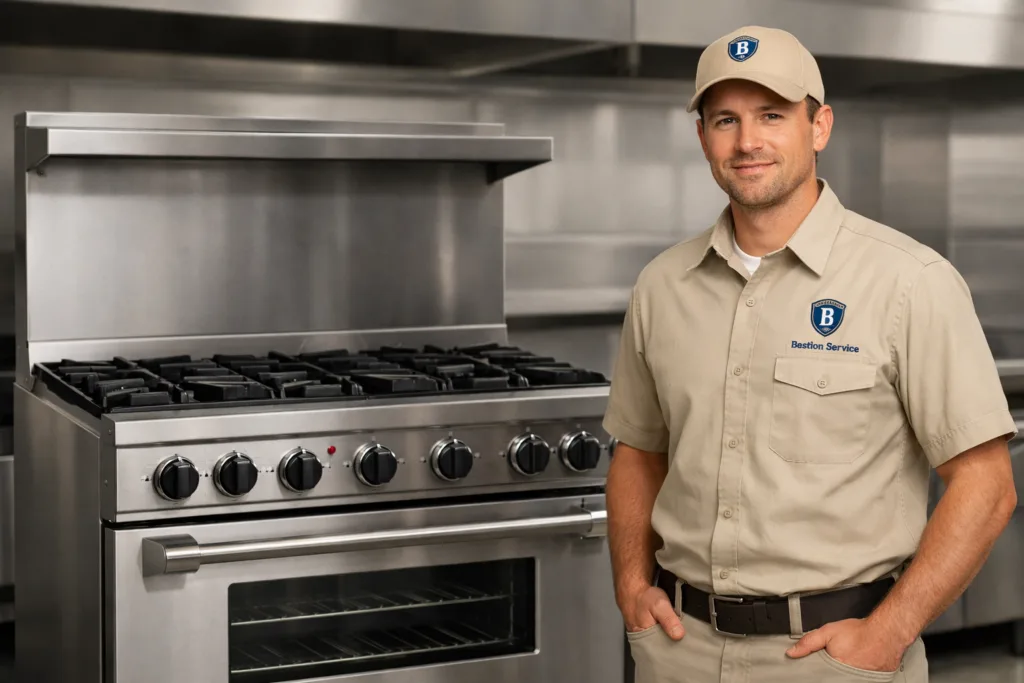
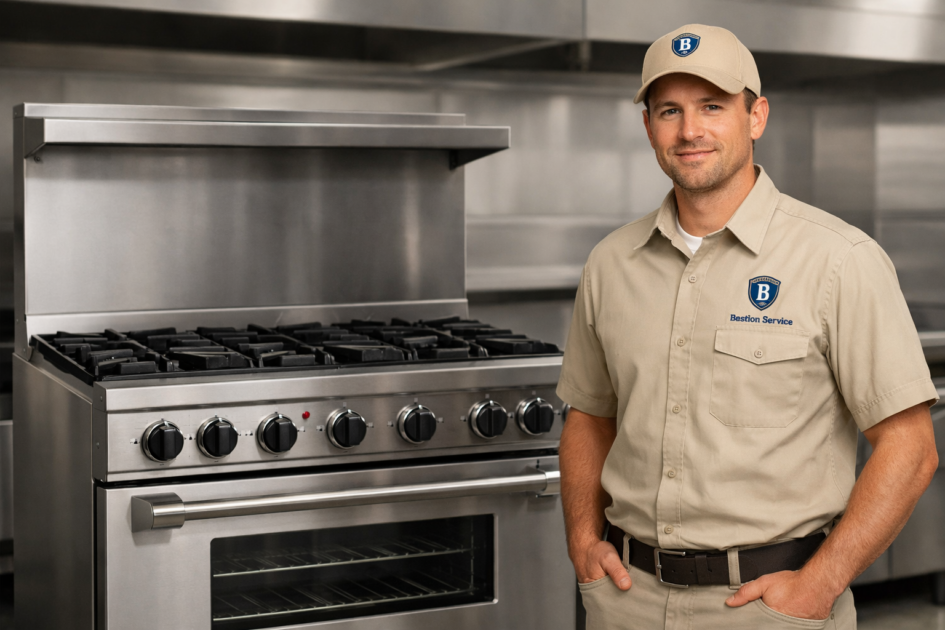
Bastion Service handles Vulcan range repair for Torrance businesses that rely on consistent cooking performance during prep, service, and cleanup. A service visit should do more than restore temporary operation. It should pinpoint the source of the complaint, check for related component issues, and help the kitchen move forward with a repair plan that fits the condition of the equipment.
Common Vulcan range symptoms that point to service needs
Many range issues start as minor disruptions that staff work around for a while. Over time, those workarounds can turn into slower ticket times, inconsistent food quality, and avoidable downtime. The following symptom patterns often indicate that the unit needs professional attention.
Burners will not light or only light sometimes
If a top burner does not ignite, takes several tries to light, or clicks repeatedly without establishing a stable flame, the problem may involve the ignition system, blocked burner ports, worn switches, weak spark performance, or gas delivery issues. Delayed ignition should not be ignored, especially if startup behavior has changed from normal or the flame is not consistent once lit.
Weak flame or uneven burner output
A burner that looks smaller than usual, struggles to reach full heat, or produces an uneven flame pattern can affect cooking speed and pan performance across the line. This may be related to clogged ports, valve problems, regulator concerns, or wear in components that control fuel flow. In day-to-day use, the symptom often shows up as slower recovery, uneven browning, or the need to keep adjusting settings to get expected results.
Oven section not heating correctly
On ranges with an oven base, heating complaints often include long preheat times, poor temperature recovery, undercooked product, or an oven that runs hotter than the dial setting suggests. These symptoms can point to sensor, thermostat, control, ignition, or burner-related faults. Because several different failures can produce similar temperature complaints, testing matters before parts are replaced.
Temperature swings during operation
When a range seems fine at one point in the shift but begins drifting too hot or too cool later, the issue may involve controls that are becoming unreliable under heat, inconsistent fuel delivery, or components that are beginning to fail intermittently. Temperature instability creates quality problems fast, especially when recipes depend on repeatable heat from one batch to the next.
Clicking, popping, or unusual burner behavior
Repeated clicking, delayed lighting, popping on ignition, or burners that extinguish unexpectedly can all signal a fault that needs inspection. In some cases, the cause is relatively contained. In others, the symptom is part of a broader ignition or flame-stability problem. Either way, unusual startup or flame behavior is a good reason to stop guessing and schedule service.
Controls not responding as expected
If knobs feel loose, settings do not match actual heat levels, or the range responds inconsistently when adjusted, worn control components may be affecting performance. Operators often notice this when the equipment no longer reacts predictably, forcing staff to overcorrect during busy periods.
Why the same symptom can have different causes
One reason range repair should begin with testing is that the visible complaint is not always the failed part. A burner that will not stay lit may seem like an ignition problem but could also be affected by gas flow, flame sensing, burner contamination, or control issues. An oven that bakes unevenly may point toward temperature regulation, but restricted heat delivery or poor burner performance can create similar results.
That is why repair decisions are stronger when they are based on how the full system is actually operating. For a business in Torrance, this helps avoid repeated service calls for the same complaint and reduces the risk of replacing parts that were not the real cause of the failure.
Signs the range should be serviced sooner rather than later
Some equipment problems can wait for planned scheduling. Others tend to worsen quickly under normal kitchen demand. It is smart to arrange service promptly when you notice:
- burners that fail to light consistently
- flames that are weak, unstable, or uneven
- oven temperatures that drift away from the setting
- slow heat recovery during active use
- controls that no longer respond predictably
- intermittent shutdowns during prep or service
- staff regularly compensating for performance problems
These issues usually affect more than convenience. They can reduce output, create timing problems, and put extra strain on surrounding components when the unit is pushed to perform through a fault.
What a service visit should help clarify
A useful repair appointment should answer a few practical questions. What is causing the complaint? Is the problem isolated to one component or affecting multiple systems? Can the range be returned to normal use after repair, or is additional work likely? Are there related wear issues that could lead to another interruption soon?
For operators, those answers matter because they shape staffing decisions, menu planning, and scheduling. A proper evaluation helps the kitchen understand whether the repair is straightforward, whether parts are needed, and whether limited operation is reasonable while waiting for the next step.
Repair or replacement depends on overall condition
Many Vulcan range problems are repairable when the equipment remains structurally sound and the fault is limited to serviceable components. That is often the best path when the unit has otherwise been supporting the kitchen well and the current issue has a defined cause.
Replacement becomes a more serious consideration when there are repeated breakdowns across different systems, ongoing heat inconsistency after prior repairs, or signs that the unit is no longer likely to deliver stable performance. Even then, an inspection is still valuable because it separates a major but fixable problem from a broader end-of-life decision.
How to prepare before scheduling range repair
If possible, note exactly what the range is doing wrong and when the problem shows up. It helps to know whether the issue affects top burners, the oven section, or both; whether it happens all the time or only during heavy use; and whether the symptom has been getting worse. Specific details about delayed ignition, weak flame, temperature drift, or shutdown patterns can make diagnosis more efficient.
It is also useful to identify whether staff have changed how they operate the unit just to keep production moving. Those adjustments often reveal how long the problem has been present and whether performance has been gradually declining.
When a Vulcan range starts interfering with speed, consistency, or safe operation, timely service is usually the best way to prevent a larger disruption. For businesses in Torrance, the right approach is to schedule repair based on the actual symptom pattern, confirm what is failing, and move quickly on the repair decision that best supports kitchen uptime.


