
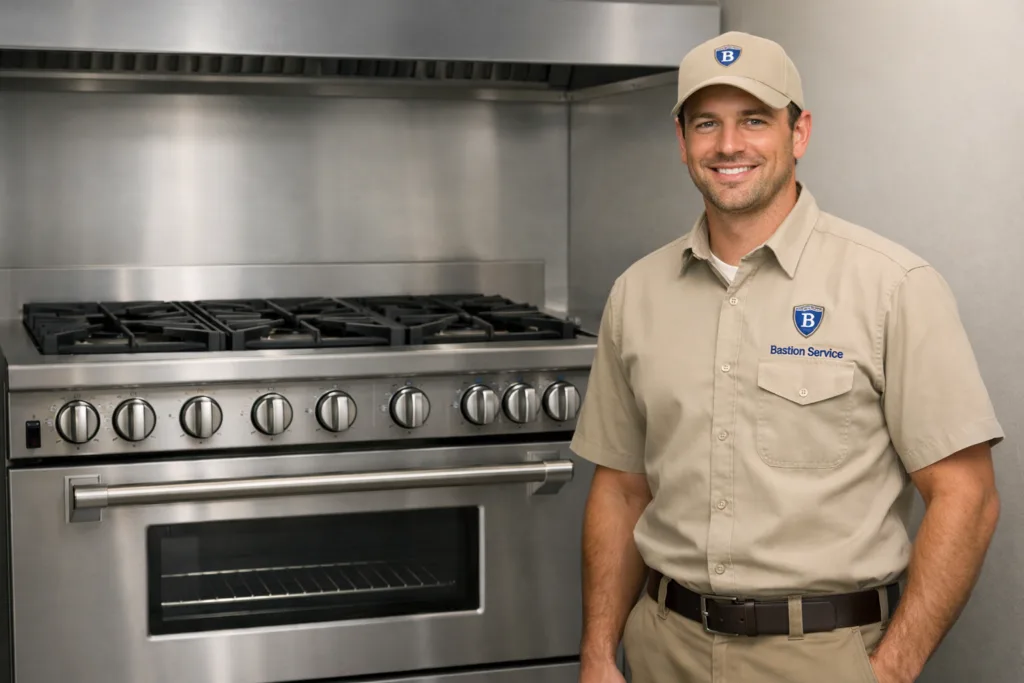




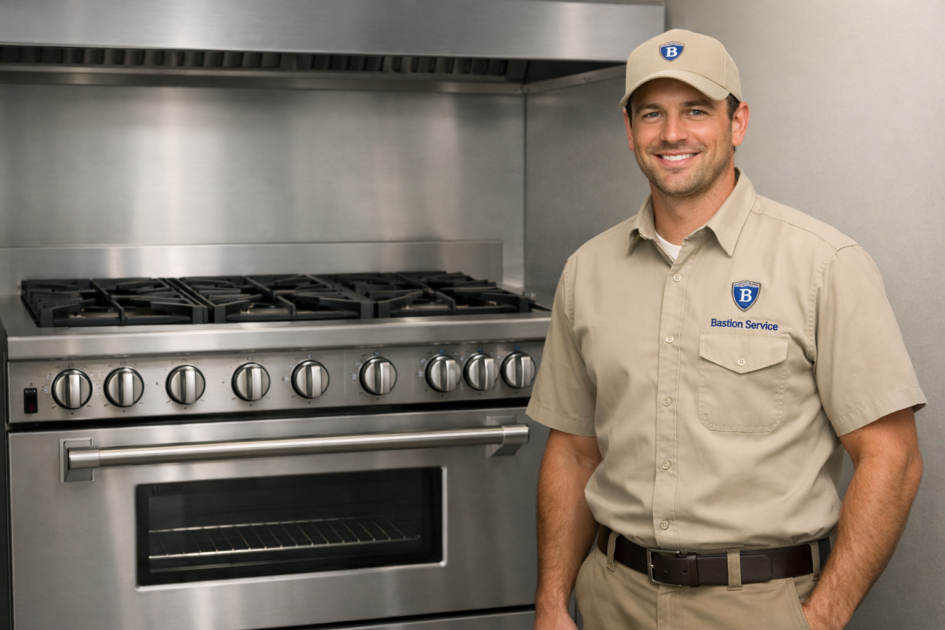
Range problems rarely stay isolated for long in a busy kitchen. A burner that clicks but does not light, an oven cavity that runs cool, or controls that respond inconsistently can slow prep, affect food quality, and force staff to work around equipment instead of relying on it. For businesses in Hawthorne, service is most useful when the symptom is traced to the exact failed system so repair scheduling, parts decisions, and downtime planning are based on what the range is actually doing.
Related commercial service paths in Hawthorne include Wolf Commercial Repair in Hawthorne, Wolf Oven Repair in Hawthorne, and Wolf Fryer Repair in Hawthorne.
Bastion Service provides Wolf range repair for businesses in Hawthorne with attention to ignition performance, burner operation, oven heat, control response, and overall reliability under daily use. The goal is to move from symptom to diagnosis quickly, explain what is affecting operation, and help operators decide the right next step before a partial failure turns into a full interruption.
What Wolf range problems usually look like in daily operation
Many range failures begin with subtle changes rather than a complete shutdown. Staff may notice slower ignition, a burner that will not hold a steady flame, longer oven preheat times, or uneven results during repeated cooking cycles. These early symptoms matter because they often point to wear in ignition components, burner assemblies, gas-related parts, sensors, switches, or electronic controls.
Even when the range still runs, reduced performance can create larger workflow issues. Teams may start rotating pans to compensate for hot and cool spots, relighting burners during service, or adjusting temperature settings more often than normal. Those workarounds are a sign the equipment should be evaluated before the problem expands.
Burners that click, fail to light, or light late
If a Wolf range clicks repeatedly without ignition, lights only after several attempts, or produces delayed ignition, the issue may involve the spark ignition system, clogged burner ports, moisture or grease contamination, worn switches, or a gas flow problem. On open-top equipment, this kind of fault affects more than convenience. It slows line work, introduces inconsistency, and can create safety concerns if gas is not igniting as expected.
A proper inspection helps determine whether the problem is centered at one burner, spread across multiple burners, or tied to a shared control or supply-related condition. That distinction matters because similar lighting symptoms can come from very different failures.
Weak flame, poor heat output, or uneven heating
When flame height seems lower than normal or heat feels uneven across the cooktop, the range may be dealing with restricted burner operation, regulator issues, valve problems, or internal wear that affects fuel delivery and flame stability. In oven sections, weak heating can point to igniter weakness, sensor drift, thermostat or control faults, or problems with temperature regulation during cycling.
These issues often show up in production as longer cook times, inconsistent searing, slow recovery between batches, or food that finishes unevenly. If staff are changing normal cooking patterns just to get expected results, the range is no longer performing predictably.
Temperature swings in the oven section
Ranges with oven compartments may continue to heat while failing to hold a stable set temperature. Operators may notice products finishing too dark on one run and undercooked on the next, even with the same settings. That pattern can be related to sensors, calibration drift, ignition inconsistency, cycling controls, relays, or other electrical faults that interrupt normal heat regulation.
Temperature complaints are especially important in kitchens that depend on repeatable results across shifts. A range that overshoots, undershoots, or recovers too slowly can affect both output and consistency.
Controls that respond irregularly or shut down intermittently
Some failures appear as intermittent operation rather than obvious loss of heat. A burner may work for a while and then stop responding. The oven may start normally but fail during a long cycle. Knobs, switches, or electronic controls may behave unpredictably under repeated use. These symptoms can indicate loose connections, heat-stressed components, failing control boards, or power-related issues inside the unit.
Intermittent faults should not be ignored simply because the range sometimes comes back on. They are often harder on workflow because they create uncertainty during active service and can become complete failures without much warning.
Why a symptom-based diagnosis matters
Two ranges can show the same complaint and need different repairs. For example, a burner that will not light may have an igniter problem, but it can also be tied to contamination, switch failure, wiring damage, or fuel delivery issues. An oven that seems too cool may be running with a weak igniter, a bad sensor, or a control problem that causes incorrect cycling.
That is why symptom pattern matters. Useful diagnosis looks at when the issue happens, whether it affects one burner or several, whether the fault appears only after the equipment is hot, and whether the oven and top burners are both involved. This approach avoids unnecessary parts replacement and helps determine whether the range can stay in limited use until service or should be pulled from operation sooner.
Signs the range should be scheduled for service soon
- Burners click continuously or require repeated attempts to ignite
- Flame is weak, uneven, yellowing, or unstable during use
- Oven heat is inconsistent or takes much longer than normal to recover
- Temperature settings no longer match actual cooking results
- Controls, switches, or knobs respond irregularly
- The range shuts down after warming up or during heavy use
- Staff are compensating for hot spots, cool spots, or unreliable burner behavior
When those signs are present, continued use can increase wear on related parts and make the eventual repair more disruptive. Early service is often the difference between a targeted correction and a wider performance problem affecting multiple cooking stations.
How repair decisions are usually made
For Hawthorne businesses, the repair decision is typically based on four things: the exact failed component, the overall condition of the range, the expected effect on uptime, and whether the problem appears isolated or part of a longer pattern. A single burner fault, ignition issue, or oven control problem may be a straightforward repair when the rest of the unit remains solid. The decision becomes more complex when several systems are showing wear at the same time.
A service visit should help clarify whether the current issue is localized, whether surrounding components have been affected, and whether restoring normal operation is likely to provide stable performance going forward. That information is what allows managers and kitchen operators to plan intelligently instead of reacting shift by shift.
Preparing for a Wolf range service visit
It helps to note exactly what the range is doing before service is scheduled. Useful details include whether the problem affects all burners or only one, whether clicking continues after ignition, whether the oven misses set temperature by a small or large margin, and whether the issue appears more often during busy periods. If the fault is intermittent, knowing how long the unit runs before symptoms appear can speed diagnosis.
Staff observations are valuable because many range problems are pattern-based. A complaint like “it sometimes runs cold” is less useful than “the oven preheats, then drops heat after several batches” or “the front-left burner clicks continuously and will not hold flame.” Specific symptom history often shortens the path to the repair itself.
Service priorities for kitchens in Hawthorne
Businesses in Hawthorne need range repair that reflects operating pressure, not just part replacement. The most important outcome is restored reliability: burners that light cleanly, oven heat that holds where it should, and controls that respond consistently during real kitchen use. When a Wolf range begins affecting prep speed, timing, or product consistency, the next step should focus on diagnosing the failing system, setting service at the right urgency, and reducing further disruption to daily operations.
If your range is showing ignition trouble, unstable heat, burner faults, or control issues, scheduling service before the problem spreads is usually the best move. A focused evaluation can identify what is failing, what needs prompt repair, and whether the unit can return to dependable use without putting another shift at risk.


