
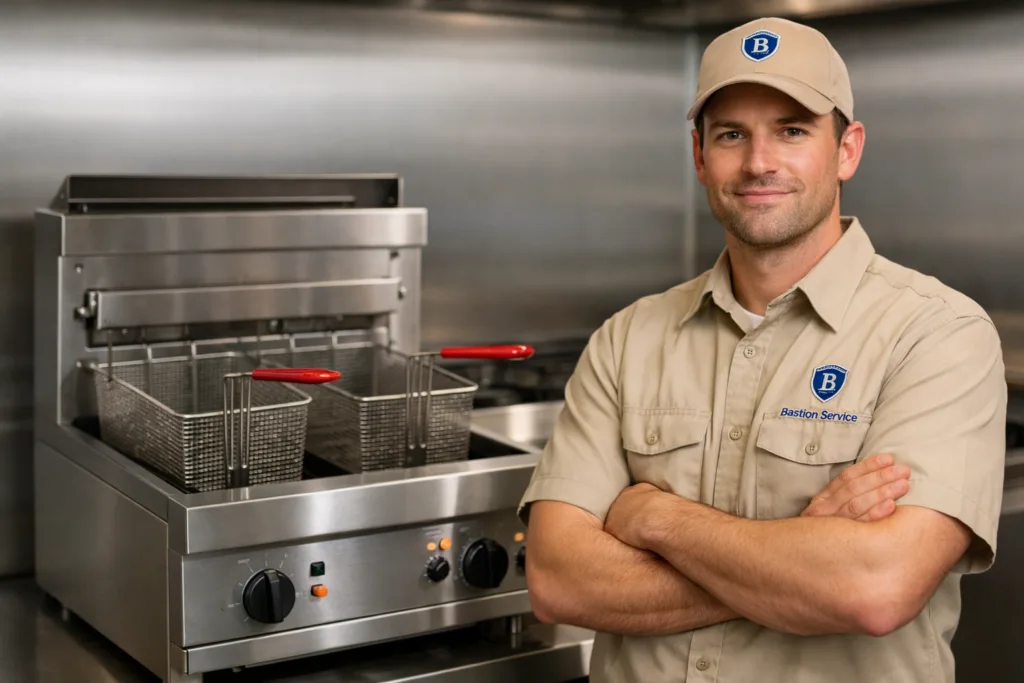




Fryer failures tend to show up at the worst time: during prep, during a rush, or right when staff are trying to keep output consistent. With Wolf fryer equipment, the right repair path depends on what the unit is actually doing at startup, during heat-up, and while cycling under load. Bastion Service helps businesses in Hawthorne troubleshoot those patterns, identify the failed component or system involved, and schedule repair based on urgency, downtime impact, and how the fryer is affecting daily kitchen operations.
Related commercial service paths in Hawthorne include Wolf Commercial Repair in Hawthorne, Commercial Fryer Repair in Hawthorne, and Wolf Oven Repair in Hawthorne.
Some fryer problems look simple from the outside but have different underlying causes. A unit that will not heat may have a control problem, an ignition failure, a tripped safety, or a power or gas supply issue. A fryer that still turns on but cooks unevenly may be dealing with temperature sensing errors, unstable cycling, or burner performance problems. That is why symptom-based diagnosis matters before parts are replaced or the equipment is pushed through another shift.
Common Wolf fryer symptoms and what they can indicate
Not heating at all
If the fryer stays cold, the problem may involve the ignition sequence, thermostat or sensor failure, control faults, electrical supply issues, safety lockout, or gas flow problems. In some cases the unit may appear to start normally but never begin a proper heating cycle. When there is no heat at all, it usually makes sense to stop repeated restart attempts and schedule service quickly so the real cause can be isolated.
Slow heat-up or poor temperature recovery
A fryer that takes too long to reach set temperature or struggles to recover between batches can slow ticket flow and make oil performance harder to manage. This symptom may point to weak burner output, control calibration issues, sensor drift, or developing wear in the heating system. Slow recovery is often an early warning sign that the fryer is still operating, but not at the output needed for steady service.
Oil temperature swings and inconsistent cooking
When product quality changes from batch to batch, the fryer may be overshooting, undershooting, or cycling unevenly. Operators often notice this as food coming out too dark, too pale, or inconsistent even when cook times have not changed. Possible causes include thermostat inaccuracy, faulty sensing, control board issues, or safety-related interruptions in the heating cycle.
Ignition problems or unreliable startup
If the fryer clicks, tries to light, fails to ignite, or lights and then drops out, the issue may involve ignition components, flame sensing, gas delivery, or related safety controls. Intermittent startup problems often get worse over time, especially in busy kitchens where the unit is cycled often. Reliable ignition is important not just for convenience, but for keeping workflow predictable.
Unexpected shutdowns during use
A fryer that shuts off mid-cycle or requires resets to continue running may be responding to overheating, control faults, high-limit behavior, or an unstable ignition or sensing condition. Shutdown complaints should be taken seriously because they can affect both output and safe operation. If staff are having to monitor the fryer constantly to keep it running, service should move up in priority.
Leaks, unusual sounds, or visible wear
Oil leaks, popping sounds, irregular burner noise, or signs of overheating can indicate a developing mechanical or operating problem. Even if the fryer is still producing, these symptoms can lead to more cleanup, wasted oil, and bigger repairs if left alone. A unit showing physical warning signs should be evaluated before normal production continues.
Why a symptom-based diagnosis is important
One of the most common repair mistakes is treating the visible symptom as the failed part. A heating complaint does not always mean the thermostat is bad. An ignition complaint does not always mean the igniter is the only issue. A shutdown may be caused by a safety device doing its job because another problem is present elsewhere in the system.
For businesses in Hawthorne, that distinction matters because the fryer is tied directly to output, timing, and food consistency. A proper evaluation helps determine whether the fault is isolated, whether related components should be addressed at the same time, and whether the unit is likely to return to stable service after repair.
Why is my Wolf fryer not heating or recovering temperature properly?
This usually comes down to a problem in the heating cycle rather than one single universal cause. On a Wolf fryer, poor heat or slow recovery can be related to ignition failure, weak burner performance, thermostat or sensor issues, control errors, high-limit interruptions, or restricted gas flow. In other cases, the fryer may heat, but not maintain temperature accurately once production starts.
The most useful clue is how the unit behaves over time. If it never heats at all, the issue is different from a fryer that heats slowly, recovers poorly after baskets are dropped, or runs hot and cold through the shift. Those differences help narrow down whether the failure is in ignition, controls, sensing, safety circuits, or another part of the system.
When to schedule fryer repair
Service should be scheduled when the fryer is not reaching temperature, takes too long to recover, starts inconsistently, shuts down during use, or produces noticeable temperature swings. These issues affect more than convenience. They can disrupt prep, increase waste, reduce output, and make it harder for staff to maintain consistent results.
It is also worth scheduling service when the problem is intermittent. Intermittent faults are easier to evaluate while the symptom pattern is still recognizable. Waiting until the fryer fails completely can turn a manageable repair window into a larger production problem.
Signs continued use may lead to more downtime
- The fryer needs repeated resets to keep running.
- Heat-up time has clearly increased compared with normal operation.
- Recovery between batches is no longer keeping pace with service demand.
- Temperature settings no longer match actual cooking results.
- The unit overheats, cycles erratically, or shuts off without warning.
- Staff are manually compensating for inconsistent fryer behavior.
When these patterns are present, continuing to run the unit can increase wear, waste oil, and create a more disruptive failure later. It is usually more cost-effective to address the operating problem before the fryer drops out entirely.
Repair versus replacement considerations
Many Wolf fryer problems are repairable when the issue is limited to a defined ignition, control, sensing, or heating-related fault. Repair is often the practical option when the fryer is otherwise in solid condition and the problem has a clear source. Replacement enters the conversation when the unit has multiple recurring issues, broader wear across major systems, or a history of breakdowns that keep returning after prior service.
For kitchens in Hawthorne, the decision is not only about whether the fryer can be fixed today. It is also about whether that repair supports reliable operation going forward. A service visit should help clarify the condition of the unit, the scope of the present fault, and whether further downtime is likely if only the immediate symptom is addressed.
How to prepare for a service visit
Before repair is scheduled, it helps to note what the fryer is doing and when the problem appears. Useful details include whether the unit fails at startup, loses temperature under load, shuts down after reaching heat, or shows inconsistent results throughout the day. If the issue is intermittent, noting the time of day, production volume, or recent changes in operation can also help.
It is also helpful to identify whether the fryer is fully out of service or still partly usable, since that affects scheduling urgency and next-step decisions. The more specific the symptom pattern, the easier it is to focus the repair on the actual source of the problem.
Service-focused next steps for Hawthorne businesses
If a Wolf fryer is affecting throughput, consistency, or safe operation, the best next step is to stop treating the symptom as routine and have the unit evaluated based on its exact heating, ignition, or control behavior. That keeps the repair decision grounded in how the fryer is performing now, what level of downtime risk remains, and what work is needed to return it to stable kitchen use in Hawthorne.


