




Equipment trouble on a busy line rarely stays isolated for long. When a Wolf oven, range, or fryer starts misfiring, running too cool, overheating, or dropping out during a shift, the repair decision affects production, food quality, staffing, and safety. For businesses in Hawthorne, the most useful service response is one that identifies the actual failure, explains whether the unit should remain in use, and sets realistic expectations for repair timing.
For specific equipment paths in Hawthorne, review Wolf Oven Repair in Hawthorne, Wolf Range Repair in Hawthorne, and Wolf Fryer Repair in Hawthorne.
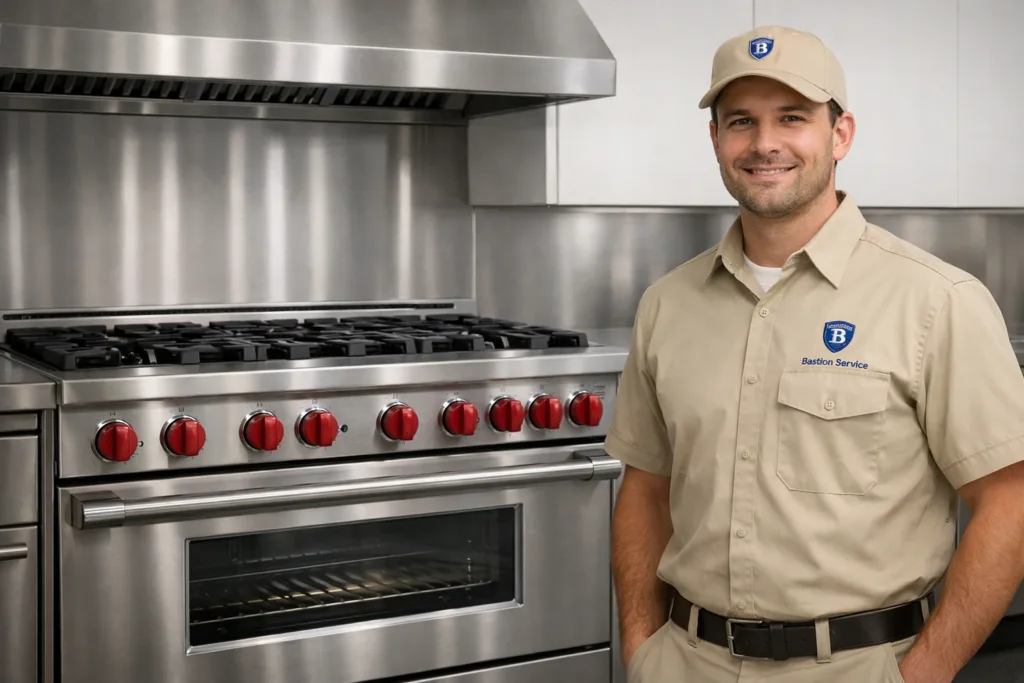
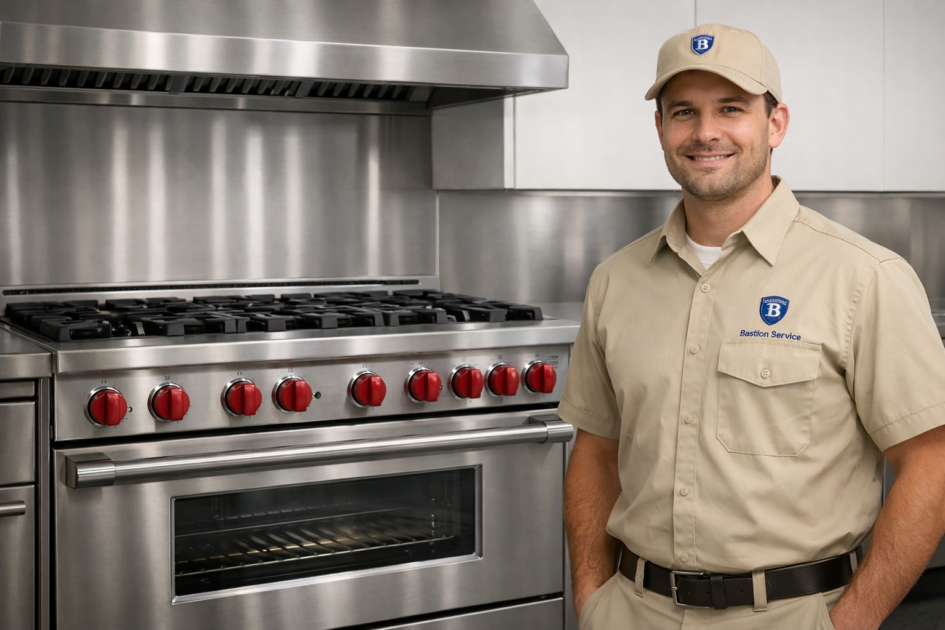
Bastion Service works with businesses in Hawthorne that depend on Wolf cooking equipment every day. Whether the issue appears as a startup problem, poor heat recovery, inconsistent burner output, or a shutdown that keeps returning, service should focus on the symptom pattern, likely failed components, and the fastest path back to stable operation.
What Wolf cooking equipment problems do technicians troubleshoot?
Wolf cooking equipment issues often show up first as performance complaints before they become full outages. An oven may start taking longer to preheat, a range burner may light only part of the time, or a fryer may recover too slowly after baskets are dropped. These early signs matter because they help narrow the repair path before the equipment becomes unusable during service.
- Burners that do not ignite or ignite inconsistently
- Delayed startup, repeated clicking, or failed ignition attempts
- Slow preheat or equipment that does not reach set temperature
- Temperature swings that affect consistency from batch to batch
- Uneven oven heat or hot and cold areas inside the cavity
- Weak flame, unstable flame, or burners that drop out under load
- Fryers with slow recovery and reduced output during busy periods
- Controls that do not respond, do not hold settings, or display faults
- Units that shut down unexpectedly or require repeated resets
Because these symptoms can overlap, a proper diagnosis is usually more efficient than replacing parts based only on one visible problem.
Oven problems that affect consistency and throughput
Slow preheat, uneven baking, and drifting temperatures
When a Wolf oven stops heating evenly or takes too long to recover, the impact shows up in both product quality and ticket timing. Businesses may notice undercooked sections, overbrowned edges, longer cook times, or the need to rotate product more often than usual. Those symptoms can point to sensor issues, thermostat problems, heating circuit faults, control failures, or airflow-related performance problems depending on the model and configuration.
An oven that still turns on but no longer holds temperature reliably should not be treated as a minor annoyance. It can create waste, rework, and unpredictable results across the shift. Service is especially important when operators start compensating manually by adjusting settings repeatedly just to get acceptable output.
Range issues that slow line performance
Ignition trouble, weak burners, and unstable flame
Wolf ranges are often central to daily prep and active service, so burner issues can quickly affect multiple stations. Common complaints include burners that click without lighting, burners that light only after several attempts, flame patterns that look uneven, or heat output that seems too low for normal cooking speed.
These symptoms may be tied to ignition components, burner assemblies, valves, regulators, switches, wiring, or control-related faults. In a business setting, even one unreliable burner can force staff to reorganize workflow, delay orders, or overload other stations. If flame performance changes suddenly or startup becomes inconsistent, scheduling service early can help avoid a full loss of that cooking position.
Fryer problems that reduce recovery and batch volume
Slow heat return, shutdowns, and poor temperature control
Fryers are especially sensitive to temperature-related failures because recovery speed directly affects output. If a Wolf fryer struggles to return to temperature after baskets are dropped, food quality can suffer and production can back up during peak demand. Operators may see longer ticket times, inconsistent texture, or the need to extend cook times to compensate.
Fryer symptoms can involve thermostats, probes, high-limit components, heating systems, gas-related parts, or controls. Repeated shutdowns are also important to investigate quickly, since a fryer that works intermittently can become harder to trust during rush periods. If the unit is no longer heating predictably, it makes sense to have it evaluated before the problem becomes a complete outage.
Ignition and startup faults should not be ignored
One of the most disruptive symptom groups across cooking equipment is startup failure. That may look like delayed ignition, repeated clicking, burners that light and then go out, or a unit that needs several attempts before it will run. These issues can waste staff time and increase wear when operators repeatedly cycle the equipment trying to keep service moving.
Startup faults should also be evaluated with safety in mind. If there is a persistent or strong gas odor, the equipment should not continue in use until the issue is handled appropriately. Even when there is no obvious odor, repeated failed ignition is a sign that key components or fuel-delivery functions need inspection rather than workaround operation.
Temperature control issues often start small and get expensive
Not every failure begins with a dead unit. Many repair calls start with reports that the equipment “just isn’t acting right.” Set temperatures may no longer match actual cooking performance. A fryer may recover more slowly than usual. An oven may overshoot, then drop too low. A range may produce enough heat to seem usable, but not enough to keep up with normal demand.
These are the kinds of problems that often lead to hidden costs first: slower output, wasted product, staff frustration, and inconsistent results. They also tend to worsen over time. A service visit can determine whether the problem is calibration-related, tied to sensors or controls, or part of a larger component failure that should be addressed before additional damage occurs.
Control failures and intermittent shutdowns
Control-related problems are especially frustrating because they can seem to come and go. A unit may restart after a reset, appear normal for a while, and then fail again in the middle of service. Displays may stop responding, settings may not hold, or safety shutoffs may interrupt operation without a clear pattern.
Intermittent faults usually require more than a quick visual check. They may involve boards, user interfaces, connected safety circuits, sensors, switches, or power-related issues. For businesses in Hawthorne, the value of a repair visit is not simply identifying that a control problem exists, but determining what is actually causing the repeated stoppage so the repair plan matches the fault.
When equipment can stay in use and when it should come out of service
Some symptoms allow limited operation until repair is completed, while others call for immediate shutdown. Mild performance loss, such as slower-than-normal preheat or a single weak burner, may still allow reduced operation for a short period depending on workload and equipment condition. Even then, the business should plan service before the issue spreads to other functions.
More serious warning signs deserve prompt action. Examples include repeated ignition failure, overheating, unstable controls, burners dropping out during use, frequent resets, or shutdowns that are becoming more common. If there is concern about unsafe operation, continued use should not be treated as a temporary solution simply to get through another shift.
How symptom-based repair planning helps businesses in Hawthorne
Repair planning is more useful when it is based on how the equipment is failing in real service conditions. A complaint such as “not heating right” becomes more actionable when paired with details like whether the issue started suddenly, affects all burners or only one section, appears after warm-up, or gets worse during heavier use. That information helps narrow the likely failure points and supports better scheduling decisions.
For businesses in Hawthorne, this matters because downtime has a cost beyond the part itself. Delays affect prep volume, service flow, staffing decisions, and the ability to maintain consistent output. A repair approach tied to actual symptoms can help determine whether the unit should be repaired immediately, monitored only briefly until service, or evaluated against replacement if failures have become frequent.
What to note before scheduling service
When calling for Wolf cooking equipment repair, it helps to describe the problem in operating terms rather than only naming the machine type. Useful details include:
- Whether the issue affects startup, heating, recovery, controls, or shutdowns
- Whether the problem is constant or intermittent
- If one section is affected or the entire unit is underperforming
- Whether the issue appears only during heavy use
- If staff have noticed unusual smells, noises, clicking, or visible flame changes
- How long the symptom has been happening and whether it is getting worse
This kind of information helps turn a broad complaint into a service call that is focused on the most likely causes.
Choosing repair before downtime spreads
Cooking equipment problems have a way of expanding from inconvenience to disruption. A range with one weak burner can force changes across the line. An oven that drifts off temperature can affect product consistency all day. A fryer that recovers too slowly can reduce output just when volume picks up. Addressing these issues before a full shutdown usually gives businesses more control over scheduling and less disruption to daily operations.
If your Wolf cooking equipment in Hawthorne is showing ignition issues, poor heat, control faults, slow recovery, or repeated stoppages, the next step is to schedule service based on the symptom pattern and current operating risk. A repair visit should help your team understand what failed, whether the equipment can stay in service, and what needs to happen to restore reliable performance as quickly as possible.


