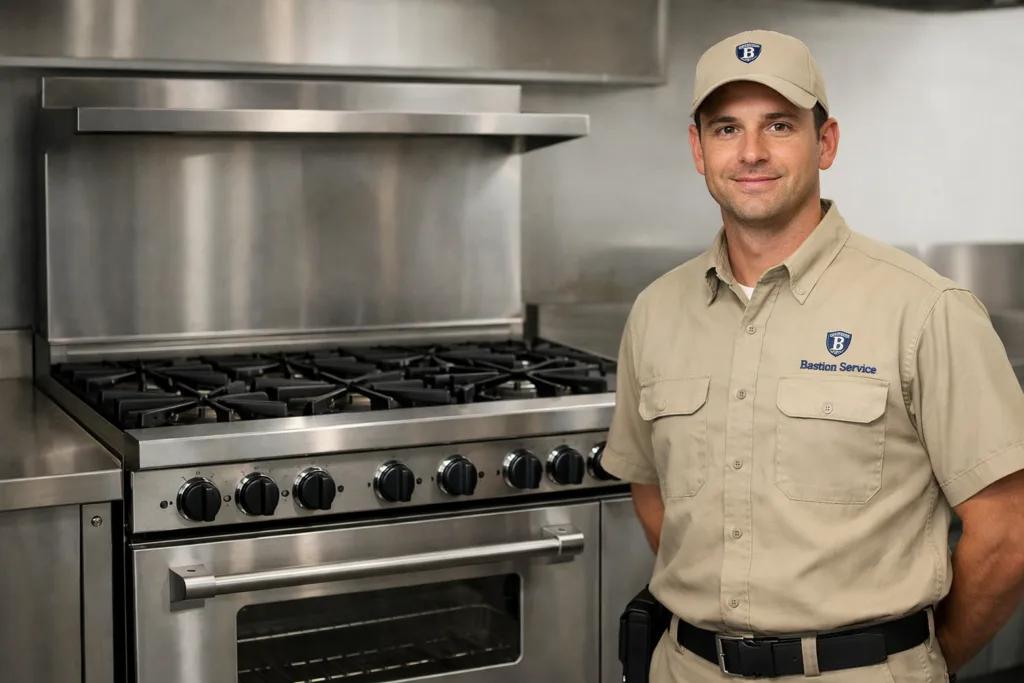




Range problems can slow production long before a unit stops working completely. A burner that clicks several times before lighting, an oven section that falls behind during rush periods, or temperature swings that force staff to adjust by feel all point to issues that should be tested before normal use continues. For businesses in Hawthorne, service is most effective when the symptom pattern is tied to the exact system causing the failure, so repair scheduling is based on what the range is actually doing in day-to-day operation.
Related commercial service paths in Hawthorne include Southbend Commercial Repair in Hawthorne, Southbend Oven Repair in Hawthorne, and Vulcan Range Repair in Hawthorne.
Bastion Service works with Hawthorne businesses to diagnose Southbend range faults that affect ignition, burner output, oven performance, controls, and safe operation. That process helps determine whether the issue is isolated to one component, spreading across multiple sections, or serious enough that the unit should be taken out of service until repairs are completed.
Why a Southbend range may stop lighting, heating, or holding temperature
These complaints often look similar from the kitchen floor, but they do not always come from the same cause. A range that will not light may have an ignition problem, a gas delivery issue, blocked burner ports, worn switches, or a control-related fault. A unit that lights but does not heat correctly may instead point to valve problems, thermostat drift, sensor issues, failing elements on electric configurations, or uneven combustion.
Temperature complaints are especially important because they affect both speed and consistency. If the oven runs cold, overshoots, or recovers slowly after the door is opened, staff may compensate by extending cook times, rotating product, or avoiding part of the equipment. Those workarounds can keep service moving temporarily, but they are also useful clues that help narrow the repair path.
Common symptoms that usually need service
Burners click but do not ignite reliably
Repeated clicking without dependable ignition often points to trouble in the ignition system, burner assembly, switch function, or gas flow. If the problem affects one position, the fault may be localized. If several burners begin acting the same way, the diagnosis may need to focus on shared components or supply-related issues. Intermittent ignition should not be ignored, especially when staff need multiple attempts to get normal flame.
Weak, uneven, or unstable flame
A burner that looks smaller than usual, flares unevenly, or heats inconsistently can reduce cooking speed and create uneven results across the line. This may be caused by clogged ports, regulator concerns, valve wear, buildup affecting combustion, or other faults that change how gas is delivered and burned. Even if the range is still usable, abnormal flame behavior is usually a sign that performance and reliability are already slipping.
Oven section runs hot, cold, or inconsistent
When the oven cavity does not match the set temperature, the cause may involve thermostatic controls, sensors, igniters, heating components, relays, or calibration-related wear depending on the model. Some operators first notice this as slower recovery during busy periods. Others notice that product finishes unevenly or requires repeated adjustments. Either way, unstable oven temperature is a repair issue, not just a cooking inconvenience.
Range shuts down during use
If the unit operates for a while and then stops heating, drops out unexpectedly, or behaves worse as it gets hot, the problem may be tied to electrical connections, safety devices, failing controls, or components that break down under load. These faults can be difficult to confirm without symptom-based testing because the range may appear normal when it is first inspected and only fail after it has been running.
Controls do not respond normally
Unresponsive knobs, inconsistent settings, erratic cycling, or sections that do not react the same way every time can indicate control failure, worn switches, internal electrical faults, or related wear in the operating system of the range. Control issues can sometimes look like burner or temperature problems, which is why proper testing matters before parts are ordered.
What those symptoms often mean for repair planning
One of the most important parts of Southbend range repair is deciding whether the problem is contained or whether it reflects broader wear. A single failed igniter, switch, or valve may support a straightforward repair if the rest of the unit is operating normally. If multiple burners are inconsistent, the oven section is drifting, and controls are becoming unreliable at the same time, the service approach may need to account for several related issues rather than one obvious failure.
That distinction affects scheduling, parts planning, and downtime expectations. A narrow fault can often be addressed with a focused repair. A range showing several overlapping performance problems may require a broader evaluation so the business can decide whether restoring the unit makes sense compared with replacement planning.
Signs the range should not stay in normal use
Some issues can wait briefly for a scheduled repair window, but others should push the unit out of regular rotation right away. Continued use becomes harder to justify when the range has persistent ignition failure, major temperature drift, repeated shutdowns, visibly abnormal flame, or controls that no longer respond in a predictable way.
If there is a persistent gas smell, stop using the range immediately and follow emergency safety procedures before arranging appliance service. If there is no gas odor but ignition is still unreliable or clicking continues without normal burner operation, the unit should still be inspected before it is returned to full production use.
How businesses in Hawthorne can prepare for a service visit
Good symptom notes can shorten the diagnostic process. It helps to know whether the problem affects the cooktop, the oven section, or both; whether the issue is constant or intermittent; whether it happens only after preheat or only during heavy use; and whether staff have noticed changes in flame quality, recovery time, or control response.
- Which burner or section is affected
- Whether the failure happens at startup, during operation, or after the unit has been running
- Whether the issue is getting gradually worse or appeared suddenly
- Any unusual sounds, repeated clicking, or visible flame changes
- How the problem is affecting ticket times, consistency, or workflow
These details help connect the complaint to the right system instead of relying on guesswork. They also make it easier to decide whether the range can remain in limited use while awaiting repair or whether downtime is the safer choice.
Repair or replacement: how to decide
The decision usually comes down to fault scope, parts condition, service history, and how important that specific range is to daily output. If the issue is limited and the rest of the equipment is stable, repair is often the sensible move. If the range has recurring heat-control problems, multiple failing sections, and a pattern of reliability concerns, replacement planning may be the better operational decision.
For many Hawthorne kitchens, the real question is not whether the unit can be restarted once, but whether it can return to steady service without continued disruption. A thorough diagnosis gives that answer and helps avoid spending money on the wrong part or the wrong next step.
When a Southbend range begins affecting production, consistent cooking results, or safe operation, scheduling service early usually prevents a smaller problem from turning into a longer outage. A targeted inspection, realistic repair recommendation, and timely scheduling can help Hawthorne businesses restore equipment performance and make the next step with confidence.