
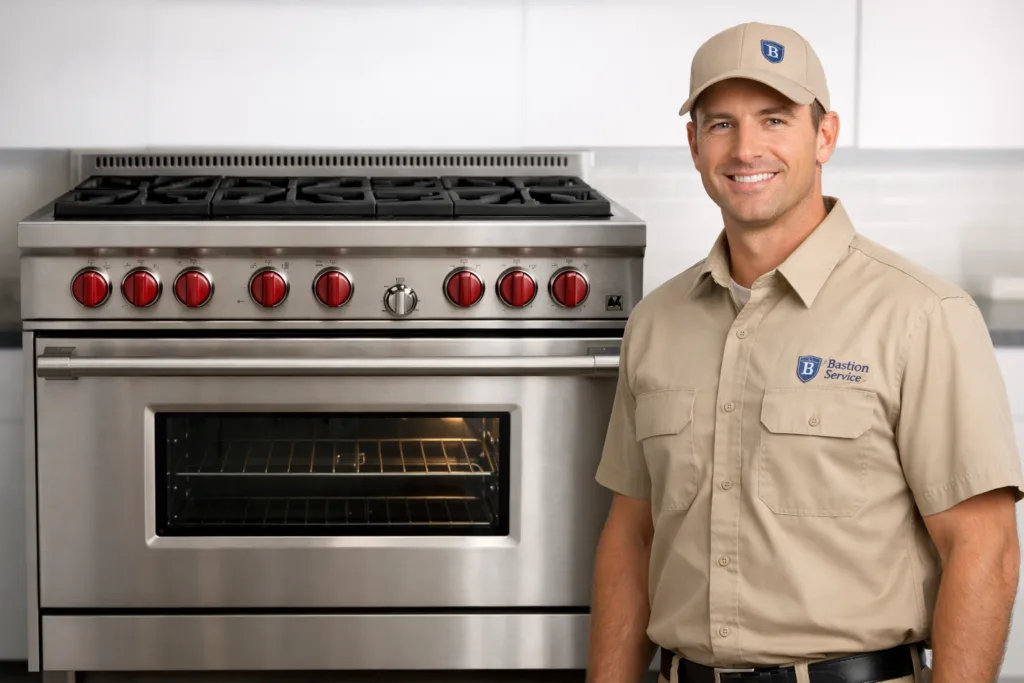




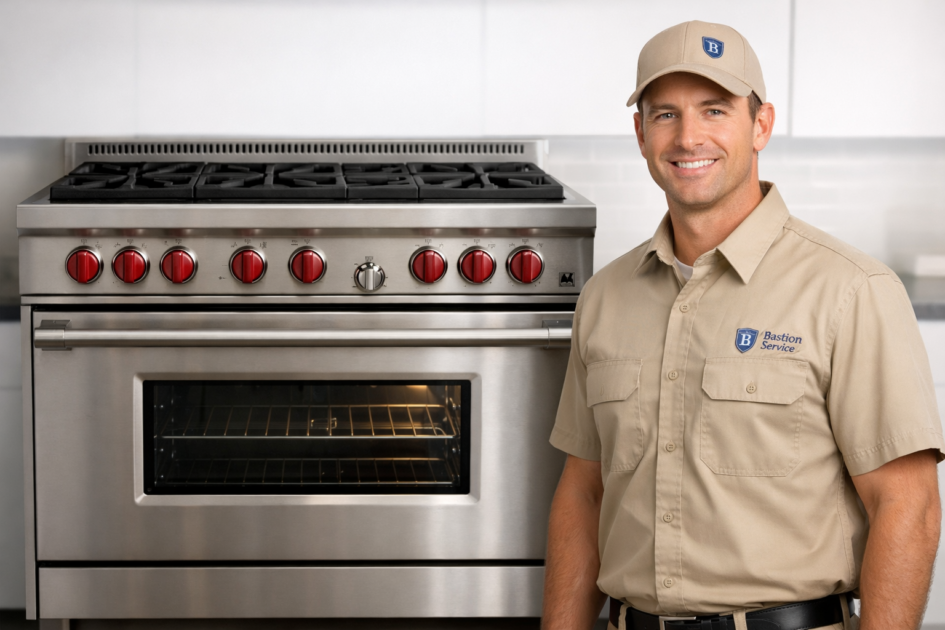
Oven problems affect more than a single piece of equipment. When a Wolf unit starts missing temperature, recovering slowly, or shutting down during production, the issue can ripple into prep timing, batch consistency, staffing flow, and service speed. In Palos Verdes Estates, businesses usually need the same thing first: a service visit focused on the actual symptom pattern so repair scheduling, parts decisions, and downtime planning are based on what the oven is doing now rather than assumptions.
Related commercial service paths in Palos Verdes Estates include Wolf Commercial Repair in Palos Verdes Estates, Commercial Oven Repair in Palos Verdes Estates, and Wolf Range Repair in Palos Verdes Estates.
How Wolf oven problems usually show up in daily operation
Many oven failures begin as performance complaints before they become full outages. Staff may notice longer preheat times, trays finishing unevenly, controls acting unpredictably, or a need to adjust temperatures repeatedly just to get acceptable results. Those early signs matter because they often point to heating, sensing, airflow, ignition, or control issues that can worsen under continued use.
Bastion Service helps businesses in Palos Verdes Estates evaluate these symptoms in a way that supports repair decisions, not guesswork. The goal is to confirm whether the problem is isolated to one failing component, tied to multiple related issues, or serious enough that continued operation could increase damage or create safety concerns.
Why is my Wolf oven not heating evenly or reaching set temperature?
This is one of the most common service calls because several different faults can create nearly the same complaint. An oven that does not reach the selected temperature may have a weak heating circuit, a failing igniter, a sensor that is drifting out of range, a control issue, poor airflow, or heat loss caused by door or gasket wear. If the oven does reach temperature but does not hold it consistently, the problem may be tied more closely to cycling control, calibration, convection performance, or intermittent electrical faults.
In a business setting, this often appears as:
- Slow preheat at the start of a shift
- Longer cook times than normal
- Uneven browning or bake results
- Difficulty recovering temperature between batches
- Staff changing settings more often to compensate
Because these symptoms overlap, testing matters. Replacing one likely part without checking the rest of the heating and control system can leave the original complaint unresolved.
Common symptom groups and what they may indicate
Slow preheat or weak heat output
If the oven takes too long to come up to temperature, it may be dealing with ignition weakness, reduced heating performance, sensor problems, or a control that is not commanding the system correctly. For kitchens that rely on steady throughput, even a moderate delay can disrupt the entire production timeline.
Uneven baking, hot spots, or inconsistent product finish
When one side cooks faster, top and bottom results do not match, or batch quality varies without a menu change, the oven may have airflow restrictions, fan-related problems, calibration drift, door seal leakage, or sensor inaccuracies. These issues are easy to misread as operator inconsistency, but repeated patterns usually point back to equipment performance.
Intermittent shutdowns during use
An oven that starts normally and then loses heat, resets, or stops mid-cycle can indicate unstable controls, overheating components, safety circuit faults, ignition problems, or a failure that appears only after the unit has been running for a period of time. Intermittent behavior is especially disruptive because it makes output unpredictable even before the oven fully fails.
Error codes or unresponsive controls
Display faults, frozen settings, or mode selections that do not respond correctly can involve the interface, control boards, communication problems, sensors, or incoming power issues. Error codes can help narrow the direction of diagnosis, but they do not replace hands-on testing of how the oven is actually operating.
Door, hinge, and gasket problems
Heat escaping around the door can cause longer cook times, poor temperature stability, and excess strain on heating components. Worn hinges, weak latching, torn gaskets, and alignment issues may look minor, but they often contribute directly to complaints about inconsistency and reduced efficiency.
Why symptom-based diagnosis matters before approving repair
Two ovens can appear to have the same problem and need completely different repairs. For example, slow heating might be caused by ignition weakness in one unit and sensor or control failure in another. Uneven cooking may come from a failing convection system, but it can also be driven by heat loss or calibration problems. That is why the most useful service call starts with symptom verification, operating checks, and focused testing tied to the complaint your staff is actually seeing.
This approach helps answer the questions businesses usually care about most:
- What failed and what symptoms are secondary?
- Can the oven continue to run safely until repair is completed?
- Is the issue isolated, or are multiple systems affected?
- Is repair likely to restore stable operation?
- Should service be scheduled immediately to avoid a larger outage?
Signs the oven should be serviced soon
It is smart to schedule service when the oven is still operating but no longer performing normally. Waiting for a complete shutdown can increase both disruption and repair scope. Warning signs include repeat temperature swings, delayed ignition, controls that respond inconsistently, unexpected shutdowns, or product quality changes that track with oven use rather than recipe or staffing changes.
Businesses in Palos Verdes Estates should also treat repeated resets, abnormal cycling, and unusual heat behavior as early repair indicators. These are often the kinds of issues that progress gradually until the oven becomes unreliable during a busy production window.
When continued use can make the problem worse
Using an oven with unstable temperature regulation, weak airflow, failing door seals, or erratic controls can increase wear on heating and electronic components. Repeated overheating, poor cycling, or ignition trouble may turn a smaller repair into a more expensive one if the unit is kept in regular use without evaluation. If the oven is showing frequent fault activity, producing severe temperature inconsistency, or operating in a way that seems unsafe, it should be taken out of normal service until it is checked.
If there is a strong or persistent gas smell, that is not a routine scheduling issue. The appliance should not be used, and the situation should be addressed through the appropriate emergency steps before appliance repair is arranged.
Repair versus replacement considerations
A major oven problem does not automatically mean replacement is the better path. Many Wolf ovens remain good repair candidates when the core structure is sound, the unit still fits the kitchen’s workflow, and the failure is limited to serviceable components. Repair becomes less attractive when breakdowns are frequent, reliability after repair is doubtful, or multiple major systems are failing at the same time.
The better decision usually depends on whether the oven can return to consistent day-to-day performance after service, not simply on whether one part can be replaced. Looking at the present symptom pattern, the likely scope of repair, and the risk of future downtime gives a business a more useful basis for deciding what to do next.
Preparing for a Wolf oven service visit
Before service is scheduled, it helps to note what the oven is doing under normal workload. Useful details include whether the problem happens during preheat or only after extended use, whether the issue affects all modes or just one, whether fault codes appear, and whether the complaint is constant or intermittent. Staff observations about batch inconsistency, delayed recovery, or shutdown timing can also help narrow the diagnosis faster.
If your Wolf oven is affecting output, slowing production, or forcing repeated workarounds, the next step is to schedule repair based on the exact symptoms and operational impact. That gives your business in Palos Verdes Estates a more reliable path to restoring performance, controlling downtime, and deciding whether immediate repair should be prioritized.


