
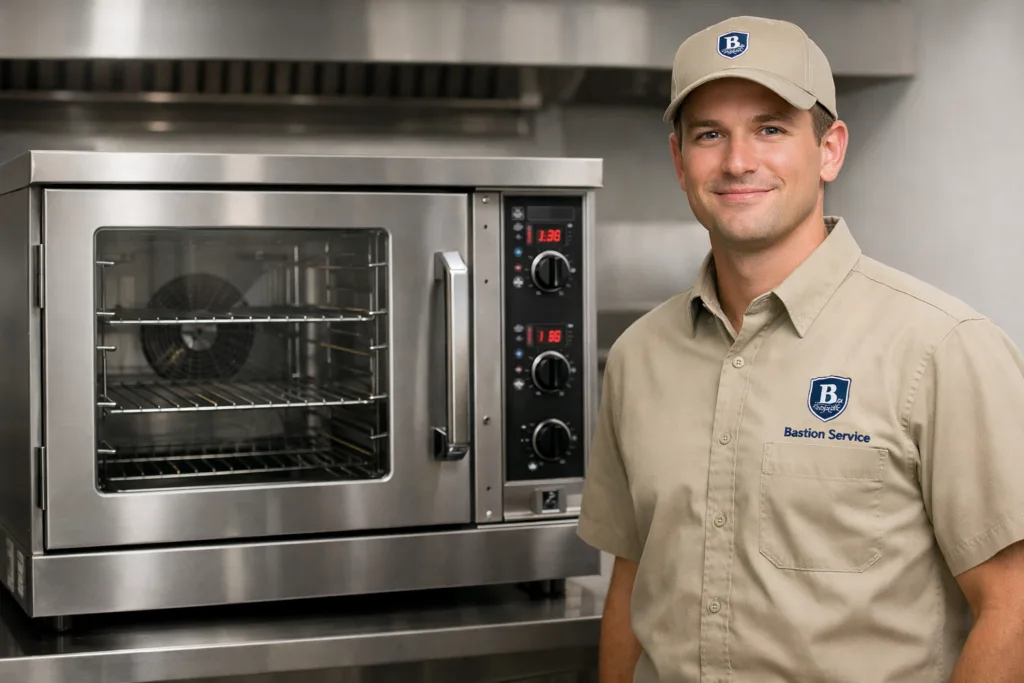




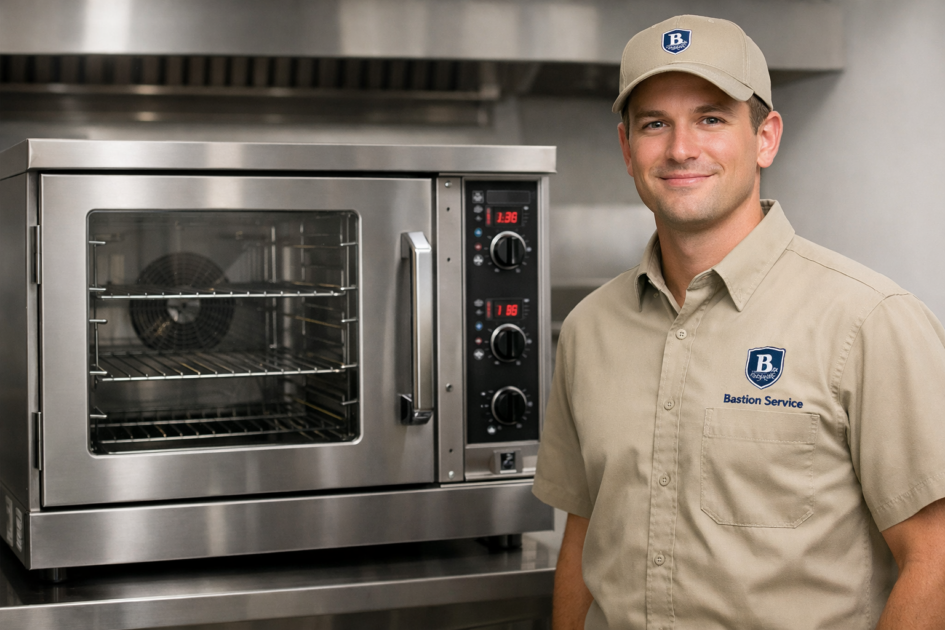
When a Blodgett oven begins missing temperature targets, baking unevenly, or dropping out during a cycle, the disruption usually spreads beyond one piece of equipment. Ticket times slow, batch consistency suffers, and staff start working around a problem that often gets worse with continued use. In Palos Verdes Estates, service is most useful when the visit is centered on the exact symptom pattern, how often it occurs, and whether the issue points to ignition, heat generation, sensing, airflow, controls, or door-related heat loss. Bastion Service works with businesses in Palos Verdes Estates to identify the fault, explain the repair path, and help shorten avoidable downtime.
Related commercial service paths in Palos Verdes Estates include Blodgett Repair in Palos Verdes Estates, Commercial Oven Repair in Palos Verdes Estates, and Southbend Oven Repair in Palos Verdes Estates.
What Blodgett oven problems usually look like in daily operation
Many oven failures do not begin as a full shutdown. A unit may still run, but preheat more slowly than usual, recover poorly between loads, or produce different results from rack to rack. Those early signs matter because they often indicate a developing issue in components that regulate heat, circulate air, or confirm temperature back to the control system.
For kitchens that rely on repeatable output, even a small shift in performance can affect product quality and labor. Staff may start rotating pans more often, extending cook times, changing placement inside the cavity, or avoiding certain modes altogether. Those workarounds help temporarily, but they also signal that the oven should be evaluated before the problem expands into a no-heat condition or a complete interruption of service.
Why a Blodgett oven may not heat evenly or reach set temperature
When a Blodgett oven is not heating evenly or reaching its set temperature, the underlying cause is not always the same from one unit to another. Similar symptoms can come from failed or weakening igniters, burner problems, sensor drift, relay faults, control-board issues, worn door gaskets, convection fan problems, or restricted airflow inside the cavity. In electric configurations, heating-element performance and electrical continuity also become key parts of diagnosis.
An oven that stalls below the target temperature may still appear functional, but partial heat output can be just as disruptive as no heat at all. If the displayed temperature does not match actual cavity conditions, the problem may be tied to sensing accuracy, calibration, or control response rather than the heating source alone. A proper service visit separates these possibilities so repair decisions are based on the actual failure instead of trial-and-error parts replacement.
Symptom-based repair clues worth paying attention to
Slow preheat and weak temperature recovery
If preheat takes longer than normal or the oven struggles to recover after the door opens, likely causes include declining ignition performance, weakened heating components, poor burner operation, heat loss around the door, or control issues that cycle heat incorrectly. These problems tend to show up first during busy periods when the oven is under repeated demand.
Hot spots, cold spots, and inconsistent baking results
Uneven color, underdone sections, or different results on separate racks often point to airflow imbalance, fan-motor trouble, blocked circulation, damaged interior components, or inaccurate temperature regulation. In convection models, fan-related issues can create major variation even when the unit appears to be running normally.
Intermittent ignition or startup failure
An oven that sometimes starts and sometimes does not may have an igniter issue, gas-valve response problem, safety-switch interruption, wiring fault, or control sequence failure. Intermittent symptoms are especially important to document because they can become harder to reproduce once the unit cools down or sits idle between shifts.
Temperature swings during operation
Wide fluctuations during a cook cycle can be caused by failing sensors, control instability, relay problems, burner cycling faults, or heat escaping from worn seals and misaligned doors. If staff notice that recipes suddenly need constant adjustment, temperature control should be checked before product inconsistency becomes routine.
Display errors, lost settings, or unresponsive controls
When the interface freezes, shows fault codes, fails to hold programmed settings, or responds unpredictably, the issue may involve the control board, keypad, sensor communication, or power delivery to the control system. These failures can affect more than convenience; they often interfere directly with cycle reliability and temperature accuracy.
Door and seal issues can create larger heating problems
Heat-retention problems are easy to overlook because the oven still produces heat, just not efficiently or consistently. Worn gaskets, loose hinges, latch problems, and poor door alignment can let heat escape continuously. The result is longer cook times, more stress on heating components, and weaker recovery between loads.
On a busy line, operators may interpret this as a temperature problem alone, but escaping heat changes how the entire oven performs. If the cavity cannot maintain stable conditions, the control system and heating assembly have to work harder to compensate, which can speed up wear and make an existing fault more noticeable.
When continued operation is no longer a good idea
Some symptoms justify prompt scheduling rather than waiting for a complete breakdown. Repeated ignition hesitation, tripped protection devices, overheating, shutdowns during use, strong temperature variance, or ongoing error codes all suggest that the oven should be inspected before the next service window closes. Continued use under those conditions can increase damage, create inconsistent output, and make the final repair broader than it needed to be.
If the oven is central to daily production, it also helps to schedule service before staff build too much workflow around a failing unit. Temporary adjustments in cook time or rack placement may keep output moving, but they rarely solve the root problem and often hide how far performance has already drifted.
Repair or replace: how businesses usually decide
A Blodgett oven is often worth repairing when the failure is concentrated in a defined part of the heating, ignition, sensing, airflow, or control system and the rest of the unit remains structurally sound. If the cavity, frame, and core operating systems are in good condition, targeted repair can restore reliable performance without forcing a premature equipment change.
Replacement becomes a more realistic discussion when multiple systems are failing together, past repairs have not stabilized temperature performance, parts needs are stacking up, or the oven no longer supports the output required by the business. The goal is not simply to get the unit running again for a short period, but to determine whether the repair meaningfully restores dependable operation.
How to prepare for a service visit
Before service is scheduled, it helps to note what the oven is doing and when the problem appears. Useful details include whether the fault happens during preheat or mid-cycle, whether the issue affects every mode or only one function, whether there are visible error messages, and whether performance changes after the oven has been running for a while. If one rack, one side, or one batch type is affected more than another, that is also helpful information.
- Record any error codes shown on the display.
- Note whether the oven fails cold, hot, or both.
- Track slow preheat times or recovery delays between loads.
- Identify unusual noises from fans, relays, or ignition attempts.
- Check whether the door closes tightly and seals evenly.
These details can make diagnosis faster and help determine whether the problem is isolated or part of a broader performance decline.
Service decisions that support uptime
The most productive repair visit is one that explains why the oven is failing, what additional wear may be connected to that fault, and whether the unit can return to stable service with focused repair. For businesses in Palos Verdes Estates, that means less uncertainty around scheduling, fewer unnecessary parts decisions, and a clearer path for restoring oven reliability. If your Blodgett oven is affecting production, consistency, or safe operation, the next step is to have the symptom pattern evaluated and schedule repair before the downtime becomes harder to manage.


