
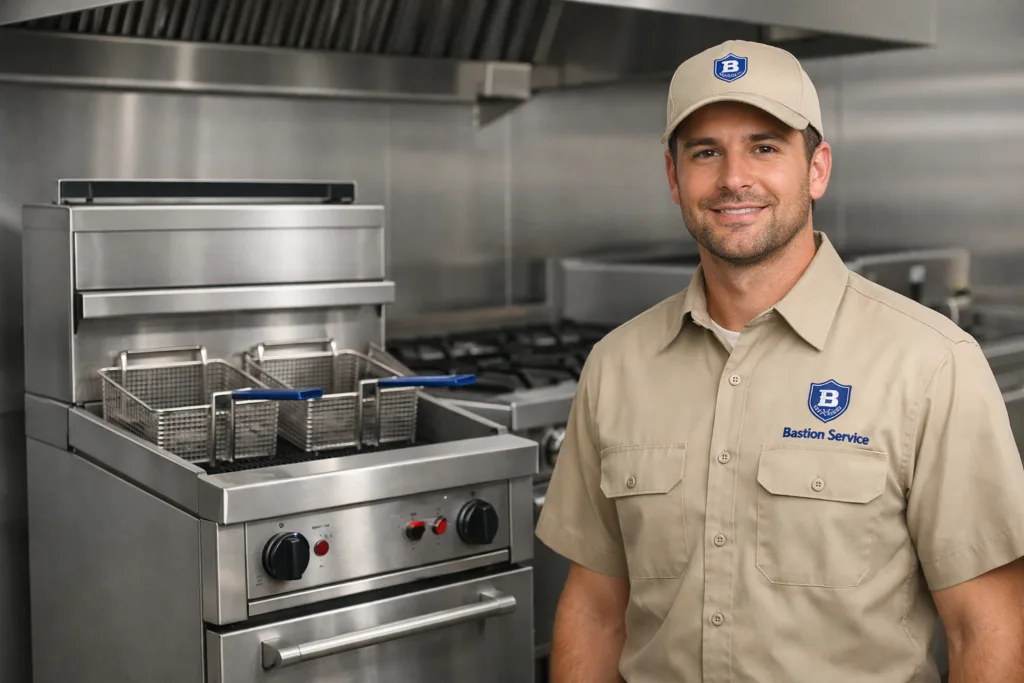




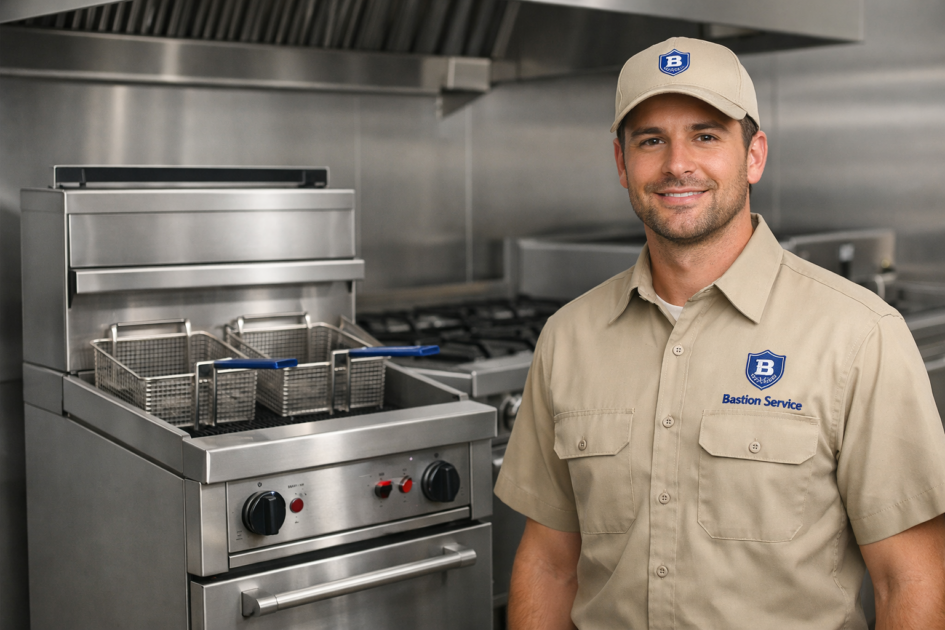
Fryer problems rarely stay isolated for long. When a Wolf fryer starts missing temperature, recovering too slowly, or shutting down in the middle of production, the result is usually immediate pressure on ticket flow, food consistency, and staff timing. For businesses in Palos Verdes Estates, service is most useful when it identifies the exact failure pattern first, then maps the repair approach to the way the unit is actually behaving on the line.
Related commercial service paths in Palos Verdes Estates include Wolf Commercial Repair in Palos Verdes Estates, Commercial Fryer Repair in Palos Verdes Estates, and Wolf Oven Repair in Palos Verdes Estates.
Bastion Service provides Wolf fryer repair for Palos Verdes Estates businesses that need symptom-based troubleshooting, realistic repair recommendations, and scheduling based on operational impact. That matters because the same complaint from staff, such as “it is not heating right,” can come from very different causes inside the fryer.
How Wolf fryer issues usually show up in daily operation
Some fryer faults are obvious from the first startup. Others appear only after the unit has been under load for a while. Paying attention to how the problem develops can help narrow down whether the issue is related to heat generation, temperature sensing, controls, safety circuits, or electrical supply.
- No heat at startup
- Long preheat time
- Slow recovery between batches
- Oil temperature overshooting the setting
- Oil temperature dropping too far during normal use
- Unexpected shutdowns
- Error displays or control panel faults
- Intermittent operation that changes from shift to shift
These symptoms may seem similar from the operator side, but they do not point to one single repair every time. A fryer that never heats, a fryer that heats but cannot recover, and a fryer that overheats each follow a different diagnostic path.
Why a Wolf fryer may not heat or recover temperature properly
If a fryer is not reaching set temperature or is taking too long to recover after baskets are dropped, the root cause may involve the heating system, the control system, or the components that tell the control how hot the oil actually is. In some cases, the fryer may still run, but production slows because the oil falls out of range too easily and does not bounce back fast enough.
Common causes of poor heat performance include:
- Weak or failed heating components
- Temperature sensor problems
- Control faults affecting normal cycling
- High-limit or safety issues interrupting operation
- Wiring or connection problems under load
- Electrical supply issues that reduce heating performance
In a busy kitchen, slow recovery often gets mistaken for normal wear or heavier-than-usual use. But if staff are extending cook times, rotating work around one unreliable fryer, or reducing batch size just to hold output together, the equipment is already affecting operations enough to justify repair service.
Temperature swings, overheating, and inconsistent cooking
When oil runs hotter or cooler than the set point, the problem is not only product quality. Temperature instability can also shorten oil life, make cook times unpredictable, and increase stress on internal components. Overheating may point to a control or sensing issue, while persistent low temperature can indicate weak heating performance or incorrect feedback to the control.
Signs that temperature control may be drifting out of range include:
- Food browning too quickly on one cycle and too slowly on the next
- Oil smoking earlier than expected
- Staff lowering or raising settings more often than usual
- Longer ticket times despite normal staffing and volume
- Visible mismatch between displayed temperature and actual cooking results
Because several different faults can create similar cooking inconsistencies, inspection usually needs to verify actual temperature behavior instead of relying only on the display reading.
Shutdowns, resets, and burners or heating circuits cutting out
A Wolf fryer that starts normally and then shuts off during operation often points to a fault that shows up only after the machine has been running for a while. Heat buildup, a failing safety component, unstable control response, or electrical interruption under load can all create this pattern.
Intermittent shutdowns deserve prompt attention because they tend to get worse during heavier use. A fryer may restart after cooling down or after a reset, which can make the issue seem manageable for a short time. In practice, that usually means the unit is one busy service away from a more disruptive failure.
If the fryer is tripping safety functions, repeatedly resetting, or cutting out once the oil gets hot, continued use can increase strain on related parts and make diagnosis more complicated later.
Control faults and error conditions
Modern fryer problems are not always mechanical. If the control panel becomes unresponsive, the unit displays fault codes, or the fryer behaves inconsistently without a clear heating pattern, the issue may involve the interface, internal electronics, communication faults, or wiring faults that interrupt command signals.
Control-related service calls often involve symptoms such as:
- Buttons not responding consistently
- Display issues or error indicators
- Random restarts
- Failure to begin a normal heat cycle
- Settings not holding properly
- Operation changing without a corresponding adjustment
These problems can look random from the outside, but they usually leave a pattern once the unit is tested in operation. That pattern helps separate a control failure from a sensor problem or a power-related fault.
When service should be scheduled instead of monitored
It is reasonable to watch a minor issue once. It is not usually a good idea to keep pushing a fryer that has already shown repeat symptoms. Scheduling repair is the better next step when the same complaint appears across multiple shifts or when staff have started building workarounds around the fryer.
Service is usually warranted when you notice:
- Repeated slow recovery
- Oil temperature drifting high or low
- Frequent resets or shutdowns
- Error messages that return after clearing
- Uneven production from one day to the next
- A fryer that can no longer be trusted during rush periods
For restaurants and other food-service businesses in Palos Verdes Estates, these are not small inconveniences. They affect speed, consistency, and labor efficiency, and they often create avoidable waste when oil and product have to be managed around unreliable heat.
What a service visit should clarify
A useful repair visit should do more than confirm that the fryer is acting up. It should identify what is failing, whether the problem is isolated or part of broader wear, and whether the unit can be returned to stable operation with a sensible repair scope.
That process commonly includes:
- Reviewing the reported symptom pattern
- Checking startup and operating behavior
- Verifying temperature performance
- Inspecting safety and control response
- Assessing visible wiring and component condition
- Determining whether continued use risks added damage
The goal is not to replace parts based on guesswork. It is to connect the real-world complaint to the failed system and outline the most reasonable next step for the equipment and the business.
Repair versus replacement for an aging fryer
Many Wolf fryer issues are repairable, especially when the cabinet and core structure remain in solid condition and the failure is limited to a specific heating, sensing, or control path. In those situations, repair is often the better move if it restores stable temperature control and normal recovery without creating a cycle of repeat service calls.
Replacement becomes a more serious consideration when the fryer has several overlapping faults, advanced wear, recurring heat-control problems, or repair costs that no longer align with the unit’s remaining service life. The right decision depends on condition, fault scope, and expected reliability after service, not just the fact that the fryer failed once.
Preparing for Wolf fryer repair in Palos Verdes Estates
Before service is scheduled, it helps to note whether the fryer fails at startup, after preheating, during heavy batch use, or only intermittently. It is also useful to record any error messages, resets, shutdown timing, unusual temperature behavior, or changes staff have made to keep production moving. Those details can shorten the diagnostic process and help focus the repair on the actual operating complaint.
When a Wolf fryer is affecting output, delaying baskets, or forcing the kitchen to work around unstable heat, the most practical next step is service built around diagnosis, downtime impact, and repair planning. For businesses in Palos Verdes Estates, that means getting the fryer evaluated promptly so the issue can be tied to a clear repair path instead of becoming a larger disruption during normal operations.


