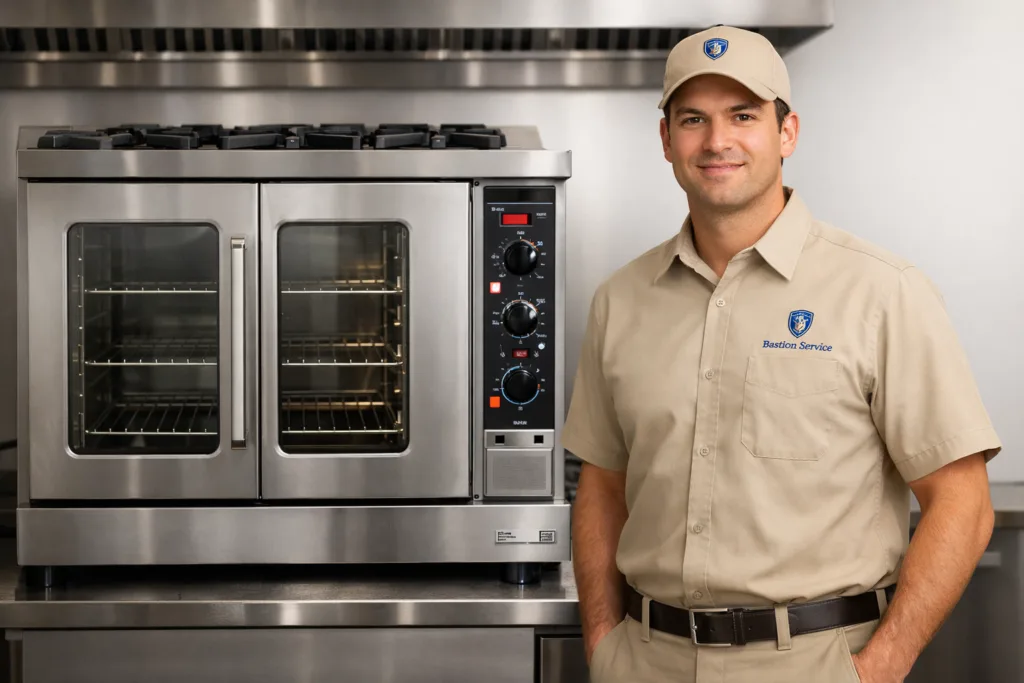




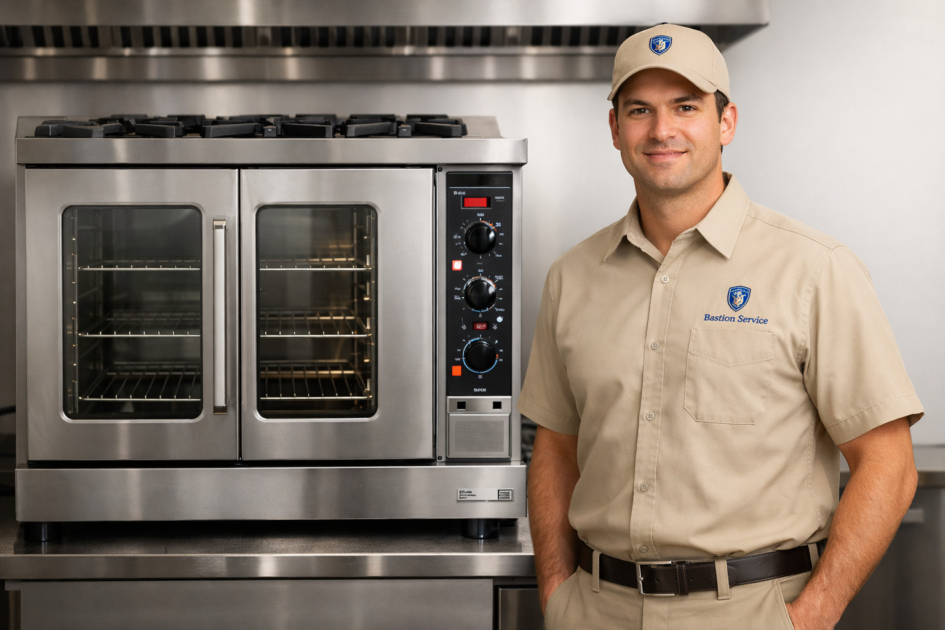
Oven failures rarely stay limited to a single symptom for long. A Vulcan unit that starts with slow preheat can turn into missed temperature targets, uneven results, or mid-cycle shutdowns that disrupt kitchen timing and product consistency. For businesses in Palos Verdes Estates, service is most effective when the problem is evaluated under real operating conditions so the repair plan reflects what the oven is actually doing, not what it seems to be doing at idle.
Related commercial service paths in Palos Verdes Estates include Vulcan Repair in Palos Verdes Estates, Commercial Oven Repair in Palos Verdes Estates, and Vulcan Range Repair in Palos Verdes Estates.
Bastion Service works on Vulcan oven issues by tracing the complaint back to the system involved, whether that points to ignition, heating output, sensor feedback, airflow, controls, wiring, or gas supply behavior. That approach helps reduce unnecessary parts replacement and gives managers a better sense of repair urgency, expected downtime, and the most practical next step for the equipment.
Common Vulcan Oven Problems and What They Can Indicate
Not heating or taking too long to preheat
When an oven powers on but struggles to build heat, the cause may be an igniter that is too weak to open the gas valve consistently, a failing heating element, a temperature sensor that is reporting inaccurately, a control issue, or a relay problem. In daily operation, this often shows up as longer cook times, delayed opening prep, or staff adjusting recipes to compensate for equipment performance.
Slow preheat can also indicate that the oven is cycling incorrectly rather than failing completely. That matters because a unit may still appear usable while producing unstable results and adding strain to other components.
Uneven baking or heat variation from rack to rack
Hot spots, cold zones, and inconsistent browning usually point to airflow or heat-distribution problems. On convection models, that may involve the fan motor, fan blade, or related electrical components. It can also be caused by a worn door gasket, calibration drift, burner distribution issues, or a sensor that no longer reflects actual cavity temperature accurately.
If staff are rotating pans more often than normal or avoiding certain positions inside the oven, that is often a sign that the problem has moved beyond normal adjustment and into a repair condition.
Ignition delays or inconsistent burner startup
Gas-equipped Vulcan ovens may develop delayed ignition, repeated clicking, failure to light on the first attempt, or intermittent burner operation. These symptoms can be tied to igniter wear, flame sensing faults, burner contamination, gas valve problems, or a control sequence failure. Because the symptom can come and go, it is easy for teams to keep using the oven until the failure becomes more disruptive.
Repeated ignition attempts should not be ignored. Besides affecting uptime, they can accelerate wear and create safety concerns that deserve prompt evaluation.
Temperature swings during use
An oven that overshoots, drops below set temperature, or recovers too slowly between loads may be dealing with sensor drift, thermostat or control failure, weak heating performance, or airflow loss. In a busy kitchen, this often shows up as products that look right on the outside but finish inconsistently inside, or batches that require constant timing adjustments.
Temperature instability is especially costly because it can mimic recipe problems, staffing issues, or loading mistakes when the real issue is equipment control.
Control errors, blank displays, or unresponsive settings
When the control panel stops responding, loses settings, displays faults, or behaves unpredictably, the issue may involve the interface, main board, harnesses, relays, or incoming power quality. Control-related symptoms can also be secondary to another fault, such as a sensor problem or overheating condition, which is why testing matters before replacing boards.
Shutting down during operation
If the oven heats normally at first and then cuts out mid-cycle, likely causes include overheating protection, intermittent connections, a failing control, unstable gas delivery, or internal airflow issues. These shutdowns often become more frequent during heavier use, making them especially disruptive during meal periods or high-output production windows.
Why a Symptom-Based Diagnosis Matters
Many oven complaints overlap. A unit that will not reach set temperature might have an ignition problem, a sensor problem, a control problem, or a heat-distribution issue. Uneven results might be caused by airflow loss, gasket failure, calibration drift, or burner imbalance. Without confirming the root cause, replacing the most obvious part can leave the original problem unresolved.
A symptom-based service visit focuses on how the failure appears in real use: whether the oven misses heat during startup, drifts during operation, struggles after the doors open, or drops out only when demand increases. That information helps separate isolated component failure from a broader wear pattern and makes repair decisions more reliable.
Signs the Oven Needs Service Soon
- Preheat times are noticeably longer than before.
- Product finishes differently from one rack position to another.
- The burner does not ignite cleanly every time.
- The display shows recurring faults or settings do not hold.
- The oven restarts, shuts off, or loses heat during active use.
- Staff are extending cook times or making routine workarounds.
These are often early indicators of a developing failure rather than isolated inconveniences. Addressing them before a full breakdown can help preserve production flow and reduce the chance of additional parts being affected.
When Continued Use Can Make the Problem Worse
Running an oven with unstable ignition, poor airflow, damaged door sealing, or inaccurate temperature control can create more than just cooking inconsistency. Improper cycling can place added stress on controls, sensors, and heating components. Repeated failed starts can shorten igniter life. Excess heat loss can keep the unit working harder while still underperforming.
If the oven shows delayed ignition or abnormal burner behavior, it should be evaluated before returning to normal use. If there is a persistent gas odor, stop using the unit and follow appropriate gas-safety procedures before arranging equipment service.
Repair or Replace: How Businesses Usually Decide
In many cases, repair makes sense when the failure is tied to a specific serviceable component such as an igniter, sensor, fan motor, control part, relay, or valve-related issue and the oven remains structurally sound overall. When the unit has repeated breakdowns, multiple overlapping faults, severe internal wear, or declining reliability that affects daily output, replacement planning may deserve a closer look.
The right decision usually depends less on the age alone and more on how the equipment performs, how often it fails, and whether the needed repair restores stable operation instead of only temporary function.
How to Prepare for a Service Visit
Before scheduling repair, it helps to note the exact symptom pattern. Useful details include whether the problem happens during preheat or after loading food, whether it affects every cycle or only some cycles, whether any fault codes appear, and whether staff have noticed changes in ignition sound, heat recovery, or cooking consistency. If one side, rack area, or cooking mode performs differently, that information can also speed diagnosis.
Clear notes from the kitchen team often make troubleshooting more efficient because they help identify whether the issue is tied to startup, control logic, airflow, or heat output from the beginning of the visit.
Service Focus for Palos Verdes Estates Businesses
For businesses in Palos Verdes Estates, oven repair is ultimately about restoring predictable operation, not just getting the unit to turn back on. A useful service call should connect the symptom to the failed system, explain whether the problem is isolated or developing, and outline the repair path in a way that supports scheduling, workflow, and uptime decisions. When a Vulcan oven begins affecting temperature performance, ignition, or control stability, timely diagnosis is the best next step to limit disruption and get the kitchen back to consistent production.