
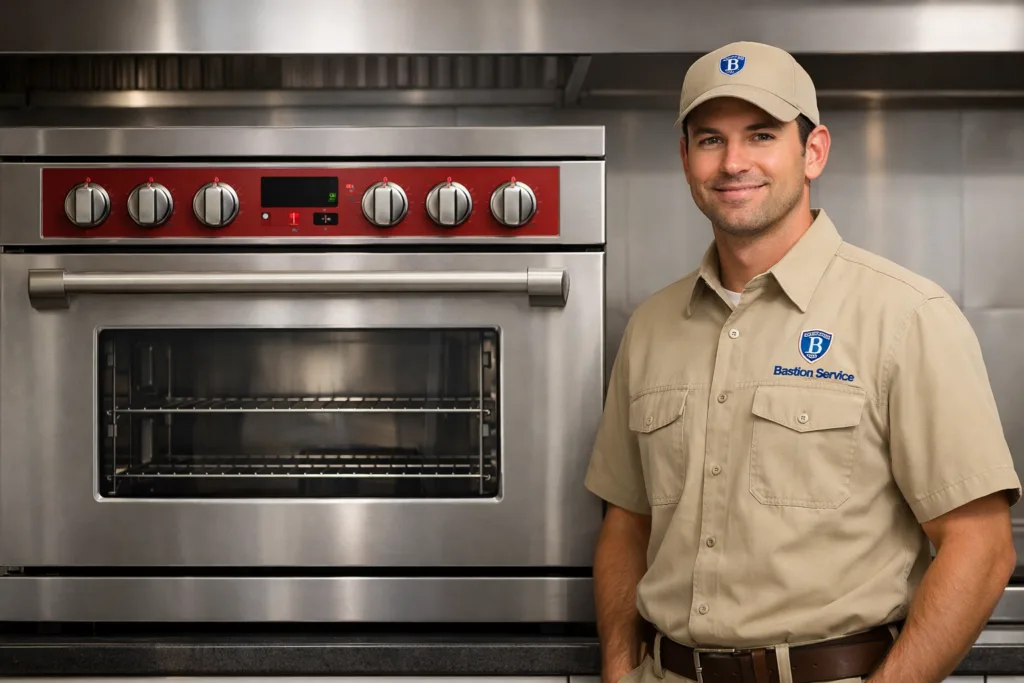




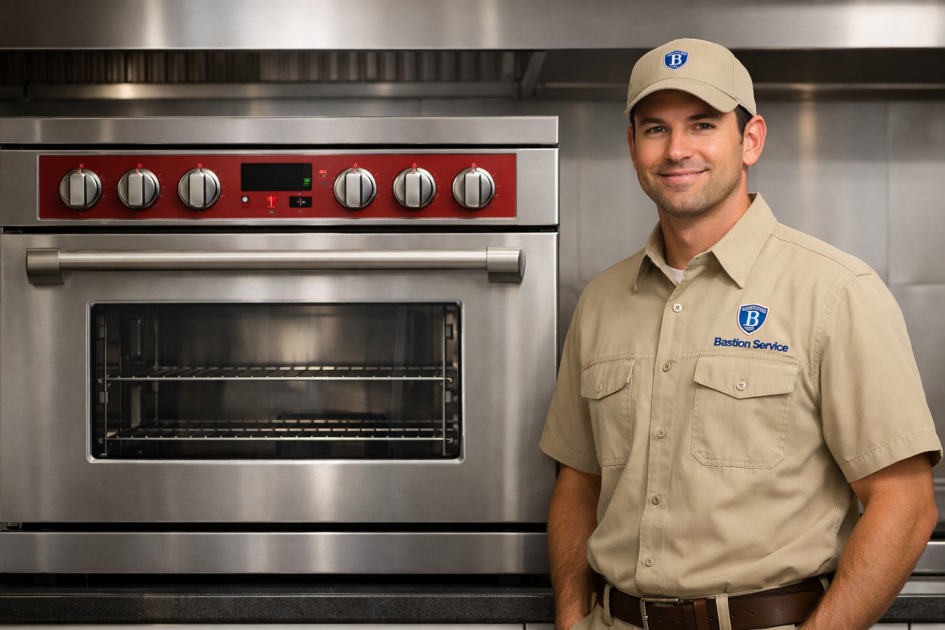
Oven problems usually show up first as slower output, inconsistent product, or staff needing to compensate for heat that no longer behaves the way it should. For businesses in Rancho Palos Verdes, the smartest next step is to have the symptom traced to the actual failure point before ordering parts or continuing to run the unit through service. Bastion Service works on Wolf oven issues with a service-first approach focused on fault isolation, repair scheduling, and minimizing avoidable downtime.
Related commercial service paths in Rancho Palos Verdes include Wolf Commercial Repair in Rancho Palos Verdes, Commercial Oven Repair in Rancho Palos Verdes, and Wolf Range Repair in Rancho Palos Verdes.
How Wolf oven problems affect daily kitchen operations
A Wolf oven does not have to fail completely to disrupt production. Many units still power on, illuminate, and appear functional while missing set temperature, cycling unpredictably, or recovering too slowly between loads. That creates a practical problem for kitchens: recipes become less repeatable, batch timing drifts, and staff start adjusting by feel instead of relying on the equipment.
For Rancho Palos Verdes businesses, the real cost often comes from inconsistency rather than a total shutdown. An oven that runs 25 degrees low, overheats after preheat, or loses heat every time the door opens can affect food quality, ticket flow, and labor efficiency long before it stops working altogether.
Why is my Wolf oven not heating evenly or reaching set temperature?
This symptom can come from several different causes, which is why testing matters more than guesswork. If the oven is heating unevenly, running hot on one side, or struggling to hit the selected temperature, the problem may involve the temperature sensor, calibration drift, relay failure, airflow disruption, fan motor weakness, door seal leakage, ignition performance, or a control issue that is no longer regulating heat correctly.
In some cases, the oven reaches temperature during preheat but cannot hold it once cooking begins. In others, the display shows the target temperature while the cavity temperature is still off enough to affect results. That difference is important because it helps narrow whether the failure is related to sensing, heat generation, circulation, or control response.
- Uneven browning or hot spots: often tied to airflow problems, fan issues, sensor drift, or door sealing problems.
- Long preheat times: may point to weak heating output, ignition trouble, electrical supply issues, or a component failing under load.
- Temperature overshoot or swings: can suggest sensor errors, relay sticking, or control regulation faults.
- Low heat despite normal operation: may indicate partial component failure, calibration error, or heat loss through worn seals and misaligned doors.
Common Wolf oven symptoms and what they often mean
Oven will not heat at all
If the unit powers on but the cavity never begins heating, the issue may involve igniters, heating elements, safety limits, relays, wiring, or the main control system. On some calls, the problem is upstream, such as incoming power irregularities or a failed circuit path that leaves the oven appearing active without actually generating heat.
Slow preheat and weak temperature recovery
When preheat takes too long or the oven struggles to recover after the door is opened, production slows down across the board. This often points to reduced heating performance, airflow problems, weak ignition, or a control problem that prevents the oven from responding correctly during heavier use. In a busy kitchen, poor recovery can be as disruptive as a total no-heat condition.
Inconsistent baking or roasting results
If one tray finishes earlier than another or the same recipe produces different results during the same shift, the oven may be cycling unevenly. Common causes include sensor drift, fan circulation issues, worn gaskets, hinge wear, or control faults that create unstable heat patterns inside the cavity.
Intermittent shutdowns or error codes
An oven that works for a period and then faults out is often harder on operations than one that fails immediately. Intermittent issues can involve overheating protection, board failure, loose wiring connections, unstable relays, cooling problems, or sensors dropping out of range only after the unit has been running. These problems should be addressed quickly because repeated resets can lead to more extensive damage.
Ignition problems or unreliable startup
If the oven hesitates during startup, fails to ignite consistently, or needs repeated attempts before heating begins, the cause may be tied to the ignition system, gas flow components, flame sensing, or controls. Even when the oven eventually starts, unreliable ignition is a sign that service should not be delayed.
Door closure, gasket, or hinge issues
Heat loss from a damaged gasket or a door that does not seal tightly can cause longer cook times, unstable cavity temperature, and extra strain on heating components. These problems are easy to dismiss because the oven still runs, but they often contribute directly to slow performance and uneven results.
When continued use can make the repair worse
Some faults stay relatively contained if handled early. Others spread wear across multiple components. A fan motor that is weakening can lead to broader heat-distribution problems. A leaking door seal can increase run time and stress temperature control parts. Repeated use through electrical irregularities, shutdowns, or overheating events can turn a focused repair into a larger control or wiring job.
It is usually best to stop regular use and schedule service when the oven:
- Trips breakers or loses power during operation
- Shows recurring fault codes
- Runs much hotter or colder than the set temperature
- Shuts down mid-cycle
- Has delayed or inconsistent ignition
- Produces visible signs of overheating or unusual odors
What a service appointment should determine
A useful oven repair visit should answer more than whether the unit is malfunctioning. It should identify which component or system is failing, whether the issue is isolated or part of a larger wear pattern, and whether repair is likely to restore stable performance for the way the oven is actually used. That information matters when a kitchen needs to decide between immediate repair, phased repair, or taking the unit offline.
For Wolf ovens, diagnosis often involves comparing reported symptoms against actual operating behavior during preheat, temperature cycling, and sustained cooking conditions. That helps separate a sensor problem from a heat-generation problem, or a door-seal issue from a control issue, so the repair plan matches the real cause.
Repair or replace?
Many Wolf oven failures are repairable, especially when the problem is limited to sensors, igniters, relays, fan components, controls, wiring, or door-related parts. Repair is often the better path when the oven remains structurally sound and the expected result is restored reliability for daily production.
Replacement becomes more likely when the unit has repeated major failures, extensive electrical damage, severe wear inside the cavity, or costs that no longer make sense compared with the expected remaining service life. The key decision is not simply the age of the oven, but whether the repair resolves the actual operating problem in a meaningful way.
How to prepare before scheduling Wolf oven repair
If you are arranging service, a few details can make diagnosis faster and more accurate. Try to note whether the issue happens during preheat, only after the oven has been running for a while, or only during heavier production periods. It also helps to document any fault codes, unusual noises, ignition delays, temperature differences, or door-seal concerns.
The more specific the symptom pattern, the easier it is to narrow the likely cause. Instead of reporting only that the oven is “not working right,” it is better to describe whether it is heating too slowly, cycling erratically, baking unevenly, or shutting off during use.
Scheduling service for a Wolf oven in Rancho Palos Verdes
When a Wolf oven starts affecting consistency, throughput, or safe operation, prompt service is usually the best way to limit disruption. For businesses in Rancho Palos Verdes, the goal is not just to get the oven running again, but to confirm why the failure happened and what repair will return the unit to stable performance. If your oven is not heating properly, showing temperature swings, or becoming unreliable during service, scheduling diagnosis early can help reduce downtime and prevent a more expensive repair later.


