
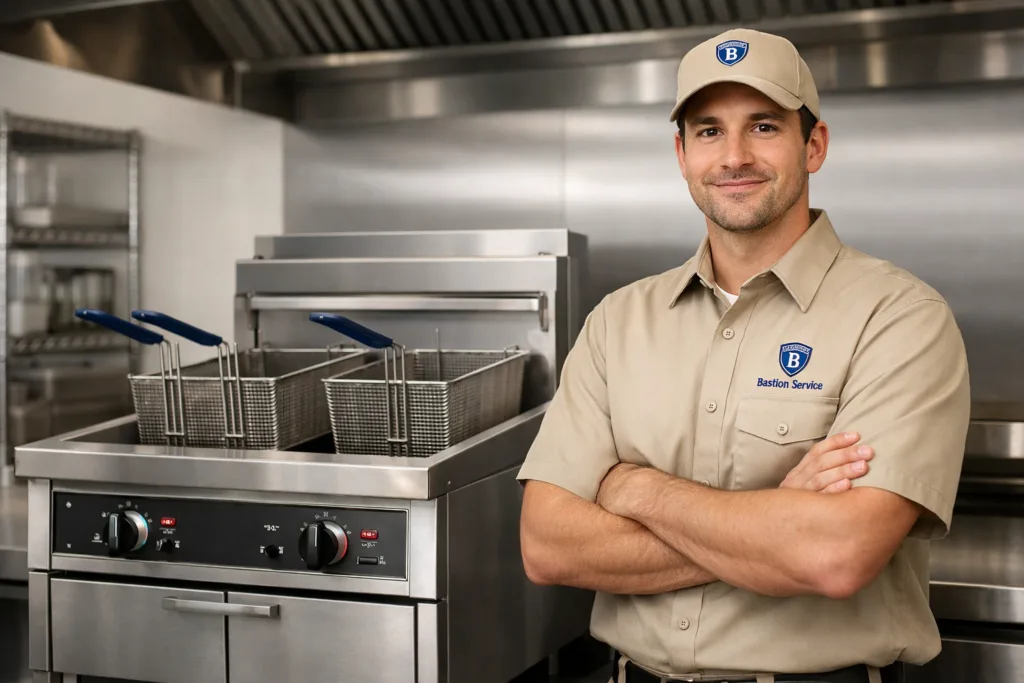




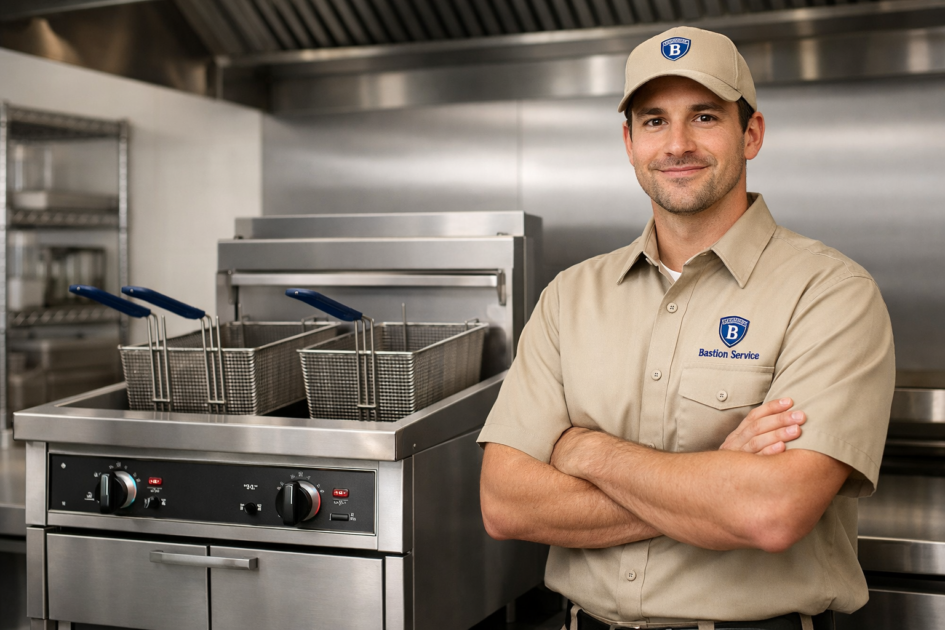
When a Wolf fryer starts missing temperature, lagging between batches, or shutting down during service, the problem usually reaches beyond one bad cook cycle. Delays at the fryer can slow ticket flow, create inconsistent food quality, and put extra pressure on the rest of the kitchen line. For businesses in Inglewood, the best next step is service that identifies the actual fault before parts are replaced or more downtime is lost.
Related commercial service paths in Inglewood include Wolf Commercial Repair in Inglewood, Commercial Fryer Repair in Inglewood, and Wolf Oven Repair in Inglewood.
Bastion Service works with businesses in Inglewood to diagnose Wolf fryer issues based on how the unit is failing in real operation, whether that means no heat, unstable oil temperature, ignition trouble, slow recovery, or repeated shutdowns. That service-first approach helps managers make informed repair decisions and prepare for the least disruptive scheduling option.
Why Wolf fryer problems should be diagnosed by symptom pattern
Fryer failures are often misread because the visible complaint does not always point to the root cause. A unit that seems like it is “not heating” may actually be cycling incorrectly, reading temperature inaccurately, tripping a safety limit, or losing performance under load. In other cases, a fryer that still heats can still be underperforming enough to affect output and consistency during peak hours.
Looking at the full symptom pattern matters. When the fryer drops too far after a basket load, overshoots set temperature, flashes an error, or cuts out mid-shift, each of those details helps narrow the repair path. That can reduce unnecessary parts replacement and make it easier to determine whether the issue is isolated or part of a larger wear pattern.
Common Wolf fryer symptoms and what they may indicate
Not heating or failing to reach set temperature
If the fryer powers on but the oil does not heat as expected, several faults are possible. Depending on the model, the issue may involve temperature sensing, heating control, ignition sequence, safety components, wiring, or power supply problems. Some units heat partially and then stall, which can point to a component weakening under operating demand rather than failing completely.
This symptom should be addressed quickly because continued use can affect cook times, food quality, and production planning. It can also lead staff to compensate manually in ways that do not solve the underlying issue.
Slow heat recovery between batches
Slow recovery often shows up first during busy periods. The fryer may appear acceptable at startup but struggle once normal production begins. Possible causes include reduced heating output, burner performance problems, sensor inaccuracy, control issues, or electrical conditions that limit recovery speed.
For a kitchen in Inglewood trying to maintain steady order flow, slow recovery can cause backup across the line. If product quality changes from one batch to the next, the fryer may need service even if it still turns on and heats.
Oil temperature swings or inconsistent frying results
When the fryer runs too hot, too cool, or drifts around the target temperature, food can come out uneven in color, texture, and timing. This kind of symptom may be linked to a sensor problem, control fault, calibration issue, or other condition affecting how the unit interprets and responds to heat demand.
Temperature instability also has an oil-management impact. If the fryer cycles poorly or overheats, oil can degrade faster and increase operating cost along with quality concerns.
Ignition failure or burner-related interruptions
On gas configurations, ignition problems can prevent startup or cause intermittent operation. The fryer may attempt to light and fail, stop heating after ignition, or lock out after repeated tries. These problems can involve ignition components, flame sensing, gas flow issues, controls, or related safety circuits.
Because ignition problems can look similar from the operator side, accurate testing matters. Replacing one visible part without confirming the full sequence can lead to repeat calls and continued interruptions.
Shutdowns, high-limit trips, or repeated resets
A fryer that turns off unexpectedly or needs frequent resets is signaling that something is wrong. In some cases, the unit is responding to overheating. In others, the shutdown is tied to control errors, sensor faults, or interruptions elsewhere in the system.
Repeated resets should not be treated as a normal workaround. If a fryer is regularly dropping offline, it should be inspected before the problem leads to broader component damage or a complete outage during service.
Error codes or control faults
Modern fryer controls can provide useful fault information, but an error code is only the start of the diagnosis. The displayed message may reflect a failed board, a wiring issue, a sensor problem, an ignition-related fault, or another component feeding incorrect information into the control system.
That is why code-based troubleshooting alone is often not enough. A proper repair decision depends on confirming what caused the code, not just clearing it or reacting to the display.
Why is my Wolf fryer not heating or recovering temperature properly?
This is one of the most common service complaints because several different failures can produce the same result. If a Wolf fryer is not heating or recovering temperature properly, the issue may involve the heat source itself, the temperature sensor, the control system, a safety cutoff, ignition performance, or an electrical supply problem. A fryer can also lose recovery performance when a component still functions but no longer performs correctly under production demand.
The most useful distinction is whether the unit fails immediately, heats inconsistently, or falls behind only during heavier use. That pattern helps identify whether the fault is tied to startup, control response, or output under load. For repair planning, that detail is far more useful than simply noting that the fryer “runs cold.”
When continued operation creates bigger problems
Some fryer issues start as performance complaints and turn into larger failures if the unit is kept in service too long. A fryer that overheats, struggles to ignite, trips off repeatedly, or runs with unstable temperature control can place additional stress on related components. That can increase the cost and scope of repair later.
Service should be scheduled promptly when the fryer is affecting throughput, producing inconsistent results, or showing signs of unreliable operation. Early attention is often the better choice when compared with losing a shift to a full breakdown.
Repair or replace? What businesses should consider
Not every Wolf fryer problem means replacement is the right answer. Many units are strong candidates for repair when the core structure is sound and the problem is limited to controls, sensors, ignition parts, heating-related components, or other serviceable systems. A focused repair can restore stable performance without the disruption of replacing equipment.
Replacement becomes more likely when failures are widespread, downtime has become frequent across multiple systems, or the cost of restoring reliable operation no longer makes sense for the condition of the fryer. The decision should be based on overall reliability, not just whether the unit can be made to run for the moment.
What to have ready before scheduling fryer service
Good service starts with useful information from the site. Before scheduling, it helps to note whether the fryer is not heating at all, heating slowly, overshooting temperature, showing an error code, failing ignition, or shutting off during use. If the issue appears only during peak production, that detail is important too.
- The model information if available
- Any error codes shown on the display
- Whether the problem is constant or intermittent
- Whether the fryer fails at startup or after it has been running
- How the issue is affecting output, timing, or food consistency
These details can help narrow the likely fault path and make the visit more efficient.
Service that supports uptime in Inglewood
For businesses in Inglewood, Wolf fryer repair is most effective when it is tied directly to the way the unit is disrupting daily operations. Whether the problem involves no heat, slow recovery, ignition failure, unstable oil temperature, or repeated shutdowns, the goal is to identify the cause, recommend the right repair path, and help restore predictable performance as quickly as practical. If your fryer is affecting service speed or product consistency, scheduling an evaluation based on the exact symptom pattern is the most direct next step.


