





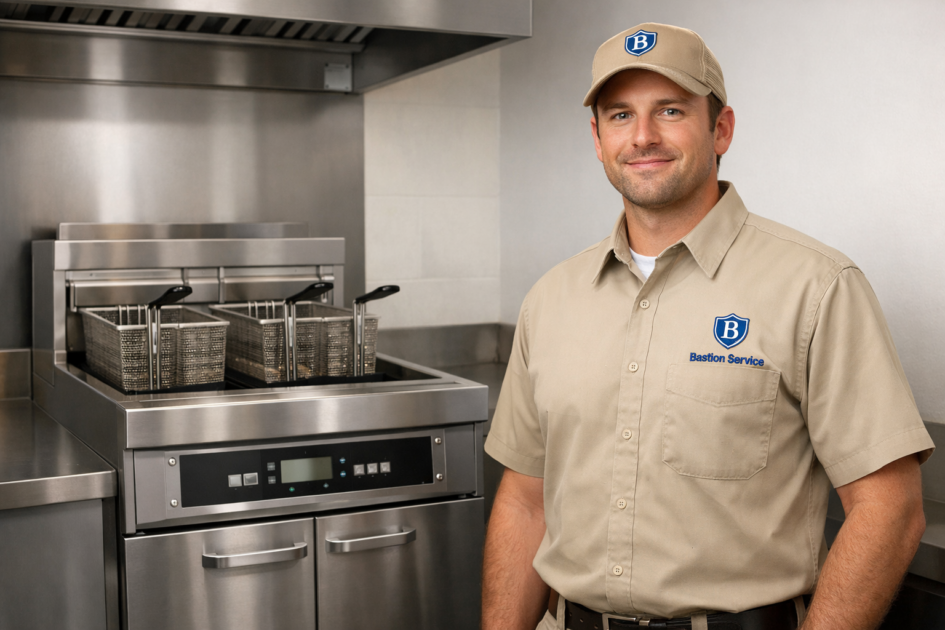
When a Frymaster fryer starts heating unevenly, dropping out during a rush, or showing recurring fault conditions, the real cost is usually lost production rather than the part that failed. For businesses in Inglewood, the smartest next step is service centered on the exact symptom pattern, because no heat, slow recovery, shutdowns, and erratic temperature can all point to different underlying causes. Bastion Service works from the complaint the kitchen is actually seeing so repair decisions are based on verified faults, downtime impact, and what is needed to return the fryer to stable operation.
Related commercial service paths in Inglewood include Frymaster Commercial Repair in Inglewood, Commercial Fryer Repair in Inglewood, and Pitco Fryer Repair in Inglewood.
What Frymaster fryer problems usually point to
Frymaster units are built for heavy daily use, but repeated heating cycles, oil exposure, cleaning chemicals, and long operating hours all add wear. A fryer may still power on and look normal while developing issues with ignition, temperature control, sensing, burner performance, filtration components, wiring, or safety circuits. That is why symptom-based diagnosis matters: two fryers with the same complaint can require very different repairs.
In kitchens across Inglewood, the most disruptive fryer problems usually fall into a few recognizable patterns. Understanding those patterns helps managers decide when to schedule service promptly and when continued use may create a bigger problem.
Common symptoms and likely causes
No heat or fryer not reaching set temperature
If the fryer will not heat at all, heats only partway, or stalls below the target temperature, likely causes can include ignition failure, heating circuit faults, control board issues, temperature sensor problems, gas supply interruption, or electrical supply trouble depending on the model. In some cases, the fryer may appear to start normally but never complete the heating sequence. In others, it may attempt to fire repeatedly and then lock out.
This is usually a repair issue to address quickly because the fryer is already affecting output. Repeated restart attempts may temporarily mask the problem without correcting the actual failure.
Slow recovery during busy periods
Slow recovery is one of the most costly fryer complaints because the unit may seem usable until demand rises. If oil temperature drops too far during active cooking and takes too long to recover, the kitchen may see longer ticket times, inconsistent browning, and higher oil absorption in product. Causes may include weak burner performance, restricted flow, sensing issues, control faults, or a condition that has been gradually worsening over time.
When recovery becomes noticeably slower, it often means the fryer is no longer performing at the level the line expects, even if it has not failed completely.
Temperature swings or overheating
If product quality changes from batch to batch, the fryer runs hotter than expected, or oil temperature drifts up and down without operator input, the issue may involve the thermostat or temperature probe, calibration drift, control problems, high-limit related conditions, or burner irregularities. These symptoms matter because they affect more than uptime. They also impact food consistency, oil life, and safe operation.
A fryer that overheats or cycles unpredictably should not be treated as a minor nuisance. It is often an early warning that a critical control or safety-related component needs attention.
Ignition failure, lockouts, and shutdowns
Some Frymaster fryers fail at startup. Others ignite and then shut down mid-cycle. Some display recurring fault codes or require resets to resume operation. These complaints can come from ignition assemblies, flame sensing problems, wiring faults, communication errors, control failures, or safety circuit interruptions. Because several causes can produce nearly identical symptoms, replacing parts by guesswork can extend downtime instead of shortening it.
If staff members are resetting the fryer multiple times a day just to get through service, the unit should be evaluated before the next full outage.
Leaks, drain issues, and filtration problems
Oil leaks, slow draining, filtration failures, and return problems affect both safety and workflow. The source may be a worn seal, a valve issue, a line problem, a pump-related component, or wear caused by long-term use. Even when the fryer still heats properly, leaking or poor filtration can create cleanup demands, slip hazards, and unnecessary strain on the station.
These are not symptoms to postpone for long. A fryer that loses oil control can interrupt the line just as seriously as a heating failure.
Signs the fryer needs service now
It is usually time to schedule repair when the fryer:
- does not heat or takes too long to reach temperature
- cannot recover properly during peak production
- shows repeated fault codes or lockout conditions
- shuts down unexpectedly during operation
- runs too hot, too cool, or inconsistently
- leaks oil or has drain or filtration problems
- requires frequent resets or operator workarounds
In many Inglewood kitchens, staff adapt to a weak fryer before management realizes how much output is being lost. If cooks are changing batch sizes, extending cook times, rotating product to other stations, or avoiding one fryer well because results are unreliable, the equipment is already affecting daily operations.
When continued use can make the problem worse
Some fryer issues can wait for scheduled service, but others should push the unit out of use until it is checked. Continued operation can worsen damage when the fryer overheats, repeatedly trips safety functions, leaks oil, emits unusual burner sounds, or fails unpredictably under load. Running the fryer in that condition can shorten oil life, strain nearby components, and turn a manageable repair into a more expensive outage.
If there is a persistent gas odor or another clear safety concern, stop using the fryer and follow site safety procedures before arranging appliance service.
Repair or replace?
Replacement is not automatically the right answer when a Frymaster fryer develops a major symptom. In many cases, repair remains the better option when the fault is isolated and the rest of the unit is in solid operating condition. On the other hand, a fryer with multiple recurring problems, poor overall condition, or rising repair frequency may justify a closer replacement review.
The decision usually comes down to:
- the confirmed cause of failure
- age and overall condition of the fryer
- history of recent repairs
- whether related systems are also deteriorating
- how important that fryer position is to daily output
A proper diagnosis helps separate a repairable issue from a unit that is no longer supporting the kitchen reliably.
How to prepare for a fryer service visit
Managers can speed up the repair process by gathering a few details before service is scheduled. It helps to note whether the fryer fails on startup or under load, whether the issue affects one vat or the whole unit, whether staff have seen an error code, and whether the problem is constant or intermittent. If the fryer leaks, struggles with filtration, or only loses temperature during rush periods, that information can be just as useful as a hard shutdown.
Helpful details include:
- when the problem started
- whether it has become more frequent over time
- what operators have to do to keep it running
- whether cooking quality has changed
- any recent cleaning, maintenance, or part replacement events
That information supports faster troubleshooting and a more accurate repair path.
Service that matches the way the fryer is failing
Fryer problems are easiest to solve when service is tied directly to the real operating complaint instead of a general assumption. Whether the issue is no heat, poor recovery, unstable oil temperature, ignition failure, shutdowns, or filtration trouble, the goal is to identify the failed system, check for related wear, and determine what is necessary to restore dependable performance. For businesses in Inglewood, timely Frymaster fryer repair helps protect throughput, product consistency, and kitchen workflow before a marginal unit turns into a full production stoppage.


