
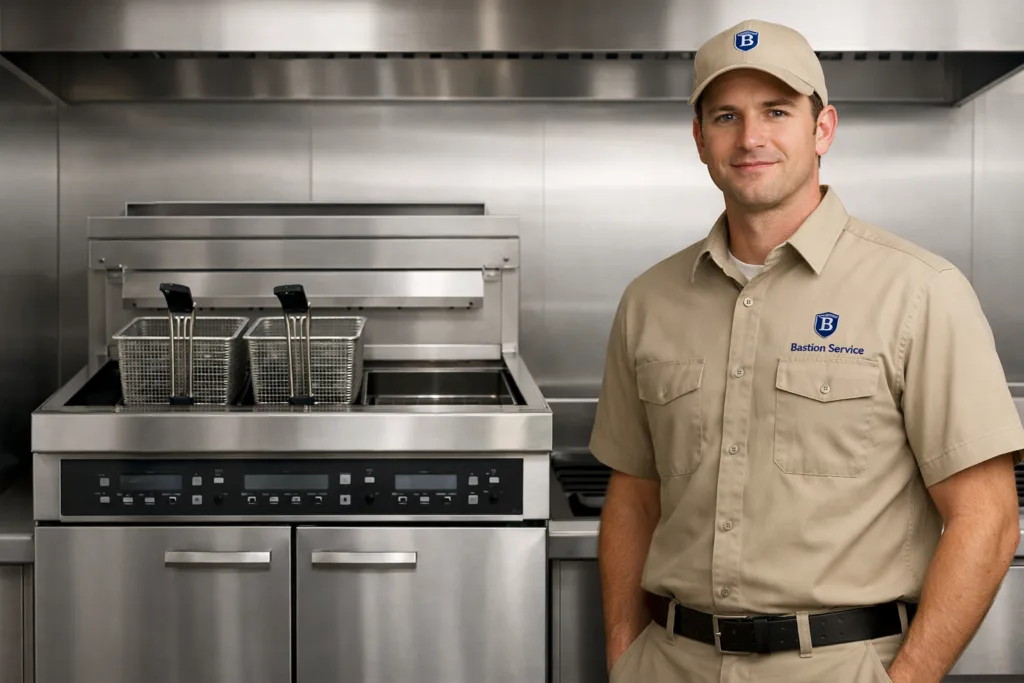




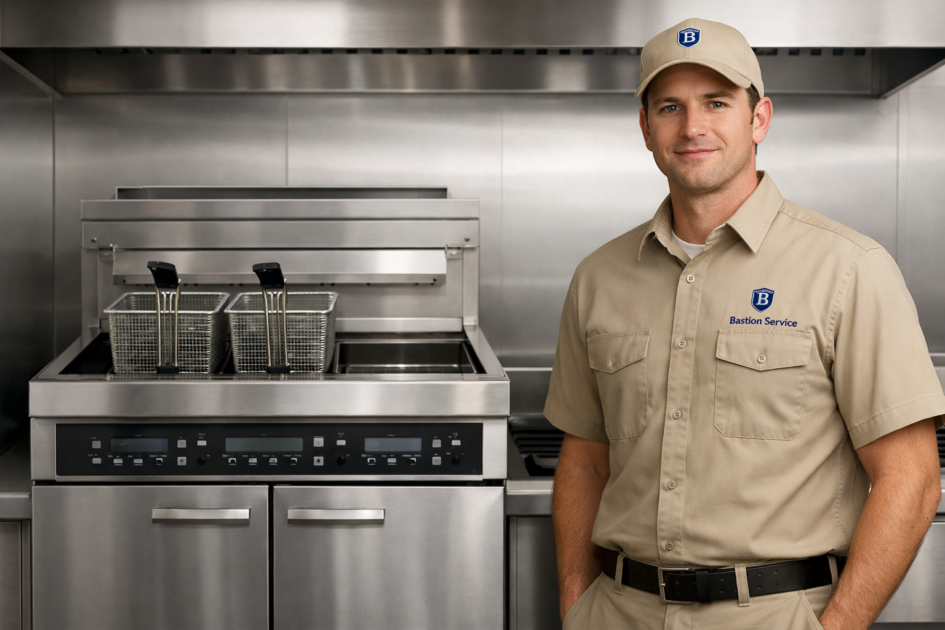
When a Frymaster fryer starts missing temperature, locking out, or recovering too slowly during service, the priority is getting the problem tested in a way that supports a repair decision instead of a parts-guessing exercise. In busy kitchens, fryer downtime affects output, timing, oil use, and staff workflow almost immediately. Bastion Service helps businesses in Hawthorne identify whether the fault is tied to ignition, heating performance, controls, filtration components, electrical supply, or gas-related issues so service can move in the right direction.
Related commercial service paths in Hawthorne include Frymaster Commercial Repair in Hawthorne, Commercial Fryer Repair in Hawthorne, and Pitco Fryer Repair in Hawthorne.
Common Frymaster Fryer Problems in Hawthorne Kitchens
Not heating or failing to start properly
If the fryer powers on but does not produce heat, the cause may involve ignition components, a high-limit trip, a control fault, a failed switch, wiring problems, or an interruption in fuel or power supply. On some calls, the fryer appears dead when the root issue is relatively contained. On others, a startup failure points to a deeper control or safety-sequence problem that needs live testing.
Oil temperature swings during normal use
Inconsistent oil temperature often shows up as uneven product color, overcooking, undercooking, or batches that take longer than expected. This symptom can be tied to sensor drift, probe issues, thermostat or control problems, restricted heat transfer, or burner performance that is no longer stable. For businesses in Hawthorne, temperature inconsistency is usually both a food-quality issue and an operations issue.
Slow recovery between loads
When recovery slows down, staff may start spacing orders differently, changing settings, or shifting work to another fryer just to keep the line moving. Slow recovery can point to weak heat output, burner problems, restricted airflow, control regulation faults, or buildup that interferes with efficient operation. The longer this continues, the more likely it is to affect ticket times and oil life.
Error codes, resets, and intermittent shutdowns
Intermittent failures are frustrating because the fryer may seem normal between events. Repeated lockouts, random shutdowns, or control errors can be caused by ignition-sequence faults, overheating conditions, communication issues, unstable power, or failing safety components. These problems are often easiest to diagnose by matching the reported behavior to actual operating conditions on site.
Leaks, drain issues, or filtration-related trouble
Oil leaks around fittings, drain valves, or filtration assemblies should be addressed quickly. Even a small leak can create safety concerns around the cook line and may lead to larger component damage if ignored. Filtration issues can also push the fryer harder than intended by making oil management less effective and reducing consistency during heavy production periods.
Why a Frymaster Fryer May Stop Heating or Recovering Temperature Properly
A fryer that will not heat, heats inconsistently, or recovers too slowly does not always have one obvious failed part. Depending on the model and symptom pattern, the problem may involve the ignition system, temperature sensing, control response, heat output, high-limit protection, airflow conditions, or utility supply. Two fryers can show the same operator-facing symptom while failing for entirely different reasons.
That is why diagnosis matters before repair approval. A unit that seems to have a burner issue may actually be reacting to a sensor problem. A fryer that appears to have a control failure may be shutting down because of overheating or an interruption elsewhere in the system. Testing the fryer at startup, during heat-up, and under load helps determine what is actually causing the performance drop.
Symptoms That Usually Mean Service Should Be Scheduled Soon
- Longer heat-up times than normal
- Frequent overshooting or undershooting of set temperature
- Recurring ignition failures or delayed burner operation
- Repeated error messages, lockouts, or resets
- One vat performing differently from the others
- Oil leaks near drain or filter-related components
- Staff needing to restart the fryer to keep it working
These symptoms rarely improve on their own. In most kitchens, they become more disruptive during the busiest periods, which is exactly when the fryer is needed most.
When Continued Use Can Make the Repair More Complicated
Some fryer issues should not be pushed through service hours. Repeated ignition failure, unstable temperatures, active oil leaks, overheating, and unpredictable shutdowns can all lead to wider equipment stress if the unit keeps running without inspection. In addition to creating safety concerns, continued use can turn a contained repair into a larger one by affecting related components.
If staff are already working around the problem by restarting the fryer, changing settings repeatedly, or avoiding one vat, the equipment is no longer operating normally. At that point, scheduling service is usually the better business decision than waiting for a full breakdown.
What a Service Visit Should Help Clarify
For Frymaster fryer repair in Hawthorne, the goal is not just to restore heat for the moment. A useful visit should help determine what failed, whether the repair is likely to return the unit to stable operation, and whether any related issues need attention before the fryer goes back into regular production.
That includes questions such as:
- Is the problem isolated to one component or part of a larger condition?
- Is the fryer heating correctly through a full operating cycle?
- Are controls responding accurately to temperature changes?
- Is there evidence of wear, restriction, or repeat-failure risk?
- Can the unit return to normal use confidently after repair?
Repair vs. Replacement Considerations
Many Frymaster fryer problems can be resolved with targeted repair when the vessel, cabinet, and core systems remain in serviceable condition. Sensor issues, ignition faults, switches, wiring problems, control-related failures, and many filtration hardware problems often fall into that category.
Replacement becomes a more serious consideration when breakdowns are stacking up, structural condition is declining, repair history is extensive, or the fryer no longer supports the kitchen’s production needs. The right decision depends on the condition of the specific unit, not just the symptom that prompted the call.
How Businesses in Hawthorne Can Prepare for Service
Before service is scheduled, it helps to note exactly what the fryer is doing. Useful details include whether the problem happens at startup or during production, whether it affects one vat or the full unit, whether there are visible leaks, what error messages appear, and whether the issue is constant or intermittent. This kind of symptom history can shorten diagnosis time and make the repair path clearer.
If the fryer has already required resets, has stopped maintaining temperature, or is affecting output during busy periods, it makes sense to have it inspected before the issue expands into broader downtime. For restaurants and other food-service businesses in Hawthorne, the most practical next step is to schedule service based on the actual symptom pattern and equipment condition rather than continue operating around a fryer that is no longer performing reliably.


