
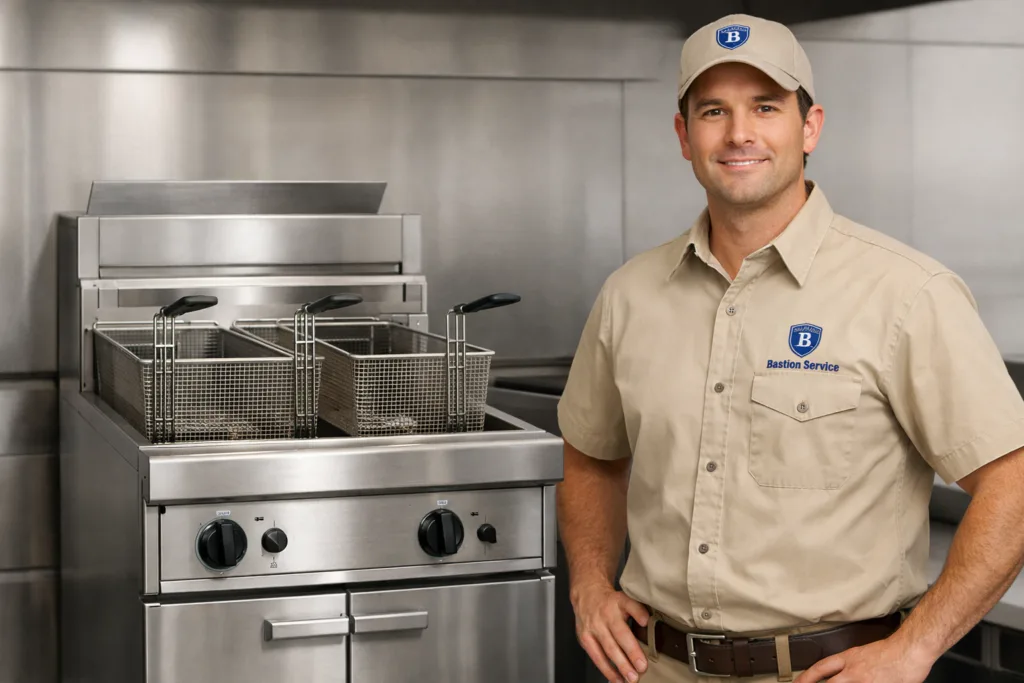




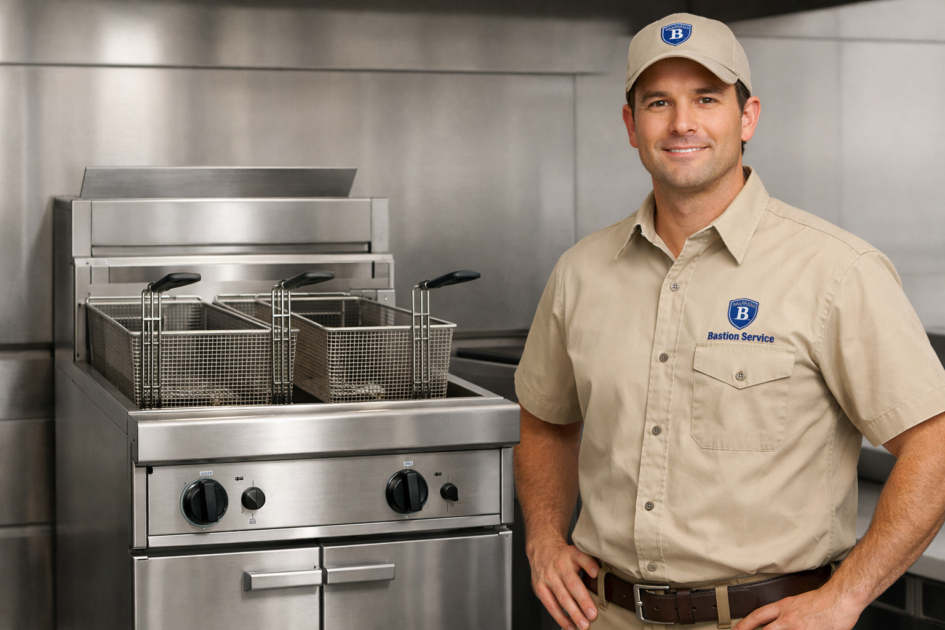
When a Wolf fryer starts running too cool, overheating, cycling unpredictably, or shutting down during service, production can stall fast. In Beverly Hills, businesses relying on steady fryer output usually benefit from service that starts with symptom-based testing rather than a parts guess. The same complaint can come from very different failures, so the repair path should be based on what the fryer is actually doing under operation, how often the problem appears, and whether the issue affects heat, ignition, controls, recovery, or safe use.
Related commercial service paths in Beverly Hills include Wolf Commercial Repair in Beverly Hills, Commercial Fryer Repair in Beverly Hills, and Wolf Oven Repair in Beverly Hills.
Bastion Service works with businesses in Beverly Hills to diagnose Wolf fryer problems, identify the failed component or system, and schedule repair based on operational urgency. That matters when a fryer is affecting ticket times, oil performance, food consistency, or staffing workflow during active service.
Why a Wolf fryer may stop heating or recover temperature poorly
If a fryer does not reach the set temperature, takes too long to recover between batches, or seems to lose heat under normal use, the problem may involve the burner system, ignition sequence, temperature sensing, safety cutoffs, control components, or electrical supply. Slow recovery can also point to a condition where the fryer technically starts but cannot sustain the output needed for normal production.
From a service standpoint, this symptom matters because weak heat and no heat are not always the same repair. One unit may have a complete ignition failure, while another may light but perform poorly because of control faults, unstable sensing, or burner-related issues. That is why diagnosis should confirm not only whether the fryer turns on, but whether it reaches and holds temperature the way it should during an actual cooking cycle.
- No heat at all: often associated with ignition faults, safety trips, power issues, or failed control components.
- Slow heat-up: may suggest burner performance problems, sensor issues, or a control system that is not responding correctly.
- Poor recovery between batches: can indicate weak heating performance, inaccurate temperature feedback, or a fryer struggling under load.
- Intermittent heating: frequently points to unstable wiring, failing controls, or a component that drops out once it gets hot.
Symptoms that often point to temperature control problems
Oil runs colder than the set temperature
If food is taking longer to cook, results are inconsistent, or staff are extending cook times to compensate, the fryer may be operating below target. This can come from sensor drift, thermostat problems, control faults, or heating components that are not delivering consistent output. A fryer that runs cold can look functional while quietly reducing throughput and product quality.
Oil overheats or goes beyond the expected range
When oil temperature climbs too high or overshoots the selected setting, the issue may involve a faulty temperature control, inaccurate sensor feedback, or a high-limit system that is not behaving normally. Overheating should be treated seriously because it can affect product consistency, oil life, and safe operation.
Temperature swings during normal use
Noticeable fluctuation from one batch to the next often points to control instability rather than a simple one-time misread. In practice, that can mean the fryer is cycling incorrectly, reading temperature inaccurately, or struggling to keep a stable operating range during production demand.
Ignition failure, burner trouble, and unexpected shutdowns
A Wolf fryer that clicks without lighting, lights and then drops out, or shuts down during use needs more than a reset. These symptoms often involve ignition parts, flame sensing, gas-related controls, wiring faults, or safety devices reacting to another underlying condition. Intermittent shutdowns are especially important because they can waste time during service while giving the impression that the fryer is only having a minor issue.
Burner-related problems may show up as uneven heating, delayed startup, repeated ignition attempts, or short cycling. In a busy kitchen, staff may work around these faults for a while, but that usually means slower output, inconsistent results, and a higher risk of a total failure during a peak period.
Control faults, resets, and inconsistent response
Some fryer problems appear on the control side before they become a full heating failure. A unit may ignore temperature changes, reset unexpectedly, lock out, display fault behavior, or operate inconsistently from one cycle to the next. In those cases, the repair decision should be based on whether the issue is coming from the control interface itself, the sensor input, wiring instability, or another component causing the controls to respond abnormally.
These faults are easy to misread without testing because a control complaint may actually begin elsewhere in the fryer. Replacing a visible part without confirming the cause can lead to repeat downtime and unnecessary expense.
When to schedule Wolf fryer repair in Beverly Hills
It makes sense to schedule service once the fryer starts missing temperature targets, recovering too slowly, shutting off unexpectedly, overheating, or requiring staff to change their routine to keep production moving. If the equipment is still running but no longer running normally, that is often the best window to address the problem before it turns into a full outage.
For businesses in Beverly Hills, early service can also help limit secondary issues. A fryer that continues operating with unstable controls, repeated ignition attempts, or poor temperature regulation may put more stress on related components and increase the scope of the repair later.
When continued use can make the repair bigger
Using a fryer with unreliable heat or repeated shutdowns can do more than slow output. It can increase wear on ignition components, controls, sensors, and safety devices, especially when staff repeatedly restart the unit or compensate for poor performance during active service. If the fryer is overheating, failing to regulate oil temperature, or dropping out under load, continued use may create a larger interruption than addressing the issue promptly.
In practical terms, service should be prioritized when the fryer is affecting consistency, forcing workflow changes, or showing signs that safe normal operation is no longer dependable.
Repair or replace?
Many Wolf fryer problems can be resolved when the failure is isolated to a specific control, ignition, sensing, or heating-related component and the rest of the unit remains in solid operating condition. Replacement becomes a more realistic conversation when the fryer has layered faults, recurring reliability problems, or broader wear that keeps creating new downtime.
The better decision usually depends on repair scope, parts involved, equipment condition, and how critical the fryer is to daily production. Age matters, but symptom history and operating reliability matter more when deciding whether repair is the practical next step.
What a productive service visit should accomplish
A focused fryer service visit should identify the source of the complaint, check for related failures, and confirm whether the unit can return to stable operation after repair. That means verifying heat performance, temperature response, ignition behavior, and recovery under normal conditions rather than stopping at a basic fault description.
For Beverly Hills businesses, the most useful next step is to schedule diagnosis when the pattern becomes repeatable, not after the fryer fails completely during a busy shift. Service is most effective when the problem is described clearly, the symptoms are tied to actual kitchen impact, and the repair plan is based on restoring reliable fryer performance with as little disruption as possible.


