
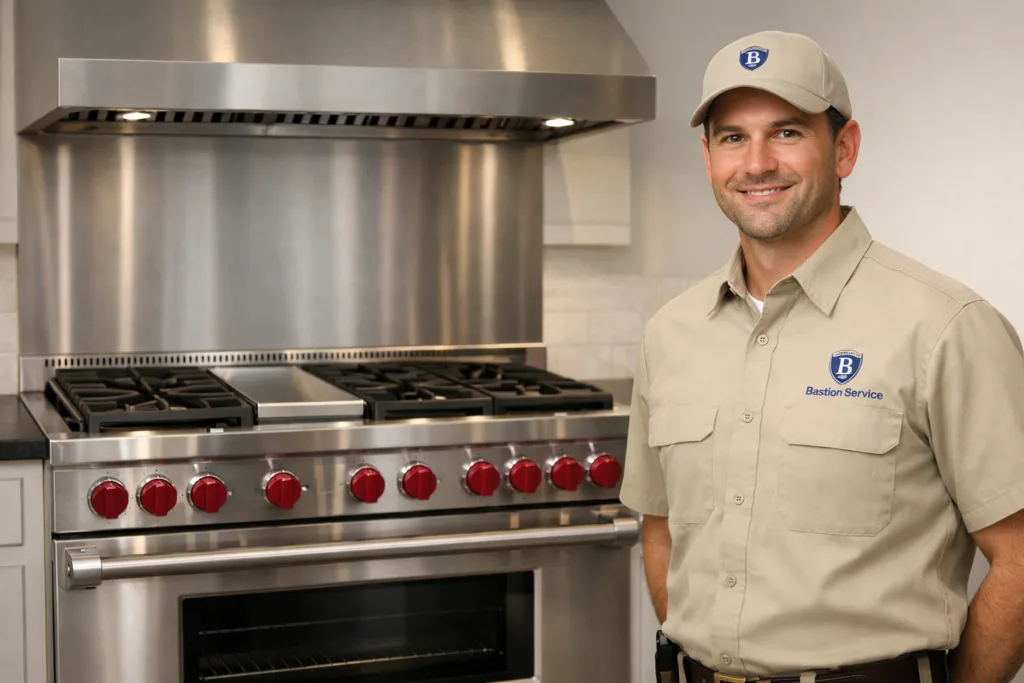




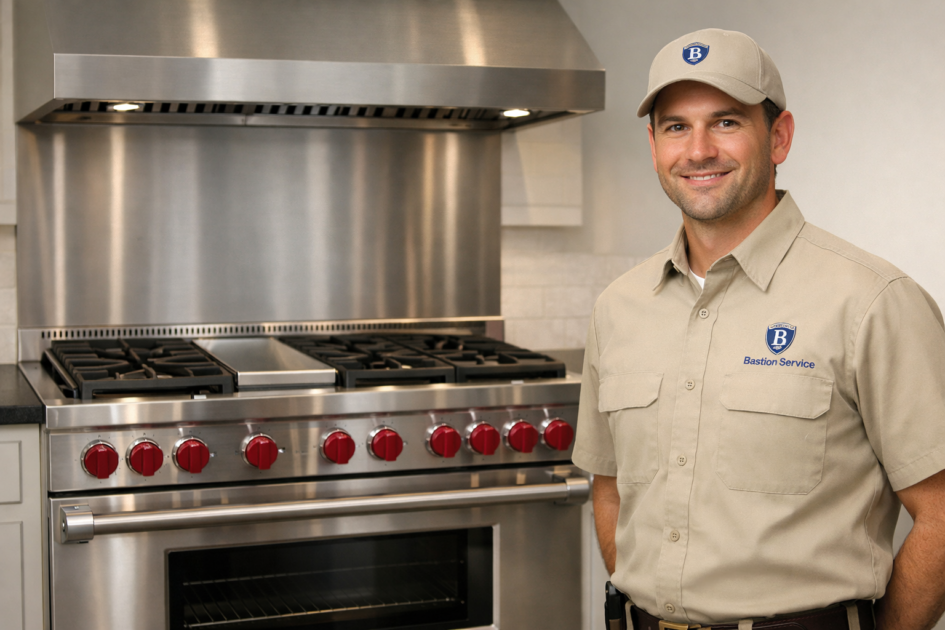
Equipment trouble during prep or service rarely stays isolated for long. When a Wolf oven, range, or fryer begins missing temperature targets, failing to ignite, or shutting down under load, the immediate need is service that identifies the fault, explains the operating risk, and helps you schedule repair around production demands in Beverly Hills. Bastion Service works with businesses in Beverly Hills that need symptom-based troubleshooting, repair planning, and practical next steps before a single equipment issue turns into a broader interruption.
For specific equipment paths in Beverly Hills, review Wolf Oven Repair in Beverly Hills, Wolf Range Repair in Beverly Hills, and Wolf Fryer Repair in Beverly Hills.
What Wolf cooking equipment problems do technicians usually troubleshoot?
Wolf cooking equipment often shows a pattern before complete failure. Staff may notice longer heat-up times, burners that do not light on the first attempt, ovens that cook unevenly, fryers that recover too slowly between batches, or controls that stop responding normally. These symptoms can come from different sources, including ignition components, burners, sensors, thermostatic parts, switches, wiring, control boards, or wear inside heavily used assemblies.
Common reasons businesses schedule service include:
- no heat or low heat
- ignition failure or delayed ignition
- temperature drift or inaccurate temperature readings
- slow recovery after opening the door or dropping a basket
- burners that will not stay lit
- uneven cooking or inconsistent browning
- control panel faults or unresponsive settings
- unexpected shutdowns during operation
Similar symptoms do not always mean the same repair. An oven running cold, a fryer struggling to recover, and a range burner with unstable flame may each look like a heating problem from the operator side, but testing is what separates a control issue from a sensor fault, gas delivery problem, or burner-related failure.
Oven symptoms that affect consistency and throughput
Wolf oven repair is often needed when product quality starts changing before anyone sees a complete no-heat condition. Extended preheat, hot and cold spots, drifting temperatures, or repeated overcooking and undercooking can slow the entire kitchen because staff start compensating manually. They may rotate pans, add extra cook time, or avoid certain racks just to get acceptable results.
Those patterns usually point to a problem that should be checked before service volume increases. Possible causes can include temperature-sensing issues, ignition trouble, heating component failure, calibration drift, relays, board faults, or heat loss related to door sealing and closure.
Signs oven service should not wait
- preheat takes noticeably longer than normal
- the oven does not hold set temperature
- the unit cycles erratically or shuts off mid-use
- certain zones cook much faster or slower than others
- staff have to keep adjusting settings to maintain output
When those symptoms are already affecting timing and food consistency, repair is no longer just about convenience. It becomes an operations issue.
Range problems that disrupt line work
Range issues are especially disruptive because they affect active cooking at the exact point where timing matters most. Wolf range repair is commonly requested for burners that click repeatedly, fail to ignite reliably, produce weak flame, or lose flame stability during use. Control issues can also show up as inconsistent response when changing heat levels or operating different sections of the unit.
In a busy kitchen, even one unreliable burner can create workflow bottlenecks. Staff may start shifting pans from station to station, waiting for ignition, or avoiding a section of the range altogether. That slows ticket flow and puts more pressure on the remaining equipment.
Typical range complaints that point to service needs
- burners do not ignite every time
- flame is too low, too high, or unstable
- burners light but will not stay lit
- controls feel inconsistent or stop responding correctly
- performance changes during extended use
These symptoms may involve ignition wear, burner blockage, switch failure, valve-related faults, wiring issues, or control-system problems. Because flame and ignition complaints can also raise safety concerns, prompt evaluation is usually the right move.
Fryer issues that lead to slow recovery and lost output
Fryers create immediate production problems when they cannot recover properly between batches. Wolf fryer repair is often needed after operators notice extended recovery time, unstable oil temperature, overheating, unreliable ignition, or shutdowns that interrupt a rush. A fryer may still be heating, but not well enough to support steady output.
Slow recovery is one of the most costly symptoms because it affects both speed and consistency. Product may brown unevenly, absorb more oil, or require timing adjustments that reduce throughput. In many kitchens, that kind of performance drop spreads quickly into ticket delays and staffing pressure.
Service should be considered quickly when a fryer:
- takes too long to return to cooking temperature
- runs below or above the selected range
- shuts off unexpectedly during active use
- shows irregular heat from batch to batch
- fails to ignite consistently
These issues can be tied to controls, sensors, ignition parts, burners, or safety-related shutoff conditions. Continued operation without diagnosis may make the original fault harder to isolate if other components begin compensating or failing as well.
Why symptom-based diagnosis matters
Business owners and kitchen managers usually need more than a repair recommendation. They need to know how serious the fault is, whether the equipment can remain in limited use, and how quickly the issue is likely to worsen. That is why symptom pattern matters so much with cooking equipment.
For example, a unit that only fails once a day may still require urgent attention if the failure involves ignition, temperature overshoot, or random shutdowns. On the other hand, some performance complaints may point to a contained issue that can be addressed with a targeted repair rather than a larger rebuild.
A proper diagnosis helps answer questions such as:
- Is the problem isolated to one component or part of a wider wear pattern?
- Can the unit remain in operation until follow-up service is scheduled?
- Is continued use likely to increase damage or downtime?
- Does the symptom fit a repairable fault, or is replacement becoming the better option?
Repair planning for businesses in Beverly Hills
Businesses in Beverly Hills often need repair timing that works around prep schedules, service windows, staffing limits, and equipment redundancy. That makes the service process just as important as the repair itself. If one oven is already down, the urgency changes. If a range is partially functional but unstable, the decision may depend on whether the kitchen can safely shift production. If a fryer is still running but recovering too slowly, the cost of waiting may be visible in every ticket.
Repair planning should consider the symptom severity, the role of the affected unit, the likelihood of worsening failure, and the practical impact of downtime. In many cases, early service prevents a manageable issue from becoming a full shutdown during a high-demand period.
When repair makes sense and when replacement enters the conversation
Not every problem points to replacement. Many Wolf cooking equipment issues are still strong repair candidates when the fault is limited to a specific ignition, burner, control, or temperature-management component and the rest of the unit remains structurally sound. A well-maintained oven, range, or fryer with one identifiable failure often justifies repair.
Replacement becomes more likely when there are repeated breakdowns across multiple systems, poor reliability history, or repair needs that no longer align with the equipment’s overall condition. The decision is usually less about one symptom and more about whether performance can be restored with confidence.
For most operators, the best starting point is straightforward: identify what failed, measure the operational risk, and compare repair value against the cost of continued interruptions.
When to schedule service
Service should be scheduled when heating performance changes, ignition becomes unreliable, temperatures begin drifting, recovery slows, controls stop responding normally, or the unit starts shutting down without warning. These are not minor inconveniences when the equipment is central to daily output. They are early indicators that repair may be needed before downtime expands.
If your Wolf cooking equipment is affecting production, timing, or consistency in Beverly Hills, scheduling service early gives you a better chance of resolving the problem before it disrupts the rest of the kitchen. A focused evaluation can confirm the cause, determine whether the unit should remain in use, and set the next repair step with less uncertainty around downtime.


