
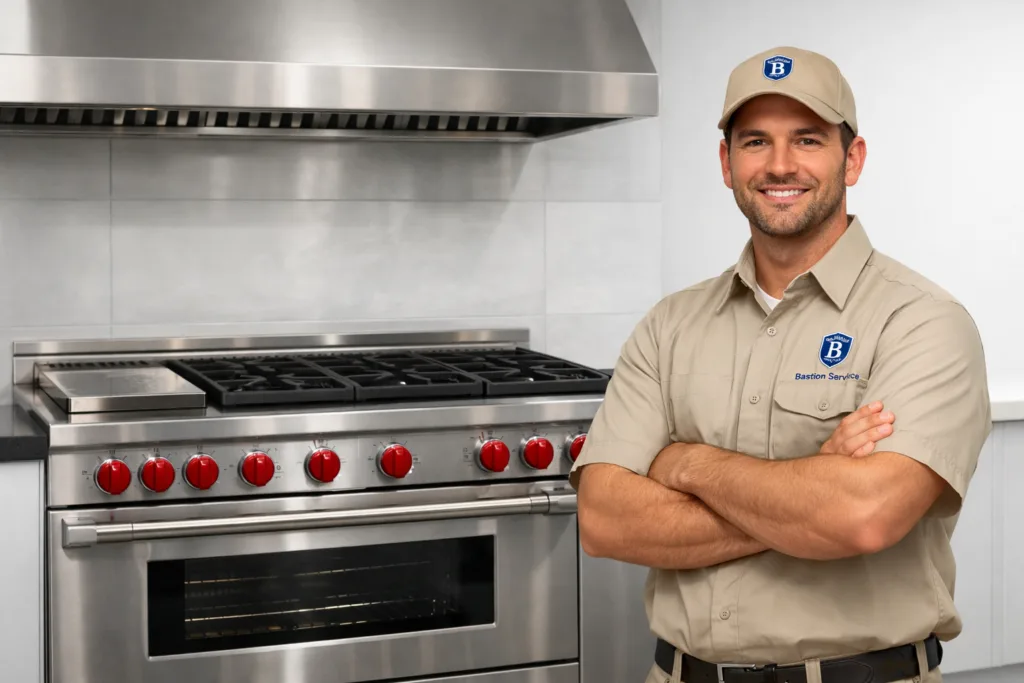




Equipment trouble in a busy kitchen rarely stays isolated to one station. When a Wolf oven, range, or fryer starts missing temperature targets, failing to ignite, or shutting down during service in Del Rey, the repair decision affects output, staff workflow, food consistency, and safety. Bastion Service provides repair support for businesses that need the problem identified accurately, the likely scope explained clearly, and scheduling handled with downtime in mind.
For specific equipment paths in Del Rey, review Wolf Oven Repair in Del Rey, Wolf Range Repair in Del Rey, and Wolf Fryer Repair in Del Rey.
For many businesses in Del Rey, the most useful service visit is one that separates a minor performance issue from a fault that should take the unit out of use. Similar symptoms can come from very different causes, so repair planning is strongest when it is based on observed operating conditions rather than assumptions. That is especially true when the equipment still runs intermittently, because partial operation often hides a worsening control, ignition, or heat-management problem.
Wolf cooking equipment problems that commonly need repair
Cooking equipment problems often show up first as inconsistency rather than complete failure. A unit may still run, but not well enough to support normal production. In practice, that can mean slower ticket times, uneven results, staff workarounds, and rising risk of an unexpected shutdown.
- Ovens that preheat slowly or drift away from the set temperature
- Ranges with burners that click, light late, or heat unevenly
- Fryers that recover too slowly between batches
- Burners that will not stay lit or show weak flame patterns
- Controls that respond inconsistently or fail during operation
- Equipment that trips, resets, or shuts down under load
- Performance changes that get worse as the kitchen heats up
These symptoms matter because they usually point to a system-level issue involving ignition, heat regulation, sensors, limits, switches, controls, airflow, or fuel delivery. The repair approach depends on whether the symptom is constant, intermittent, or tied to certain operating conditions.
Oven symptoms that affect consistency and production
Slow preheat or failure to reach set temperature
If a Wolf oven takes too long to heat or never reaches the selected setting, production timing can slip quickly. This kind of symptom may involve temperature sensing problems, control faults, heating component issues, or related electrical failures. In a business setting, the key question is not just why the unit is slow, but whether it can still produce consistent results while waiting for repair.
Temperature swings during the cooking cycle
An oven that runs hot, cold, or unevenly can create waste and force staff to compensate manually. Wide temperature variation often points to regulation problems rather than a simple adjustment issue. When product quality starts varying from batch to batch, it is usually a sign that the equipment needs service rather than observation.
Unexpected shutdowns mid-cycle
If the oven stops during operation, the issue may involve controls, safety limits, wiring, relays, or heat-related component failure. Intermittent shutdowns are especially disruptive because they make planning difficult and can leave staff unsure whether the unit is safe to continue using between failures.
Range problems that slow the line
Burners clicking without lighting
Repeated clicking with no ignition usually indicates an ignition-system fault that needs inspection. Delayed light-off, inconsistent lighting, or burners that work only sometimes can quickly disrupt line flow. Even when the issue appears limited to one burner, the cause may involve components or conditions affecting broader performance.
Weak flame or uneven burner output
When a range burner produces weak heat, uneven flame, or inconsistent response, prep and finishing times become harder to manage. This may be tied to burner blockage, valve problems, ignition faults, or control-related issues. Because similar flame symptoms can have different causes, accurate testing matters before parts are recommended.
Burners that will not stay stable during service
A burner that starts normally but loses performance as the shift continues may be reacting to heat load, control failure, or another condition that appears only during sustained use. These are the types of faults that often get worse before they become obvious enough to force a full shutdown.
Fryer issues that create bottlenecks
Slow heat recovery between batches
When a fryer cannot recover quickly, output slows and cooking results can become inconsistent. This often signals a problem with heat generation, limits, controls, or related operating components. In a high-demand kitchen, slow recovery is more than an inconvenience; it affects throughput and can push staff to alter workflow in ways that create additional problems.
Unstable temperature or overheating
Fryers that fluctuate too far below or above the target temperature can affect food quality and operating safety. Temperature instability may point to sensing issues, control problems, or components that are no longer regulating properly under normal demand. If the unit overshoots repeatedly or cannot maintain stable heat, it should be evaluated promptly.
Startup failures and sudden cutoffs
If the fryer will not start reliably or cuts out during use, continued operation may not be appropriate. A unit that fails under load can interrupt the entire cooking flow, especially when backup capacity is limited. Service is usually best scheduled before staff begin building workarounds around an unreliable fryer.
How ignition, control, and shutdown faults are evaluated
Some Wolf cooking equipment problems are obvious, while others only appear after the unit has been running for a while. That is why symptom history helps. If your team has noticed whether the fault happens at startup, during preheat, under peak use, or after long operation, that information can make troubleshooting faster and more accurate.
Common inspection points often include:
- Whether ignition failure is constant or intermittent
- Whether temperature loss happens during heat-up or while holding
- Whether shutdowns occur randomly or at similar points in operation
- Whether one section of the equipment is affected or the whole unit
- Whether the problem worsens during busy service periods
Intermittent faults are often the most time-sensitive because they tend to become complete failures without much warning. A range that lights late today may fail to light tomorrow. An oven with minor drift may stop holding temperature once demand increases. A fryer with slower recovery may begin falling behind enough to affect the entire line.
When equipment should stay out of use until repair
Not every issue requires immediate shutdown, but some do. If a unit will not ignite reliably, shows abnormal flame behavior, shuts down repeatedly, overheats, or cannot hold safe and usable operating conditions, it may be better to keep it offline until the fault is diagnosed. The cost of running unstable equipment is not limited to repair risk; it also includes production disruption, inconsistent food results, and avoidable safety concerns.
Signs that should push scheduling higher on the priority list include:
- Repeated startup failures
- Noticeable temperature drift affecting product quality
- Frequent resets or controls that stop responding
- Burners that work inconsistently during the same shift
- Fryers falling behind normal recovery times
- Any shutdown that interrupts active service
Repair planning for businesses in Del Rey
Good repair planning is not just about fixing the present symptom. It is also about deciding whether the equipment can remain in service temporarily, whether parts are likely to be needed, and how to schedule work with the least disruption. For businesses in Del Rey, that usually means looking at the urgency of the problem, the role of the unit in daily production, and whether the fault has been getting more frequent.
In some cases, repair is a straightforward component issue. In others, the symptom reflects broader wear across multiple systems. A service evaluation helps clarify that difference so operators can make an informed decision about immediate repair, follow-up work, or whether replacement needs to be considered if reliability has been declining over time.
When to schedule service
It makes sense to arrange repair when staff start compensating for the equipment to keep service moving. That includes turning temperatures up or down to chase results, relighting burners repeatedly, extending cook times, avoiding certain stations, or building extra time into the workflow because the unit no longer performs predictably. Those are operational signs that the equipment issue has moved beyond routine monitoring.
If your Wolf cooking equipment in Del Rey is showing ignition trouble, heat loss, slow recovery, unstable controls, or repeated shutdowns, the next step is to schedule diagnosis and use that assessment to decide on the safest and most efficient repair path. Timely service helps reduce production delays, limit avoidable downtime, and restore more stable kitchen performance before a partial problem becomes a full outage.


