
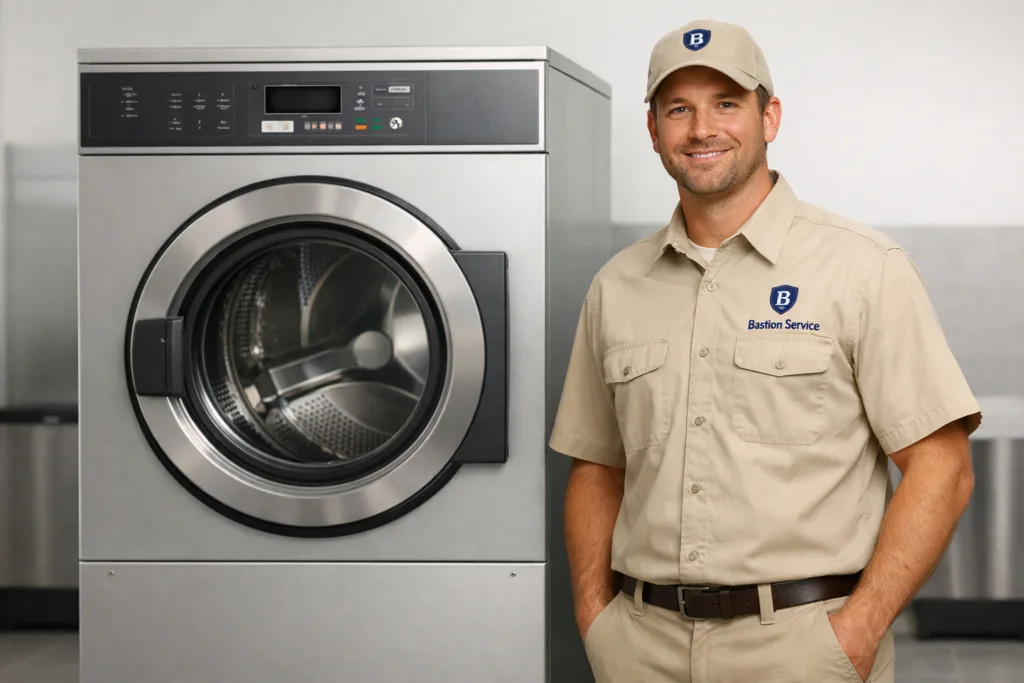




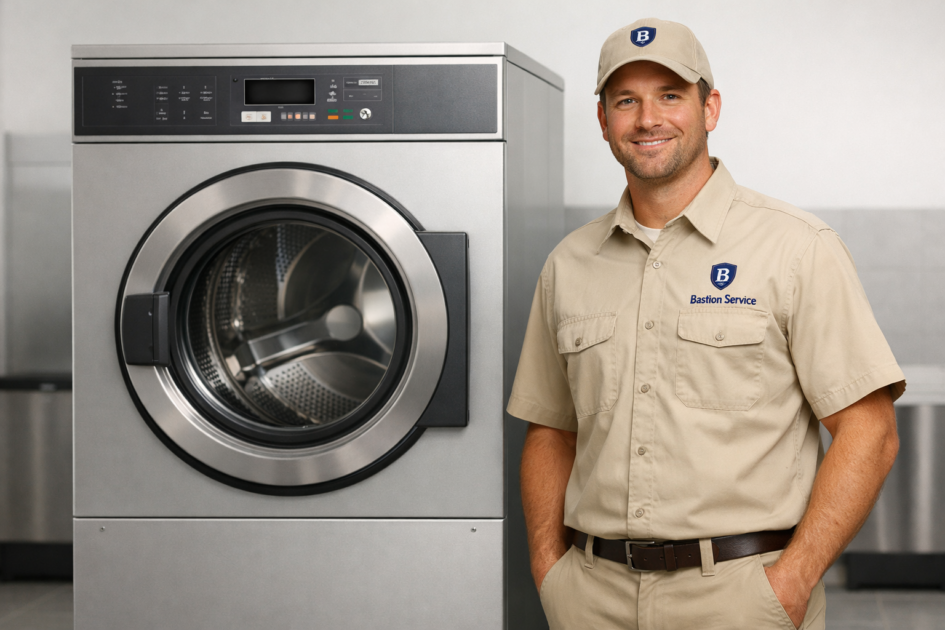
Dryer problems in a business setting can interrupt far more than one load. When a Wascomat unit begins missing heat, stretching cycle times, stopping unexpectedly, or making new noise, the priority is identifying the failed system before the issue spreads into lost throughput and scheduling problems. Bastion Service handles Wascomat dryer repair in Venice with a service-focused approach built around symptom patterns, testing, and repair decisions that fit daily operating demands.
Related commercial service paths in Venice include Wascomat Commercial Repair in Venice, Commercial Dryer Repair in Venice, and Wascomat Washer Repair in Venice.
Common Wascomat Dryer Symptoms That Need Attention
Wascomat dryers often show warning signs before a full shutdown. Some problems are obvious, while others look minor at first but steadily reduce output. In laundromats, hotels, shared laundry rooms, and other Venice businesses, even a dryer that still runs can create delays if it is no longer drying efficiently or finishing cycles normally.
No heat or weak heat
If the drum turns but the load stays damp, the issue may involve the heating circuit, temperature controls, airflow restriction, safety devices, or a control problem. Weak heat can be especially disruptive because staff may keep rerunning loads, assuming the machine is only underperforming. That adds time, labor, and extra wear without fixing the underlying fault.
Long dry times
Extended dry times often point to poor airflow, restricted exhaust movement, sensor problems, or heat output that is present but not reaching normal performance. This symptom matters because it can reduce the number of loads completed in a day even when the dryer never fully stops working.
Dryer will not start
A no-start complaint can come from door switch issues, power supply faults, failed controls, motor problems, or safety interruptions. Because several systems can create the same symptom, this is not a problem to solve by guessing at parts. The correct repair depends on confirming where the start sequence is failing.
Stops before the cycle finishes
If the dryer starts but shuts down mid-cycle, possible causes include overheating, motor protection trips, airflow problems, wiring faults, or intermittent control failure. A unit that restarts after cooling down may still have a serious issue that should be addressed before it causes a longer outage.
Noise, vibration, or rough drum movement
Thumping, squealing, scraping, or rattling usually points to mechanical wear. Support components, belts, motor-related parts, drum alignment, and loose hardware can all contribute. New noise should not be ignored simply because the dryer still heats. Mechanical wear tends to get worse under continued use and may lead to additional part damage.
Burning smell or overheating
A hot, scorched, or unusual burning odor should be treated as a priority service issue. Restricted airflow, lint buildup in the wrong areas, failing thermostats, overheating components, or wiring trouble can all be involved. Continued operation under these conditions can increase repair scope and create a safety concern.
Why a Wascomat Dryer May Not Be Heating or Finishing the Cycle
Two of the most disruptive complaints are lack of heat and incomplete cycles, but those symptoms do not always point to one simple failed part. On a Wascomat dryer, heating and cycle completion depend on several systems working together. If airflow is poor, the dryer may overheat and shut itself down. If sensing or control functions are off, the cycle may end incorrectly or run without delivering proper drying results. If a safety device opens due to a related fault, the machine may appear to have a heat problem when the root cause is elsewhere.
This is why symptom-based service matters. A dryer that is not heating, not drying, or not finishing the cycle may need inspection of heating components, thermostatic controls, airflow path, motor operation, wiring integrity, and control response rather than an immediate part swap.
What Long Dry Times Usually Indicate
Long dry times are easy to dismiss during a busy day, but they are often an early sign that the dryer is moving toward a larger failure. When loads start taking noticeably longer than usual, the machine may be struggling with:
- Restricted airflow that prevents proper moisture removal
- Heat that cycles incorrectly or never reaches full output
- Temperature sensing problems that affect cycle performance
- Control issues that interrupt normal drying operation
- Mechanical wear that reduces efficient drum movement or overall performance
For businesses in Venice, this symptom has an operational cost even before the dryer fully fails. Slower throughput can create backlog, increase staff workarounds, and affect customer-facing timing.
Why Accurate Diagnosis Matters
Dryer repair decisions are more reliable when they are based on testing rather than assumptions. The visible complaint is not always the real cause. A heating issue may begin with airflow. A shutdown issue may be triggered by overheating rather than a failed motor. A noise complaint may reveal wear in more than one mechanical area. Without diagnosis, it is easy to replace one part and leave the actual failure in place.
Good service should determine whether the problem is isolated or whether multiple systems are wearing at the same time. That helps businesses in Venice decide whether the repair is straightforward, whether additional corrective work should be planned, or whether the machine is reaching a point where larger investment needs to be considered.
When to Schedule Service
It is usually best to schedule repair when symptoms become consistent rather than waiting for a complete shutdown. Early service can limit downtime and reduce the chance of secondary damage.
- Dry times are steadily increasing
- The dryer runs but heat is inconsistent or absent
- The machine stops before the load is finished
- There is a burning smell or excessive heat
- Staff notice new squealing, grinding, or thumping sounds
- The same issue returns after resetting or basic cleaning
Prompt service is especially important when the dryer supports daily volume and backup capacity is limited.
Repair or Replacement Considerations
Many Wascomat dryer issues are repairable when the fault is limited to serviceable components and the rest of the machine remains in solid operating condition. Repair is often the sensible path when the cabinet, drum, and major structure are still sound and the problem is tied to normal wear, controls, heating parts, or mechanical components that can be replaced.
Replacement becomes a more serious consideration when breakdowns are frequent, multiple systems are failing at once, or downtime costs keep rising with each new repair. The best decision depends on age, overall condition, repair history, and how important that specific dryer is to the operation.
Preparing for a Service Visit
A few details can help make a repair visit more efficient. Before service, it helps to note when the problem started, whether it happens on every cycle or only under certain loads, and whether the symptom is getting worse. If staff have noticed a smell, an error pattern, unusual noise, overheating, or a shutdown point in the cycle, that information can help narrow the problem faster.
If the dryer is showing signs of overheating, repeated shutdowns, or strong burning odor, limiting use until it is inspected is the safer choice. For businesses in Venice, the most useful next step is usually to schedule service based on the exact symptom pattern so the machine can be tested, the cause confirmed, and the repair plan matched to the real source of downtime.


