
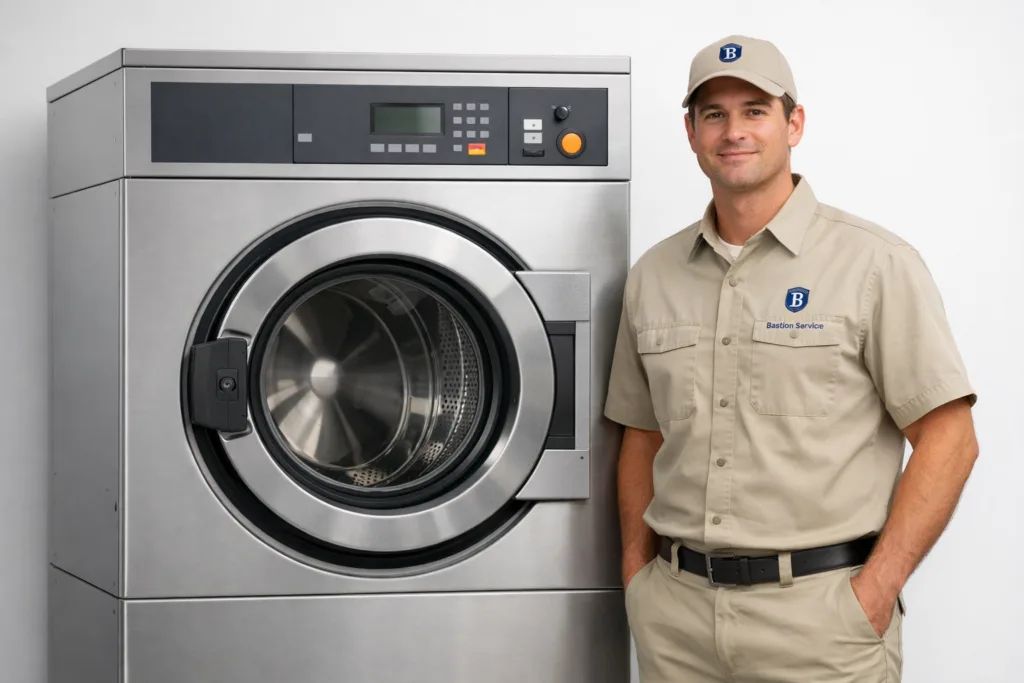




Unplanned washer or dryer issues can interrupt load schedules, create staff workarounds, and reduce available machine capacity faster than most businesses expect. For laundry equipment used every day, the right next step is service that identifies the failed system, checks whether the unit should stay in use, and sets repair timing around operational demands in Venice. Bastion Service helps businesses in Venice troubleshoot Wascomat equipment problems with repair-focused findings that support faster scheduling decisions.
For specific equipment paths in Venice, review Wascomat Washer Repair in Venice, Wascomat Dryer Repair in Venice, and Commercial Appliance Repair in Venice.
Washer and Dryer Problems That Interrupt Daily Operation
Wascomat laundry equipment often shows performance changes before a complete stoppage. A washer may begin leaving loads too wet, pausing mid-cycle, leaking, or draining slowly. A dryer may still run but stop heating properly, take too long to finish loads, or shut down before the cycle is complete. These symptoms matter because they usually point to a specific mechanical, electrical, airflow, drainage, or control problem that needs testing rather than guesswork.
For laundromats, hotels, shared laundry rooms, and other businesses in Venice, one machine running poorly can affect more than one load. It can delay attendants, reduce turnover, create uneven drying results, and push extra demand onto the rest of the equipment lineup. Early service is often the best way to limit wider downtime.
Common Washer Symptoms
Wascomat washer problems can show up in several ways:
- Washer will not start or repeatedly stops after startup
- Slow fill, no fill, or incorrect water level during the cycle
- Failure to drain or standing water left in the drum
- Leaking from the door area, hoses, pump system, or internal seals
- Weak spin performance that leaves laundry excessively wet
- Heavy vibration, banging, or movement during extraction
- Error codes or control issues that interrupt normal cycle selection
These symptoms can relate to door lock faults, inlet valve problems, pump issues, drain restrictions, pressure sensing faults, motor or drive wear, suspension wear, or drum-related problems. A washer that is still technically running can still be costing the business time if cycles are inconsistent or loads need to be rerun.
Common Dryer Symptoms
Wascomat dryer problems usually affect throughput quickly because drying delays back up the entire laundry process. Typical symptoms include:
- Dryer runs but produces little or no heat
- Long dry times and repeated cycles to finish one load
- Overheating or unexpected shutdown during operation
- Drum not turning correctly or stopping under load
- Loud squealing, scraping, thumping, or blower-related noise
- Control failures, display problems, or cycle selection issues
In many cases, the source may involve airflow restrictions, heating components, thermostats, sensors, drive parts, electrical supply problems, or worn drum support parts. Because dryers combine heat, airflow, and moving components, recurring shutdowns or unusual smells should be inspected promptly instead of being treated as a minor nuisance.
What Wascomat Laundry Equipment Problems Do You Troubleshoot?
Service for Wascomat laundry equipment typically focuses on symptom patterns that affect washer and dryer reliability, safety, and output. That includes leaks, drainage failures, fill problems, excessive vibration, weak extraction, cycle interruptions, door lock faults, no-heat complaints, long dry times, overheating, airflow-related shutdowns, drive noise, drum movement issues, and control-related faults.
In practical terms, troubleshooting is meant to answer four questions that matter to the business:
- What system is actually failing?
- Can the machine remain in service safely until repair?
- Is there related wear that could cause another outage soon?
- What repair path makes the most sense for uptime and cost?
Symptoms That Usually Mean Service Should Be Scheduled Soon
Some equipment issues can wait for a planned visit, but others tend to worsen if the machine stays in rotation. Scheduling service soon is usually the smart move when you notice visible leaking, frequent resets, repeated incomplete cycles, weak spin results, no heat, burning smells, harsh noise, tripped breakers, or recurring error messages.
These symptoms often indicate a problem that is no longer isolated. A drain issue can become a leak problem. A vibration issue can lead to mounting or drum wear. A dryer with poor airflow can drive up cycle times and stress heat-related components. When staff have to monitor one machine constantly just to keep loads moving, the equipment is already affecting productivity.
Washer Issues That Can Spread Into Bigger Downtime
Washer failures are not always sudden. A machine may first show intermittent draining trouble, a longer cycle time, or occasional imbalance before it reaches a full no-run condition. Businesses often notice the operational impact before they know the exact cause: puddles on the floor, delayed load turnover, laundry coming out too wet, or staff repeatedly taking the same unit offline.
Leaks are one of the clearest signs that service should not be postponed. Even when the machine still completes some cycles, water escaping from a seal, hose, pump area, or door assembly can create slip hazards and damage nearby components. Likewise, a washer that cannot extract properly forces longer dryer time and reduces overall throughput.
Dryer Problems That Reduce Capacity Fast
Dryer complaints often show up as “it still runs, but it is not keeping up.” That may mean little heat, uneven heat, overly long cycle times, frequent overheating trips, or a drum that sounds rough during operation. In a busy laundry setting, even one slow dryer can create a bottleneck that affects the rest of the equipment lineup.
Long dry times are especially important because they can come from more than one source. Airflow restrictions, heating component failure, sensor problems, control issues, or drive wear can all produce similar customer-facing symptoms. Accurate diagnosis matters because replacing parts based only on one symptom can miss the larger cause and leave the machine with the same performance problem.
Repair Decisions Based on the Actual Condition of the Machine
Not every Wascomat repair call leads to the same recommendation. Some machines need a focused part replacement and can return to service quickly. Others show multiple signs of wear that make continued operation risky or inefficient. The condition of the drive system, water control components, heating system, controls, and surrounding wear points all affect the repair decision.
For businesses in Venice, the most useful service outcome is not just identifying the failed part. It is understanding whether the machine should stay offline, whether the issue is likely to repeat if ignored, and whether the repair supports stable operation going forward. That helps owners and managers make informed decisions instead of reacting load by load.
What a Service Visit Helps Clarify
A repair visit for Wascomat laundry equipment is often about restoring predictability as much as restoring function. Testing and inspection help confirm the source of the complaint, rule out related component failures, and determine whether the washer or dryer can return to normal use after repair. This is especially important when the equipment shows more than one symptom at the same time, such as a washer that leaks and stops mid-cycle or a dryer that heats inconsistently and makes unusual noise.
If your Wascomat washer or dryer is disrupting laundry flow in Venice, the best next step is to schedule service before a partial performance problem turns into a full equipment outage. Timely diagnosis can reduce avoidable downtime, support better repair planning, and help your business get back to consistent daily operation.


